


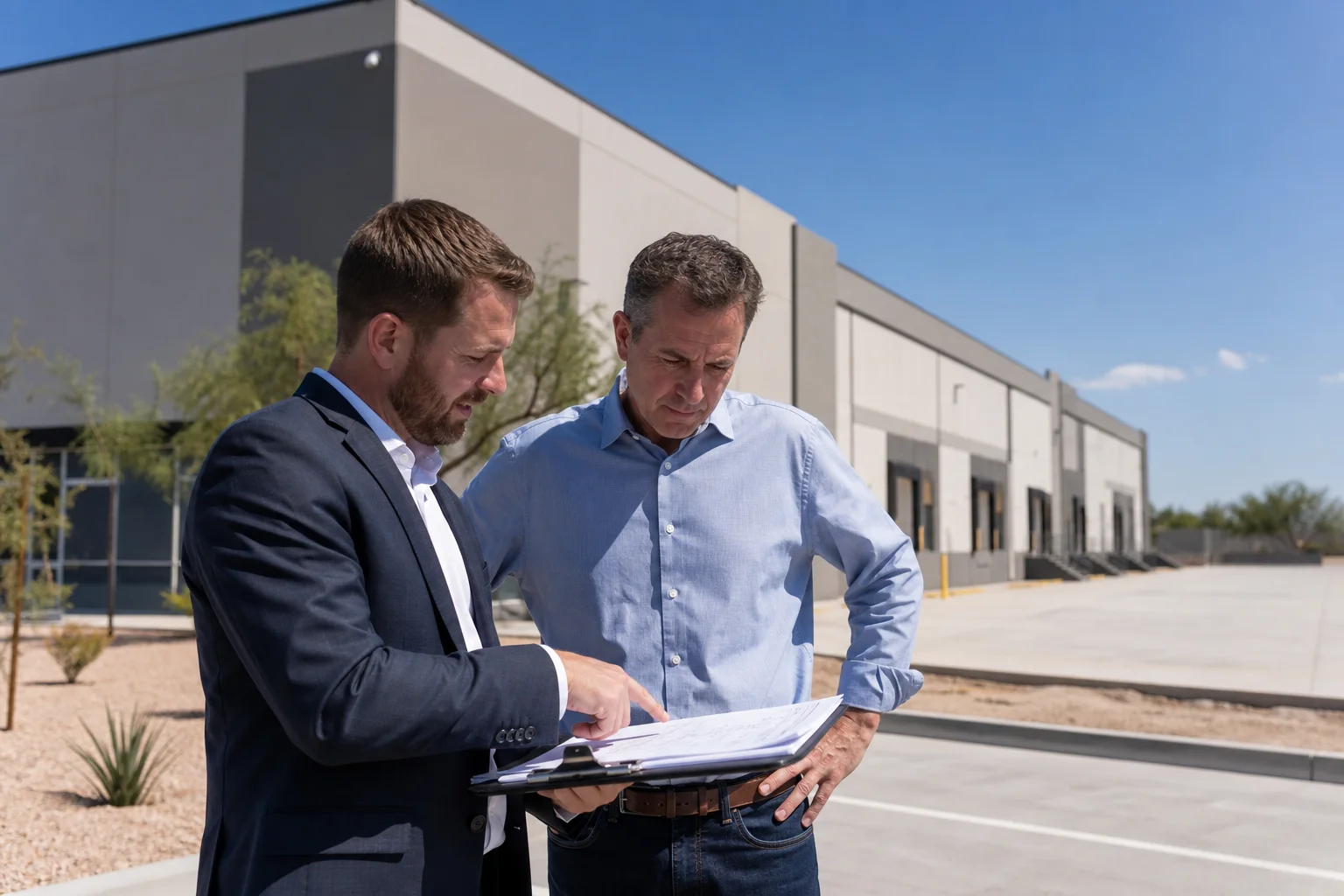
Buying industrial property in Phoenix requires more than a signed contract and a wire transfer. A disciplined commercial due diligence checklist for buyers of Phoenix industrial property protects against title defects, zoning conflicts, and lease liabilities before closing. Investors evaluating industrial real estate in Chandler, Tempe, and Gilbert win or lose the deal during this due diligence period.
By David Pierce, MHG Commercial
What a Commercial Due Diligence Checklist for Buyers of Phoenix Industrial Property Should Cover
Industrial real estate in the Phoenix metro moves fast. Warehouse and distribution space along the Loop 202 and Loop 303 corridors routinely draws multiple offers, and sellers rarely extend the inspection period past 30 to 45 days. A structured due diligence process is what separates a buyer who closes clean from one who inherits someone else's problem.
Every commercial due diligence checklist for buyers of Phoenix industrial property should include five core review areas: title and survey, zoning and land use, environmental and physical condition, lease and tenant documents, and financing and insurance. Skipping any one of these categories shifts risk from the seller to the buyer at the exact moment the buyer has the least leverage to negotiate a price adjustment.
For business owners purchasing owner-occupied industrial space, the checklist looks similar but adds a layer of scrutiny around the intended use of the building, since a change of use from warehouse to light manufacturing or food distribution can trigger a new round of permitting. Environmental history tied to the metal fabrication industry, in particular, often calls for additional testing beyond a standard Phase I report.
Title Search and Ownership Verification Before You Sign
A title search is the foundation of the due diligence checklist. Order it through a Phoenix-based title company as soon as the contract is executed, not after the inspection period is half over. The report will show recorded easements, deed restrictions, unpaid liens, and any judgments attached to the seller entity.
Industrial parcels in Maricopa County frequently carry utility easements, drainage easements, and rail spur agreements that are decades old and rarely surface during a casual walk-through. A title search that flags an easement crossing the loading dock area, for example, can affect truck turning radius and dock door count, both of which drive lease rates for future tenants.
Confirm the seller holds clear, insurable title before earnest money goes hard. If the report shows an unresolved lien or a break in the chain of title, treat that as a negotiating point rather than an automatic reason to walk away. Pierce CRE brokers coordinate directly with title officers so buyers see the preliminary report inside the first two weeks of contract, not the final week before closing.
Zoning Regulations and Land Use Review for Industrial Sites
Zoning regulations determine what a buyer can actually do with an industrial building, and that answer is not always the same as what the current tenant is doing. Phoenix, Chandler, Tempe, and Gilbert each maintain separate zoning codes, and a parcel zoned for light industrial use in one jurisdiction may restrict outdoor storage, truck idling hours, or hazardous material handling that a buyer assumes is standard.
Pull the zoning verification letter directly from the city or county planning department rather than relying on a listing summary. Confirm the property is not subject to spot zoning or a pending overlay district that could change land use rules before closing. Land use restrictions tied to a planned area development can also limit future expansion, even on a parcel with excess lot coverage.
If the buyer's intended use differs from the seller's current use, such as converting flex space to cold storage, request a written zoning compliance letter before removing contingencies. A due diligence checklist that skips this step leaves the buyer exposed to a use variance application after closing, which can take four to six months to resolve in Maricopa County.
Environmental and Physical Site Inspections
A Phase I Environmental Site Assessment is standard for any industrial acquisition in Phoenix, particularly for buildings with a history of manufacturing, auto service, or chemical storage. The report reviews historical use records, aerial photographs, and regulatory database listings to flag potential soil or groundwater contamination before the buyer takes on liability.
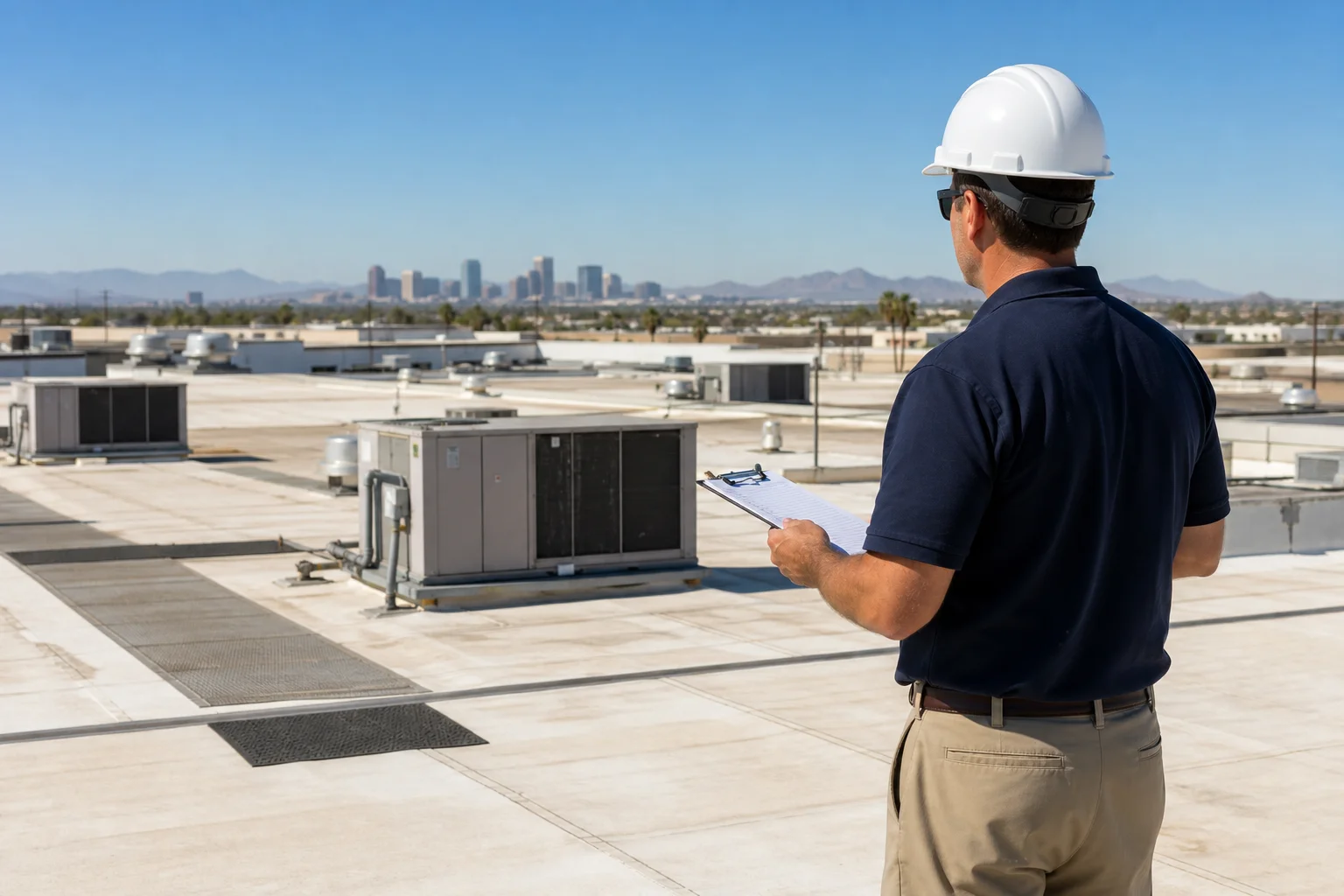
Physical inspections should cover the roof membrane, HVAC and rooftop units, dock levelers, fire suppression systems, and the concrete slab for cracking or settlement. Phoenix industrial buildings built before 2000 often carry roofing systems approaching the end of their useful life, and a roof replacement on a 100,000 square foot building is a six figure line item that belongs in the purchase negotiation, not a surprise six months after closing.
Confirm the electrical service and clear height match the building's stated specifications, and walk the truck court to check turning radius and unobstructed view of the loading area for safety. A warehouse marketed at 32 feet clear height that measures 28 feet at the lowest point changes which products and racking systems the space can actually support.
Lease Review, Security Deposits, and Tenant Obligations
If the industrial property is leased, request full copies of every lease, amendment, and estoppel certificate, not just the rent roll summary. Confirm security deposits held by the seller transfer to the buyer at closing and match the amounts stated in the lease documents. A mismatch between the security deposits on the rent roll and the actual bank account balance is one of the more common discrepancies found during the due diligence period.
Review each tenant's insurance certificates to confirm coverage limits meet the lease requirements, and check for any letters of credit held in place of a cash security deposit, since those instruments are issued through a commercial bank and require separate transfer paperwork. Tenant estoppels should also confirm there are no side agreements, rent abatements, or disputes that do not appear in the lease itself.
Buyers who use commercial financing rather than an all cash purchase should expect the lender to order its own appraisal, environmental report, and zoning compliance letter, often duplicating parts of the buyer's own due diligence checklist. Coordinating these reports with the same environmental consultant can save two to three weeks of overlapping work.
Buyers structuring the purchase through a 1031 exchange should coordinate the estoppel and lease review timeline with their qualified intermediary early, since 1031 exchange services carry strict identification and closing deadlines that do not pause for a slow tenant response. Businesses occupying the space directly rather than leasing it out should still request maintenance records and utility bills covering at least the trailing twelve months.
Frequently Asked Questions
How long does the due diligence period typically last for Phoenix industrial property? Most Phoenix industrial contracts allow 30 to 45 days for due diligence, though larger deals or properties with complex environmental history often negotiate additional time. The due diligence checklist should be scoped against the actual calendar, with title, environmental, and lease review running in parallel rather than sequentially.
What does a title search reveal that a buyer would not otherwise know? A title search uncovers recorded easements, liens, judgments against the seller entity, and gaps in the chain of ownership. On industrial parcels, it commonly reveals utility or rail easements that affect where a buyer can expand the building footprint or add dock doors, details that rarely surface during a walk-through alone.
Do zoning regulations affect industrial buildings that are already occupied? Yes. Zoning regulations govern the full range of permitted uses for a property going forward, not just the current tenant's operation. A buyer planning a different use, such as adding outdoor storage or a manufacturing component, needs a written zoning confirmation letter from the city or county before removing contingencies.
What happens to security deposits when an industrial property sells? Security deposits held by the seller should transfer to the buyer at closing, with the exact amount reconciled against each lease and confirmed on the closing statement. Any shortfall between the rent roll and the actual bank balance becomes a credit adjustment negotiated before funds disburse.
Should a buyer hire a third party for the due diligence process, or rely on the broker? Both. A commercial real estate broker coordinates the due diligence process and flags issues early, but title companies, environmental consultants, and structural engineers should conduct the actual technical reviews. The broker's role is managing the timeline and negotiating outcomes based on what those reports find.
Start Your Industrial Property Due Diligence With Pierce CRE
A thorough due diligence checklist is the difference between an industrial acquisition that performs and one that drains capital in year one. To review title, zoning, and lease documents on a specific Phoenix industrial property, contact our brokerage before your inspection period starts the clock.