


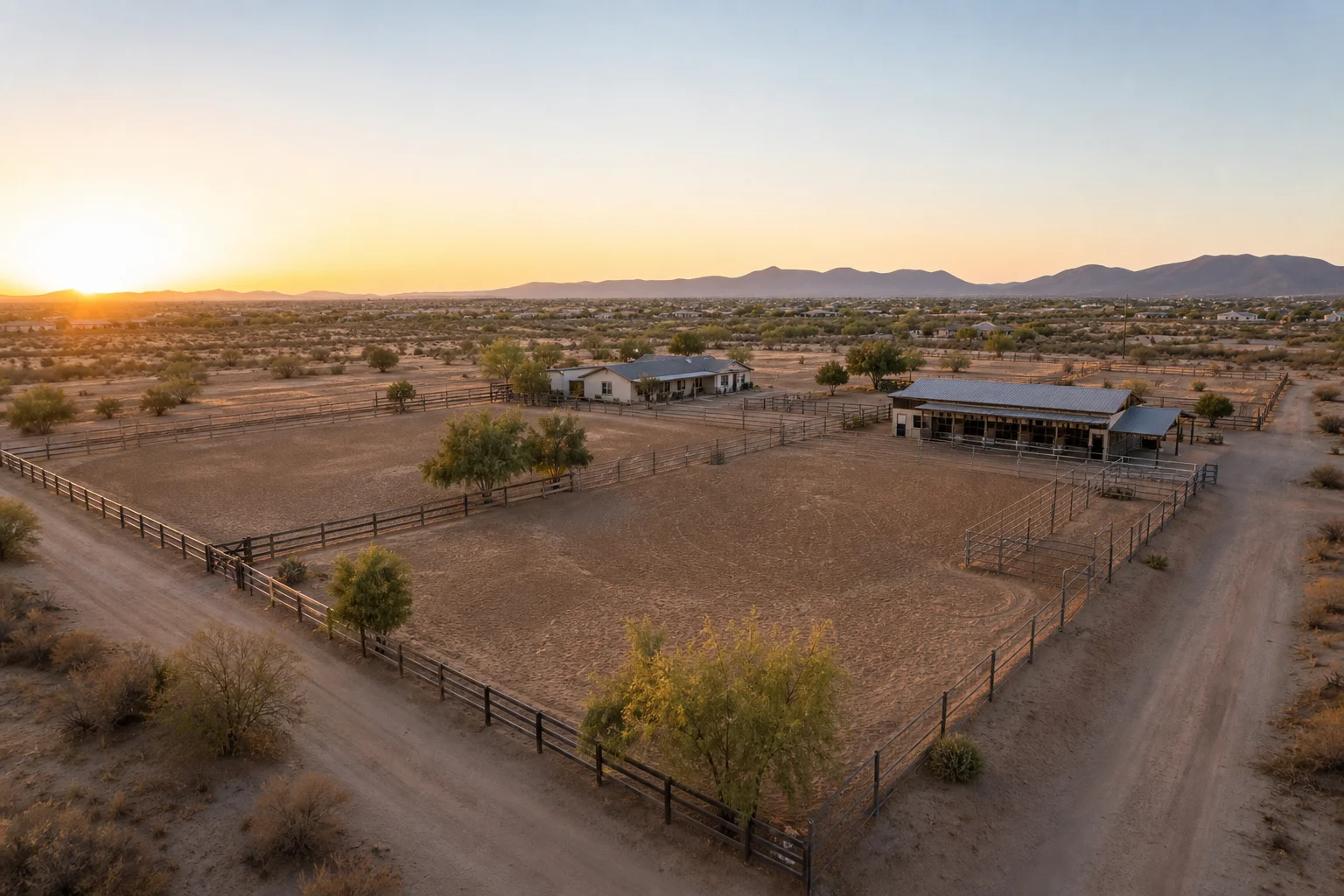
Horse property as a land play in San Tan Valley draws a different type of investor than typical rural home buyers: one pricing the acreage, zoning, and hold period first. Large lot parcels here support horse property uses today while carrying long term redevelopment optionality as the Pinal County growth corridor matures.
By David Pierce, MHG Commercial
Horse Property as a Land Play in San Tan Valley: Why Investors Look Past the Home
Commercial real estate investors evaluating San Tan Valley rarely stop at the house. The barn, the arena, the fenced pasture, all of it sits on a lot that is doing the real work: an acre count large enough to matter later, even if the current use is horses today. That framing, horse property as a land play in San Tan Valley, treats the home as a carrying-cost offset rather than the asset itself.
Queen Creek AZ, San Tan Valley AZ, and the surrounding Hunt Highway corridor have absorbed years of rooftop growth pushing outward from Mesa and Gilbert. Parcels that were once considered rural edge land now sit closer to the leading face of that growth than they did five years ago. An investor holding five acres of horse property is holding a position in that path, with equestrian use as the interim income and lifestyle rationale.
Acreage and Zoning Fundamentals for San Tan Valley Horse Property
Most San Tan Valley horse properties sit on county zoning categories built around minimum lot sizes, typically at or above one acre, that permit keeping horses and other livestock as an accessory use to a single family residence. That is different from land zoned strictly agricultural or from small residential lots inside a platted subdivision, and the difference matters for anyone underwriting a hold.
A few fundamentals worth confirming before closing:
Minimum Lot Size and Density
Larger minimum lot sizes cap how many parcels a given section of land can support, which is part of what keeps horse properties from becoming a beds baths commodity product. A five acre parcel does not compete on bedroom bathroom counts the way a subdivision home does.
Setbacks, Easements, and Access
Irrigation easements, canal frontage, and unpaved or partially improved roads are common across San Tan Valley acreage. None of these are disqualifying, but each affects buildable area and should be priced into the acquisition, not discovered afterward.
Well and Septic Infrastructure
Many parcels rely on private wells and septic systems rather than municipal utilities. That infrastructure carries its own maintenance and permitting considerations and should be inspected with the same rigor as a commercial building's mechanical systems.
Water Rights and Agricultural Exemptions
San Tan Valley sits inside a groundwater basin where well permitting and irrigation district membership vary parcel by parcel. Some horse properties carry irrigation shares tied to older agricultural platting, while newer homes built nearby on smaller lots typically do not. Confirming water rights before closing affects both current equestrian use and any future exit that depends on the acreage supporting more than one home.
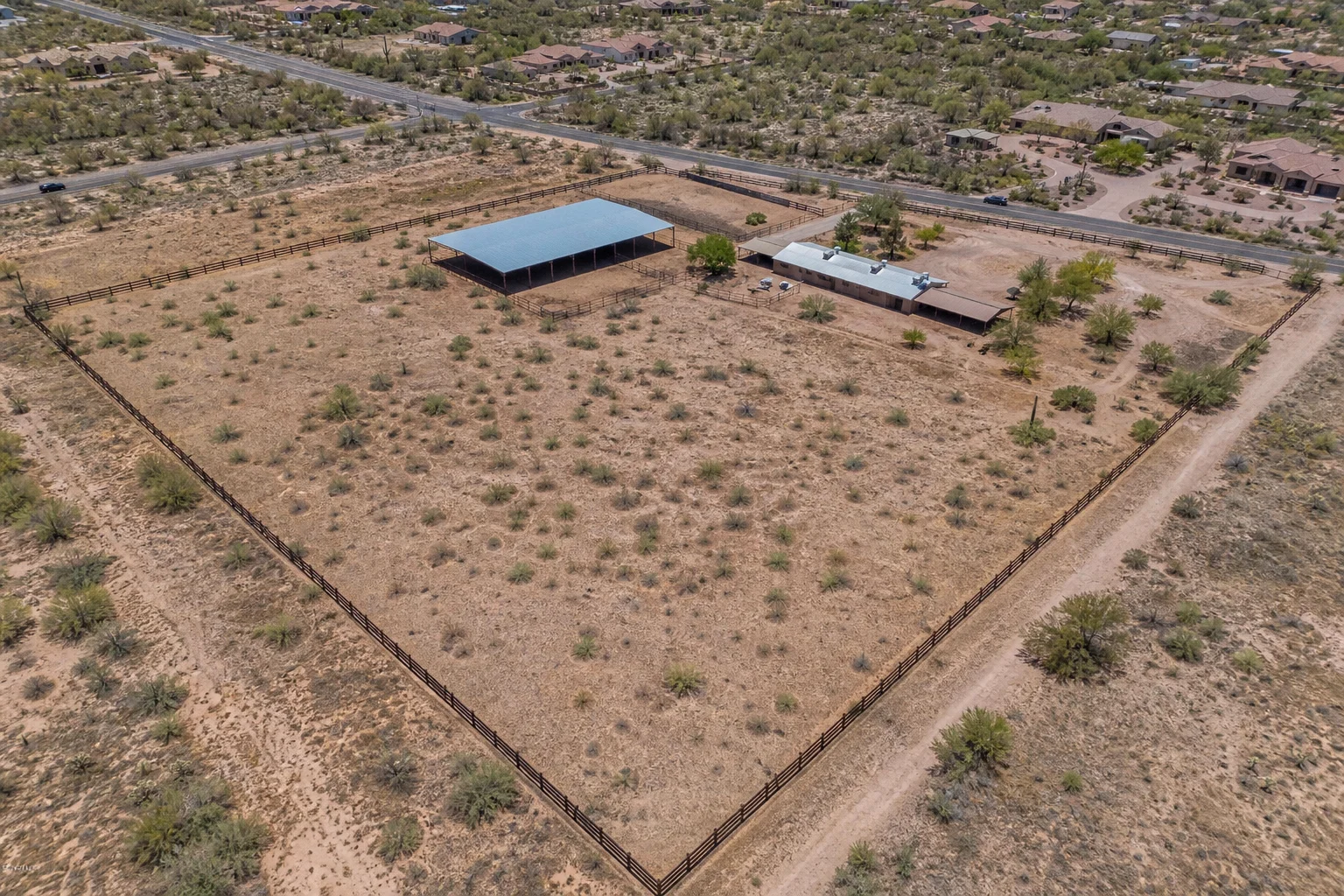
Comparing Horse Property to Raw Land and Residential Lots
Raw land carries no structures and no carrying-cost offset. An investor holding vacant acreage through a straight land purchase pays property tax and opportunity cost with nothing generating use in the interim. A standard residential lot, on the other end, is priced almost entirely on the home: bed count, bath count, and finished living space per sqft, with the land itself treated as incidental.
Horse property sits between those two positions. The existing home and outbuildings support a livable, financeable asset today, often with a bedroom bathroom mix that reads like a typical single family home. Available horse properties in San Tan Valley routinely list four or five bedrooms alongside stalls, arenas, or pasture, so the property functions as a residence while the acreage does the longer-term work a raw land purchase would otherwise do alone.
Buyers who shop purely on a bed bath spreadsheet miss the point of this asset class. A modest bed bath count on an older home does not diminish a five acre parcel's standing in the corridor, and in some cases a smaller home on more acreage prices better on a per-acre basis than a larger home on a tight in-fill lot.
Hold Strategy: Timeline, Carrying Costs, and Exit Options
A land play needs a hold thesis, not just a purchase. Carrying costs for horse property are generally lower than raw land because the home offsets holding costs through owner occupancy or rental income, and lower than a conventional investment property because agricultural or equestrian zoning classifications can reduce certain tax burdens depending on use and county assessment.
Exit paths worth mapping before you buy:
- Resale to another buyer seeking horse properties, which keeps the asset in its current use and zoning
- Continued hold through a longer growth cycle, betting on the corridor rather than a near-term event
- Eventual subdivision or repositioning if zoning and infrastructure support higher density later
Buyers weighing this path should review the Arizona horse property guide before setting a target hold period, since zoning nuance across Pinal County townships affects which exits are realistic.
Where San Tan Valley Fits in the Queen Creek, Gilbert, and Mesa Corridor
San Tan Valley sits southeast of Queen Creek and Gilbert along the Hunt Highway and Bella Vista corridors, with Mesa's employment base within a commutable range. That geography is a meaningful part of the land play thesis: horse property here is not isolated rural acreage, it is acreage inside the growth path of three established submarkets.
The view corridors across much of San Tan Valley still favor open desert and mountain sightlines, which supports current equestrian and rural living demand even as rooftop density increases closer to Queen Creek and Gilbert. Investors who understand horse property as a land play in San Tan Valley are underwriting that transition, not just today's use.
Demand Signals Worth Tracking Before You Buy
A handful of indicators tell you whether the corridor is still moving in horse property's favor. Building permit volume for new homes in the townships adjacent to San Tan Valley is one, since rooftop growth eventually pushes retail and service demand outward with it. Retail and industrial site selection activity along Hunt Highway and the Ironwood corridor is another, since commercial users tend to follow the same rooftop counts that make acreage more valuable over time.
None of these signals guarantee a specific outcome or timeline, and no two parcels absorb that growth at the same pace. Investors underwriting horse property as a land play in San Tan Valley should treat these as directional inputs to a hold thesis, not a substitute for parcel-level diligence on zoning, access, and infrastructure.
Frequently Asked Questions
What makes horse property different from a standard land investment in San Tan Valley?
Horse property combines a livable home and outbuildings with acreage large enough to function as a land position. That combination offsets carrying costs through owner occupancy while the underlying lot count benefits from the same growth corridor pricing raw land, giving the asset dual utility that vacant acreage alone cannot provide.
How much acreage is typical for horse properties in San Tan Valley?
Most horse properties in the area sit on parcels ranging from roughly one to five or more acres, depending on zoning and location. Larger available parcels near the edge of the growth corridor tend to carry more of a land play thesis, while smaller in-fill acreage closer to Queen Creek trades more like a standard residential purchase.
Do horse properties require special financing?
Financing depends on the property's classification, existing structures, and whether the land includes agricultural exemptions. If you're comparing loan programs, a broker familiar with Pinal County zoning and county assessor treatment can flag which properties qualify for standard residential financing versus specialty acreage or agricultural lending.
Is horse property a good fit for a 1031 exchange?
It can be, depending on how the replacement property is used and titled. Investors weighing an exchange into acreage should confirm use and holding intent with their qualified intermediary and CPA, since a purchase that mixes personal use with investment intent needs careful structuring to preserve exchange eligibility.
Talk to Pierce CRE About Your San Tan Valley Acreage Strategy
A horse property acquisition in San Tan Valley works as a land play only when the acreage, zoning, and hold period are underwritten together, not treated as an afterthought to the home. To review specific parcels, zoning classifications, and comparable closings, contact our brokerage.