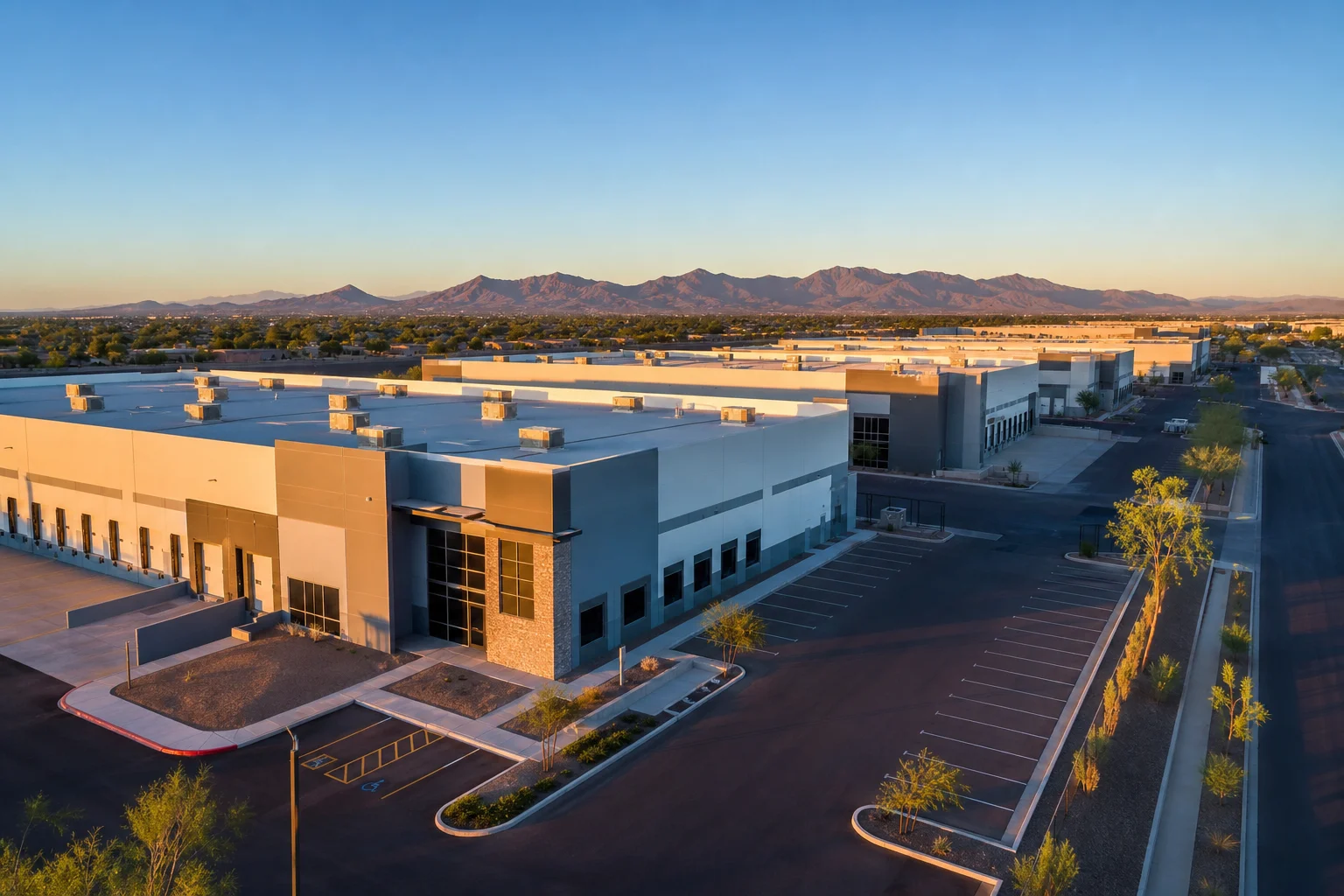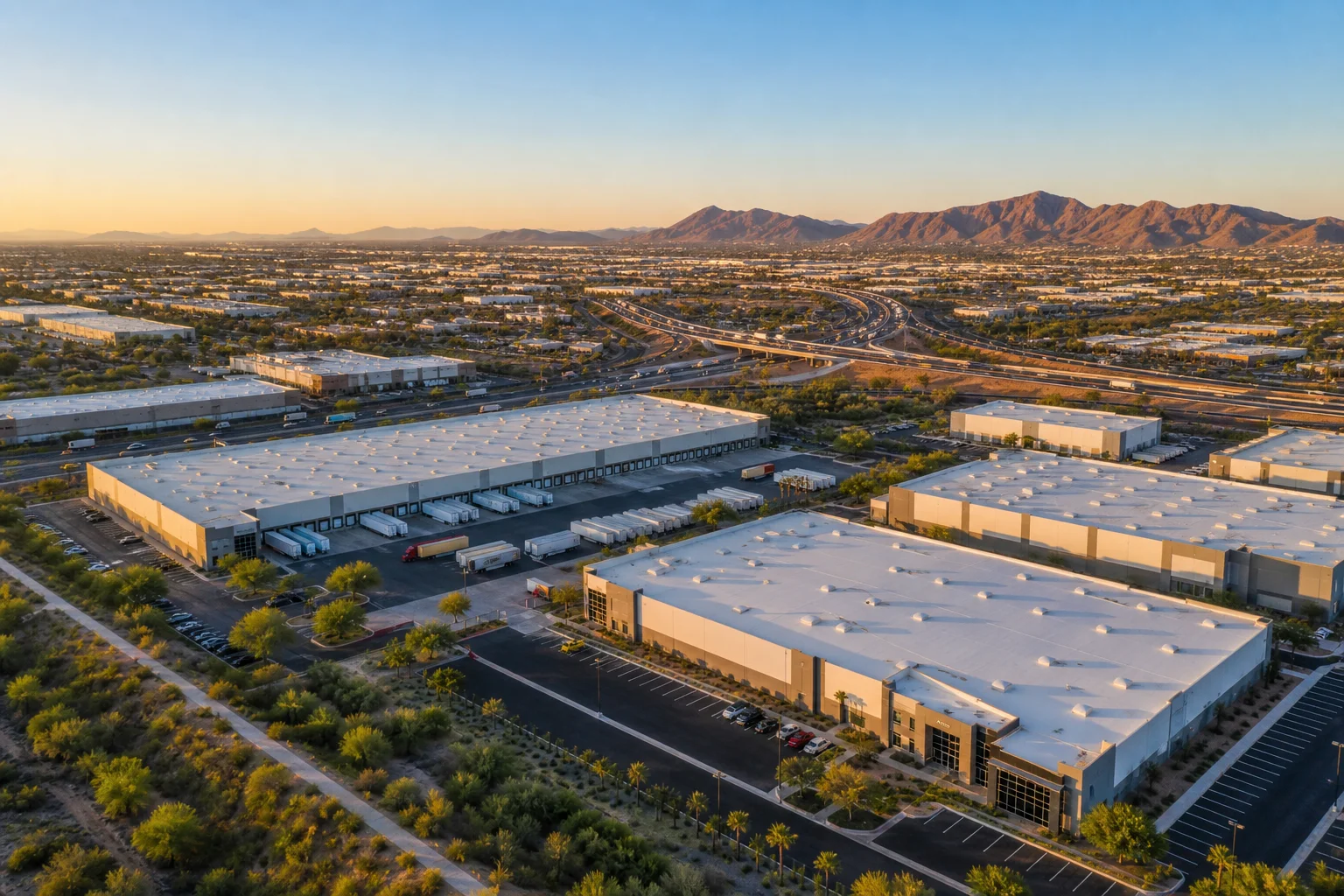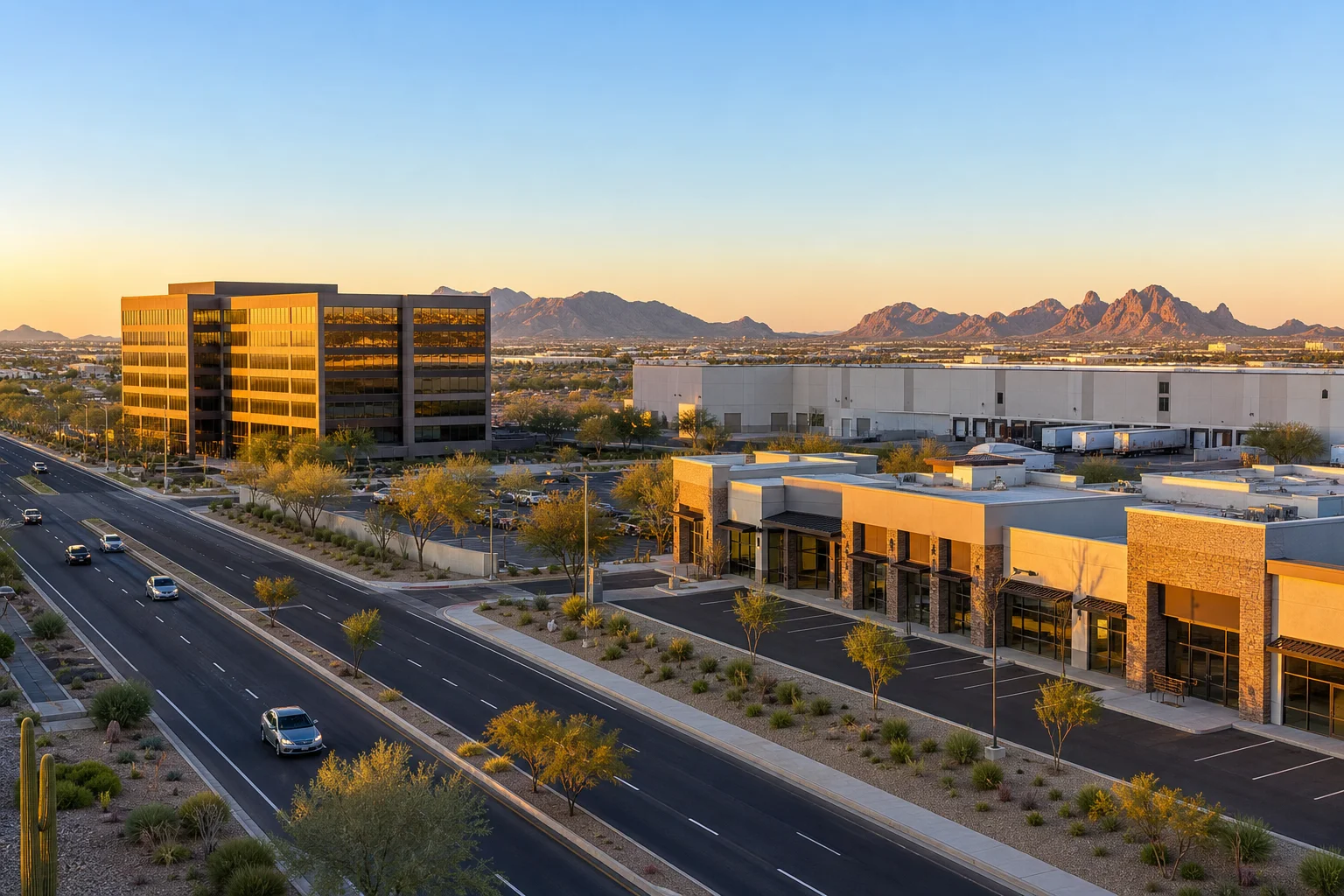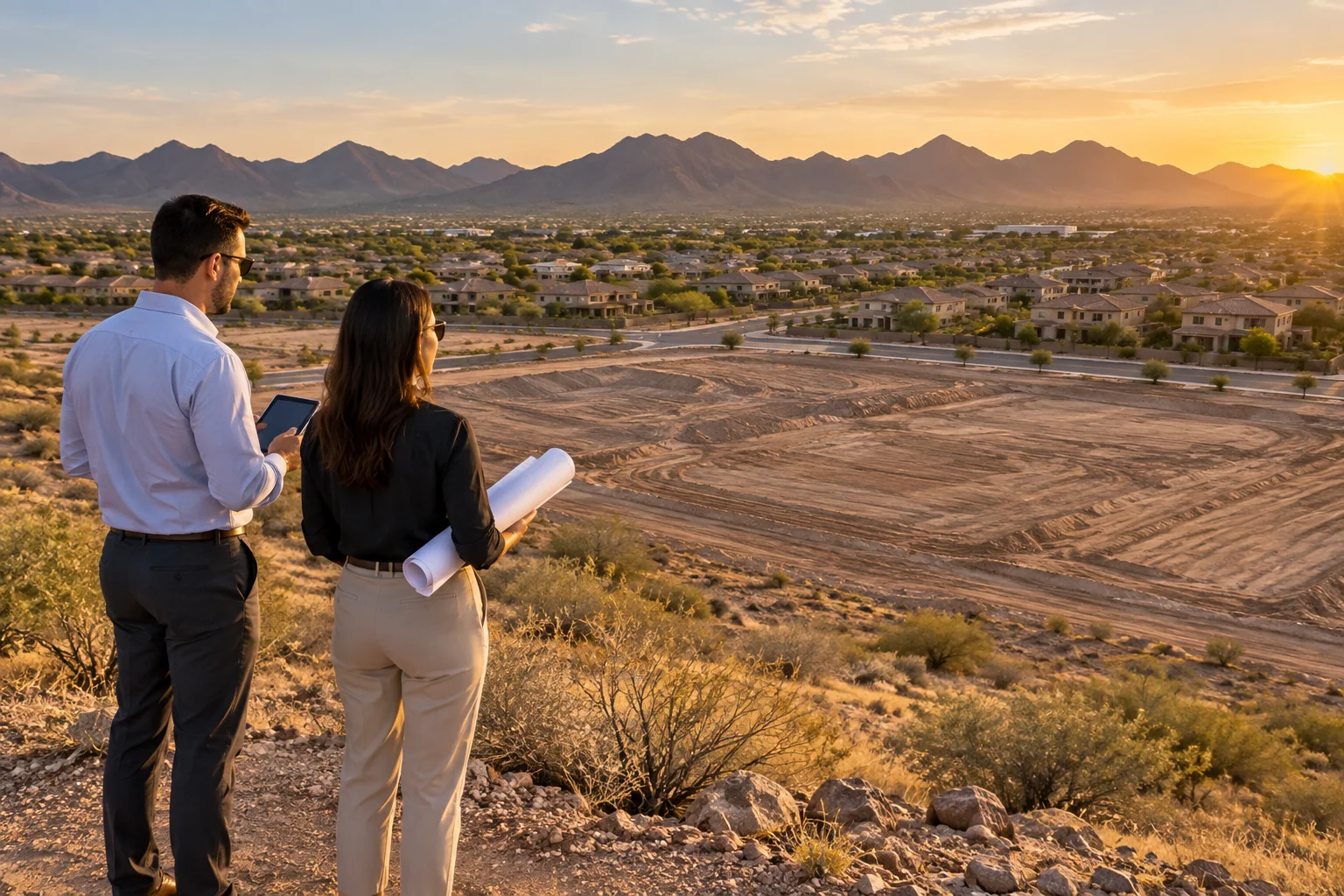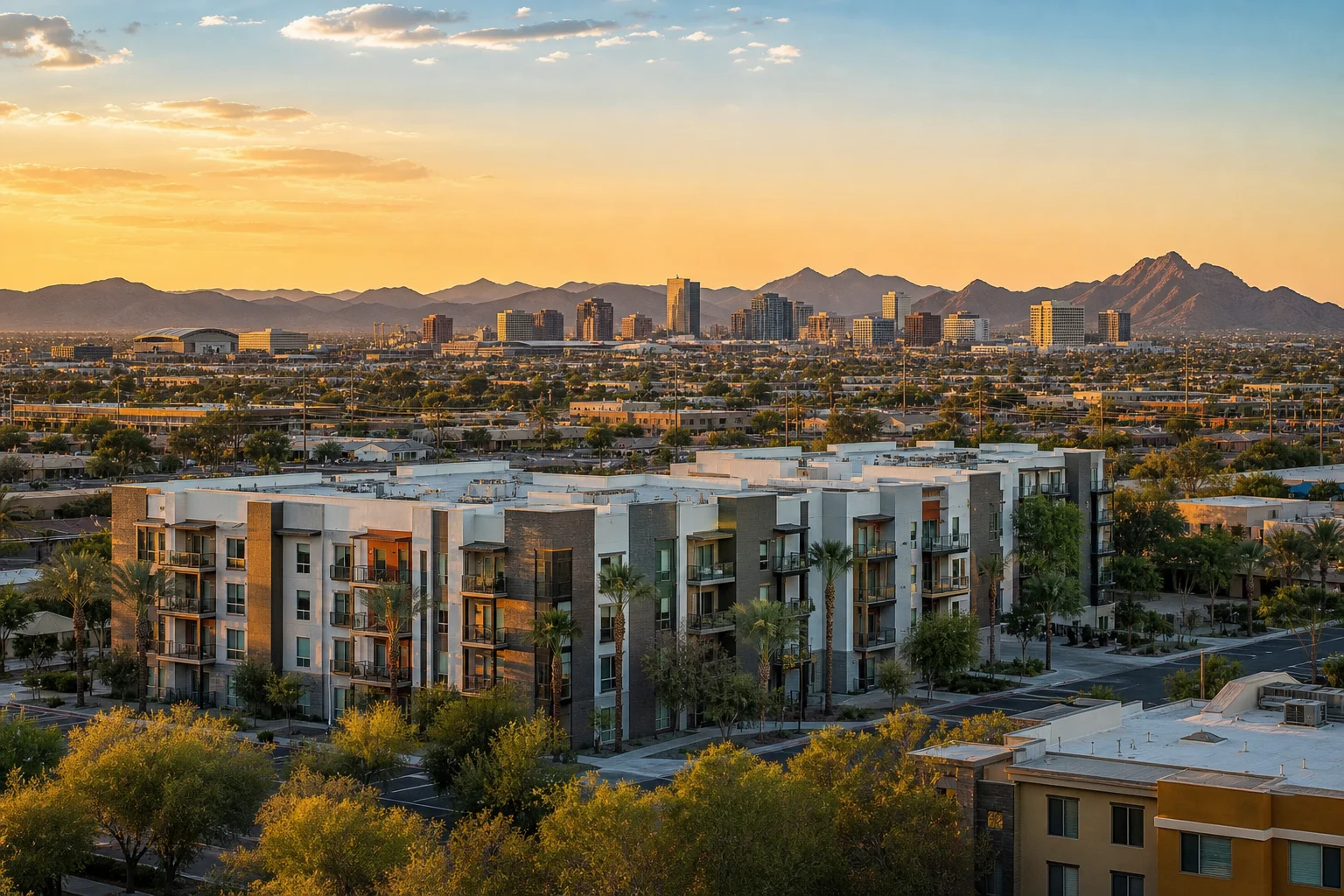
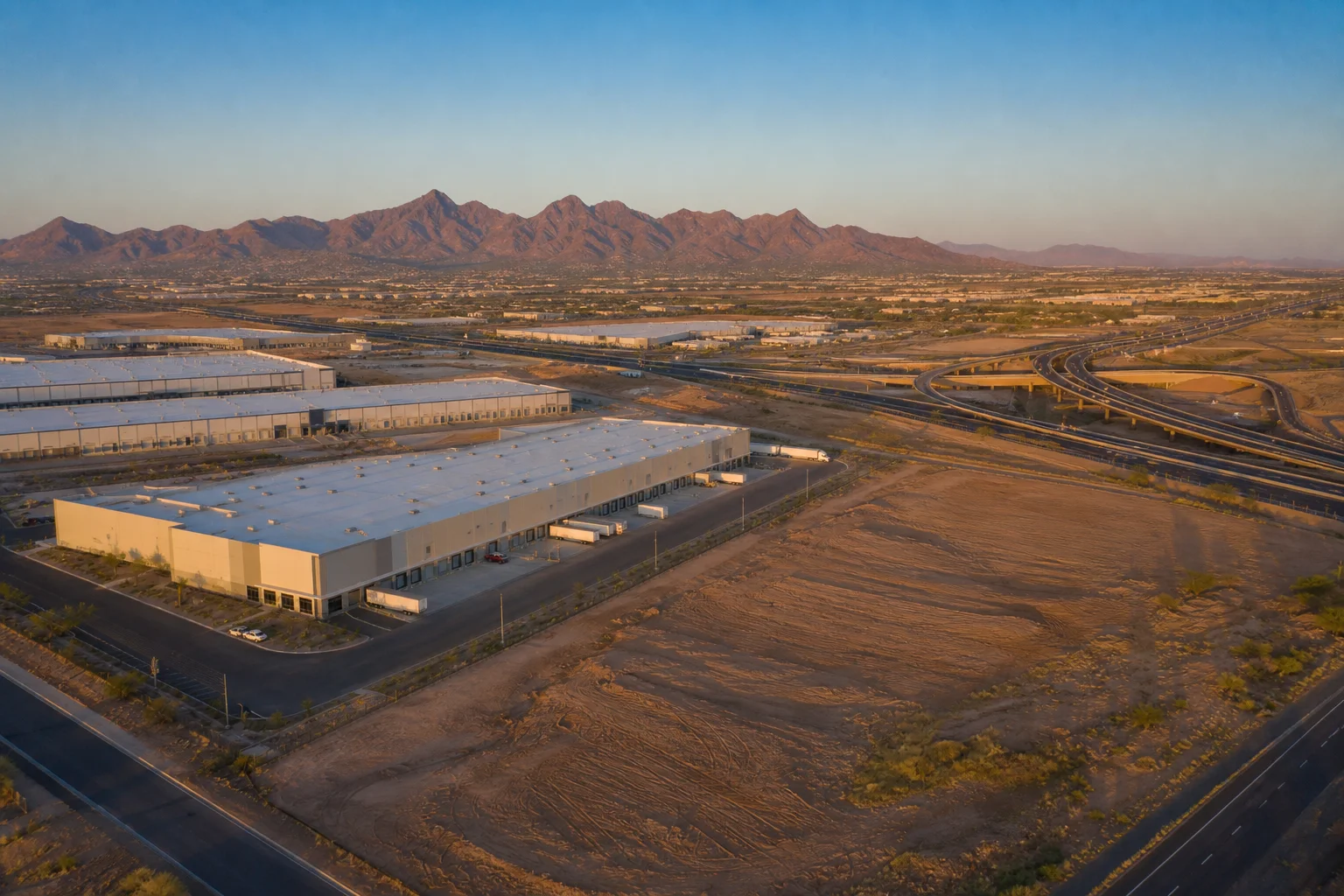
Industrial land for sale in Maricopa County draws serious capital because the Phoenix metro remains one of the fastest-growing industrial markets in the American Southwest. Buyers who understand local zoning classifications and site selection criteria close faster and avoid costly entitlement delays that erode deal timelines and project margins.
By David Pierce, MHG Commercial
What Drives Demand for Industrial Land for Sale in Maricopa County
Maricopa County exceeded 4.4 million residents as of the 2020 U.S. Census, and the Arizona Department of Administration projects continued population growth through 2030. That base, combined with direct Interstate 10, I-17, and Loop 202 freeway access, positions the county among the more compelling industrial land markets in the western United States.
Distribution operators, light manufacturers, and last-mile logistics providers have accelerated land acquisition across Chandler, Gilbert, and Mesa because of proximity to Sky Harbor International Airport and established regional labor pools. The Arizona Commerce Authority consistently ranks the Phoenix metro among the top-tier industrial expansion markets in the Mountain West, citing the county's combination of freeway infrastructure, available acreage, and a growing workforce.
For investors evaluating industrial land for sale in Maricopa County, the macro case is straightforward: demand is structural, not cyclical, and build-to-suit tenant demand continues to outpace available shovel-ready acreage in established submarkets.
Industrial Zoning Classifications in the Phoenix Metro
Each municipality within Maricopa County maintains its own zoning code, so buyers must review the specific jurisdiction, not just the county overlay, before underwriting a site. The most common industrial designations you will encounter are as follows:
A-1 (Light Industrial): Permits warehousing, flex space, light assembly, and office-support uses. Typically prohibits outdoor storage, heavy processing, and high-noise manufacturing. Common in infill locations near residential transition zones.
A-2 (Heavy Industrial): Permits outdoor storage, bulk material handling, truck terminals, and intensive manufacturing. Requires greater setbacks and usually situates in dedicated industrial corridors away from residential and commercial centers.
A-3 and Manufacturing District: Found in Phoenix and some Chandler jurisdictions, this designation allows the broadest range of industrial uses including processing facilities, cold storage, and some hazardous material handling subject to state environmental permitting.
BP (Business Park): A hybrid designation that blends office, research and development, and clean manufacturing. Common in Gilbert and Chandler for semiconductor, aerospace, and biomedical tenants. Floor-area ratios are more restrictive than A-1, but design standards are higher.
Buyers should also check overlay districts, particularly airport influence areas near Phoenix-Mesa Gateway Airport and Chandler Municipal Airport, which impose height restrictions and noise-level criteria that can affect building design and tenant suitability.
Key Site Selection Factors for Industrial Development
Zoning is a threshold requirement, not the whole picture. Once a parcel clears the zoning screen, the following factors determine whether the site actually pencils as a development.
Acreage and Parcel Configuration
Industrial users typically require a depth-to-width ratio that accommodates truck circulation. A square or near-square parcel may look efficient on paper but creates dock placement and staging problems for distribution operations. Standard industrial sites in the Phoenix metro range from three to 50 acres depending on use; logistics campuses frequently require 50 or more contiguous acres.
Freeway Proximity and Truck Route Access
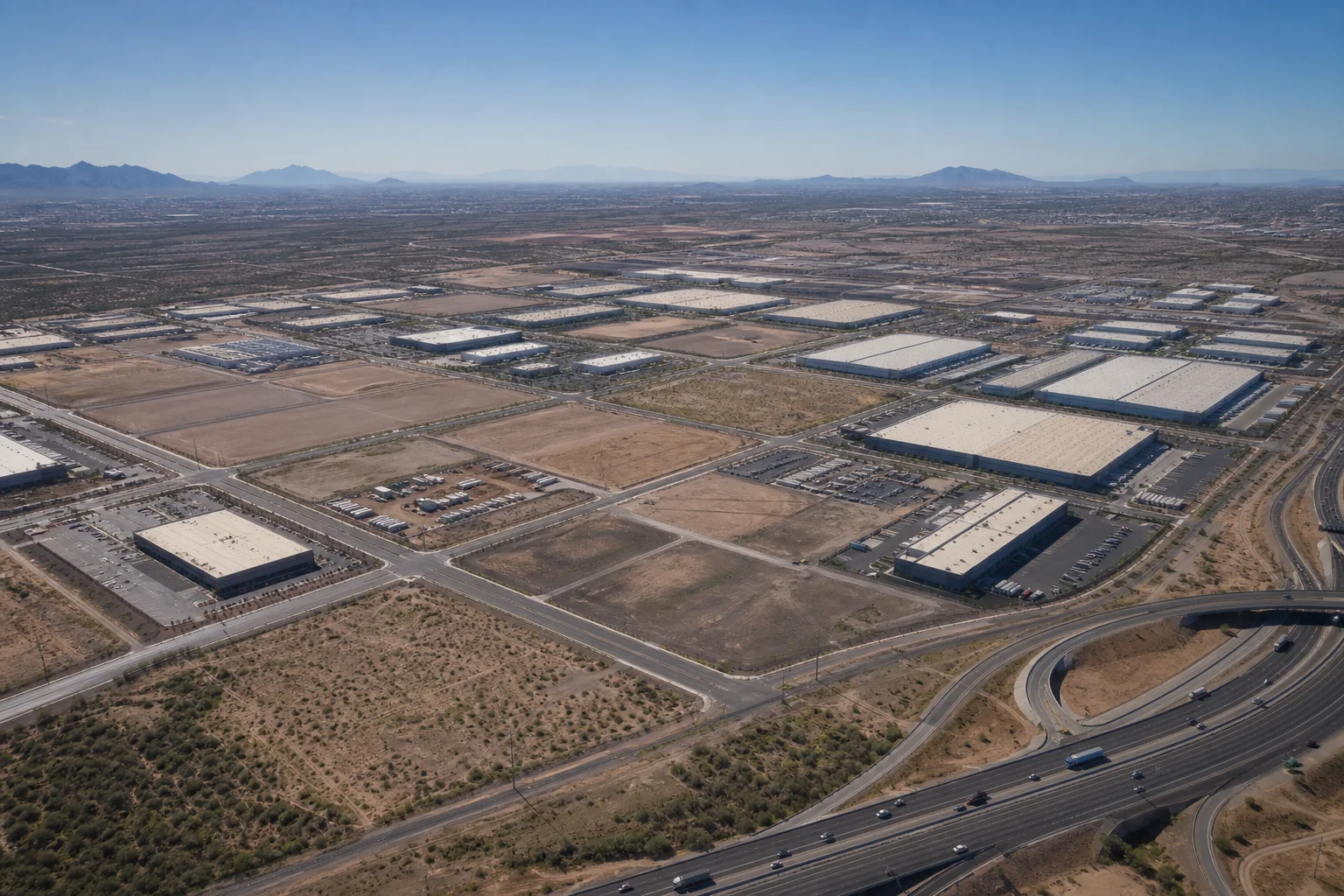
Maricopa County's industrial corridors cluster around freeway interchanges for a reason. Truck route designations are municipality-specific and restrict heavy commercial vehicles on certain arterials. Verify that your primary ingress and egress roads carry truck route status before assuming operational access.
Flood Zone and Grade
A significant portion of raw land in Maricopa County carries a FEMA Special Flood Hazard Area designation or sits in a locally-mapped retention basin corridor. Sites that require flood mitigation or significant fill add cost and timeline. Request FEMA FIRM panel data and Maricopa County flood control district mapping early in due diligence.
Soil and Environmental Conditions
Caliche layers present at varying depths across the Valley and can add materially to foundation and grading costs. Phase I Environmental Site Assessments are standard; Phase II testing is warranted on any site with prior agricultural chemical use, dry cleaning, or fuel storage history.
Infrastructure and Utility Access
Industrial development in Maricopa County is utility-dependent in ways that raw land pricing does not always reflect. Buyers should request utility confirmation letters, not just verbal representations from brokers or sellers, before going hard on earnest money.
Power: Large industrial users, particularly data centers, semiconductor fabs, and cold storage operators, require substation-level power or dedicated transformer service. Arizona Public Service and Salt River Project both serve Maricopa County, with SRP covering a large portion of the East Valley including Chandler, Gilbert, Mesa, and Tempe. Confirm which utility serves the parcel, then request available capacity documentation from the serving utility directly.
Water and Sewer: Municipal water and sewer availability varies considerably at the parcel level, even within served areas. The Arizona Department of Water Resources enforces a 100-year assured water supply requirement for any subdivision or commercial development. Some jurisdictions issue water assured supply letters; requesting one early in due diligence can prevent a late-stage entitlement delay.
Fiber and Communications: Institutional buyers and corporate tenants increasingly require dark fiber access or carrier-neutral data infrastructure. Parcels near established business parks often have existing fiber runs; raw industrial land in emerging corridors frequently does not.
The Entitlement Process: What to Expect
Entitlement timelines in Maricopa County vary by jurisdiction and project complexity. A straightforward A-1 conforming use on an already-zoned parcel may require only a building permit and site plan review, which some cities process in 30 to 60 days. Rezoning petitions, general plan amendments, or development agreement negotiations add months to the process.
For buyers acquiring land that requires a zoning change, the typical municipal process includes a neighborhood notification period, Planning and Zoning Commission hearing, and City Council vote. In Mesa, Chandler, and Gilbert, contested rezonings can take six to twelve months from application to final approval. Phoenix carries similar timelines for complex entitlements.
Development agreements are often required for large-format projects above a certain acreage threshold and may include infrastructure contribution requirements, landscaping standards, or phased construction commitments. These terms are negotiable but must be addressed before plat recordation.
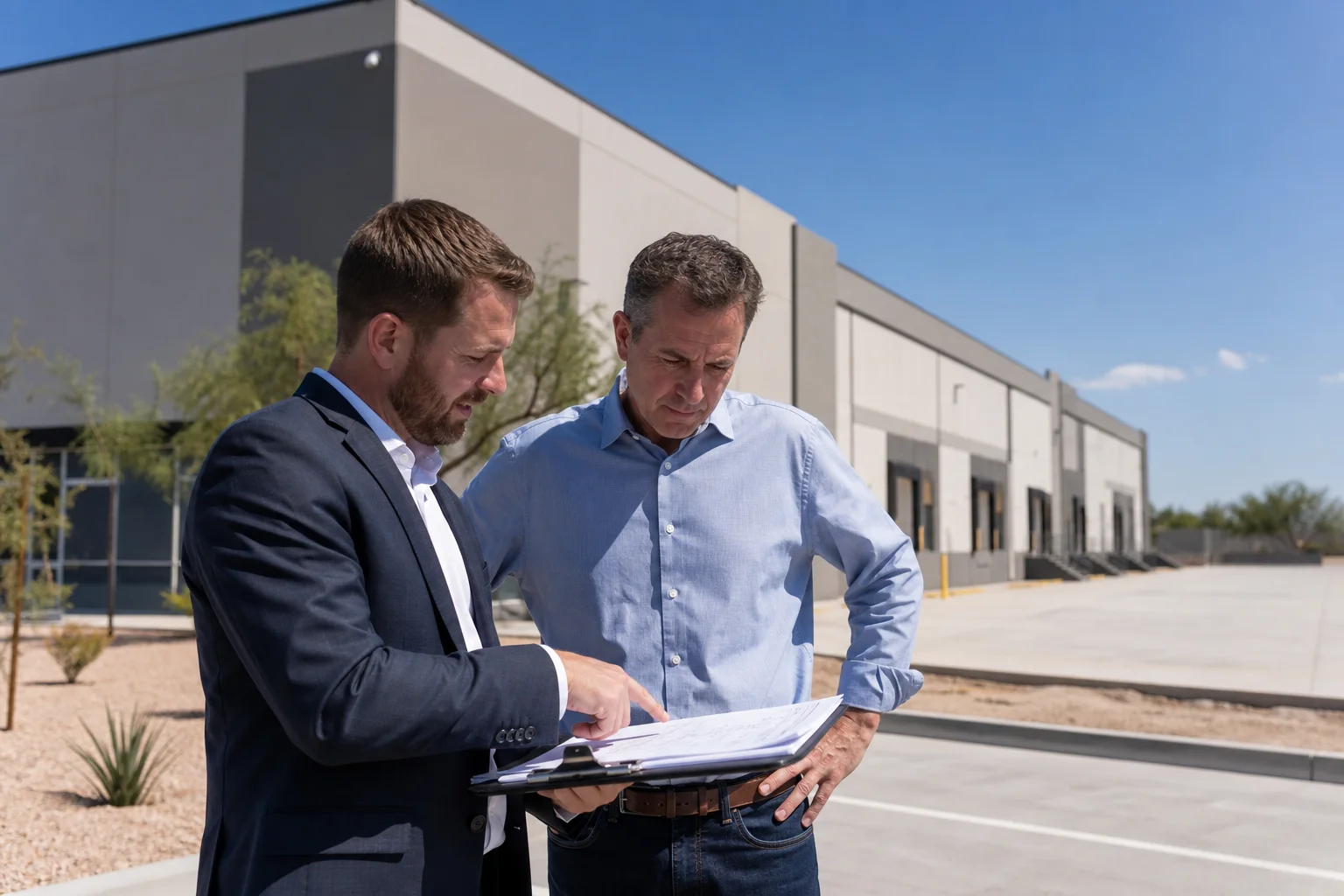
Working with a broker who has active relationships with planning departments across Chandler, Tempe, Gilbert, Scottsdale, and Phoenix reduces entitlement friction. Familiarity with each city's review staff and internal process cuts down on resubmittal cycles and keeps projects on schedule.
Frequently Asked Questions
What is the minimum lot size for industrial development in Maricopa County?
Minimum lot sizes vary by jurisdiction and zoning designation. A-1 zones in Chandler and Gilbert often require a minimum of one acre for new industrial construction, while some Phoenix industrial overlay districts allow smaller infill parcels. Always confirm the specific municipality's development standards before relying on county-level generalizations, as requirements differ materially between cities.
How do I verify that a parcel is actually zoned for industrial use?
Request the parcel's zoning designation directly from the applicable city or town planning department using the Assessor's Parcel Number. Maricopa County Assessor records show ownership and parcel boundaries, but zoning authority rests with incorporated municipalities, not the county, for parcels inside city limits. A title commitment will also flag any recorded use restrictions.
What is the typical price per acre for industrial land for sale in Maricopa County?
Pricing varies significantly by submarket, zoning designation, utility status, and parcel configuration. Published industrial land transactions in the Phoenix metro have ranged widely across submarkets over recent years. A commercial real estate broker with active industrial land experience can provide a current comparable sale analysis specific to your target submarket and intended use.
Do industrial sites near Phoenix-Mesa Gateway Airport face special restrictions?
Yes. Gateway Airport's Airport Influence Area imposes height restrictions, avigation easements, and noise notification requirements on nearby parcels. Buyers must review the specific AIA zone for any parcel within the mapped influence boundary, as these restrictions directly affect building height, tenant suitability, and in some cases debt financing availability.
Is a 1031 exchange viable for industrial land acquisitions in Maricopa County?
A 1031 exchange can apply to industrial land acquisitions when the property is held for investment or productive use in trade or business. Raw land without an income-producing improvement can qualify as a replacement property under certain structures. Buyers should confirm the exchange structure with a qualified intermediary and legal counsel before committing to a timeline, as the 45-day identification and 180-day closing windows are strict.
Reach a Commercial Land Broker Active in the Phoenix Metro
Industrial land transactions in Maricopa County involve zoning, entitlement, utility, and environmental variables that are site-specific and jurisdiction-specific. Working with a broker who is active across Chandler, Gilbert, Mesa, Scottsdale, and Phoenix gives you current comparable data, municipal relationships, and the market read needed to underwrite sites with confidence. Contact our brokerage to review current industrial land opportunities across Maricopa County.