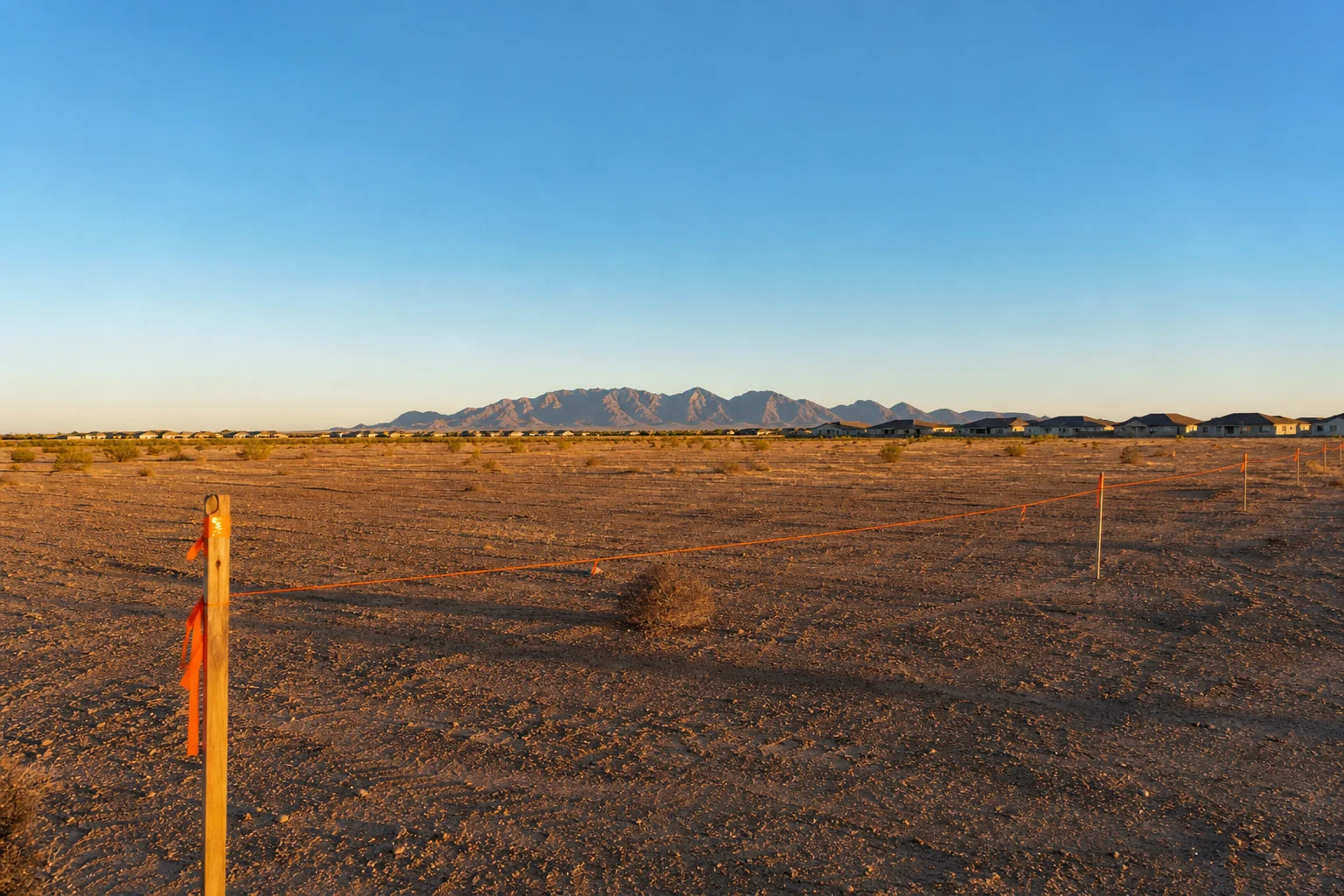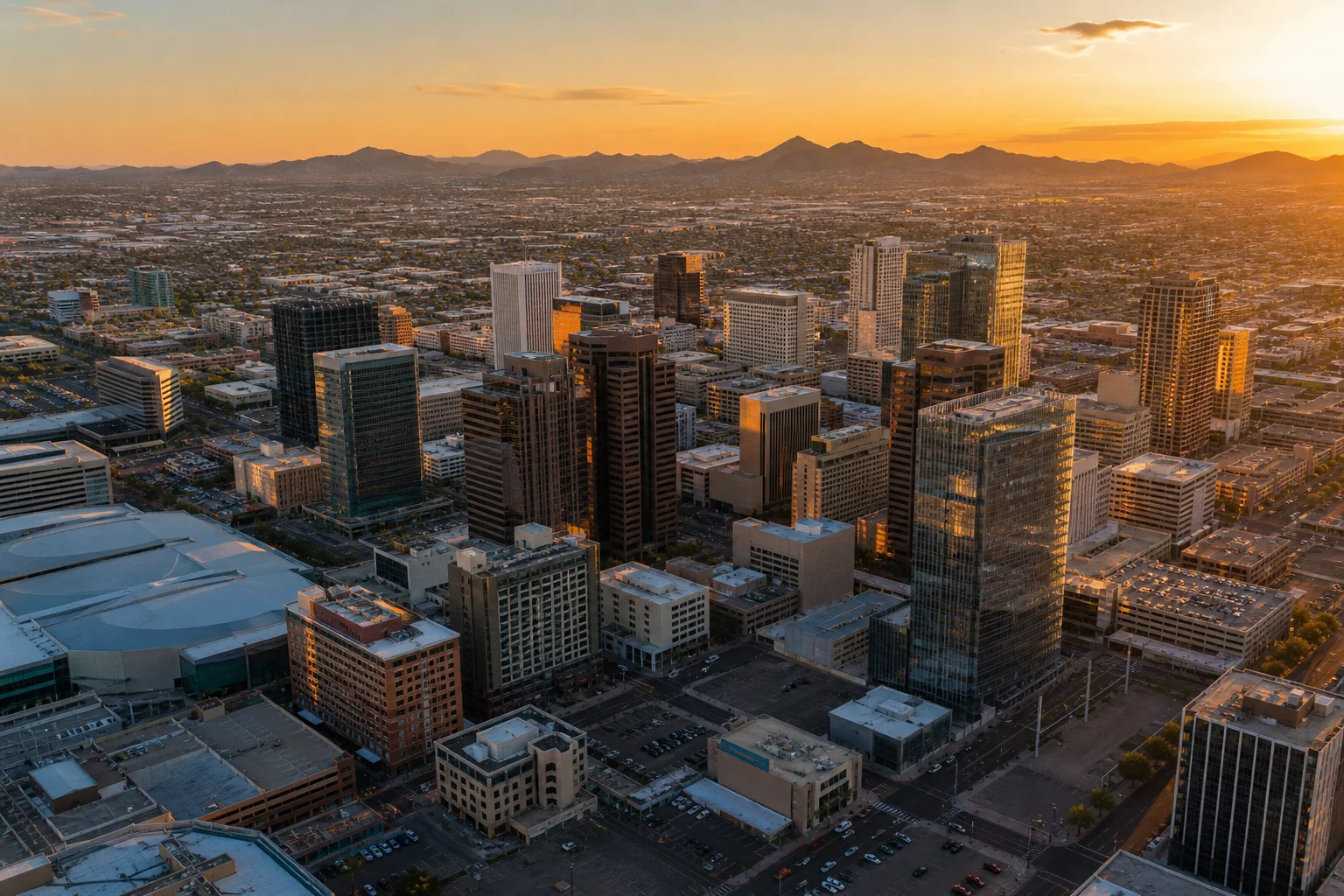
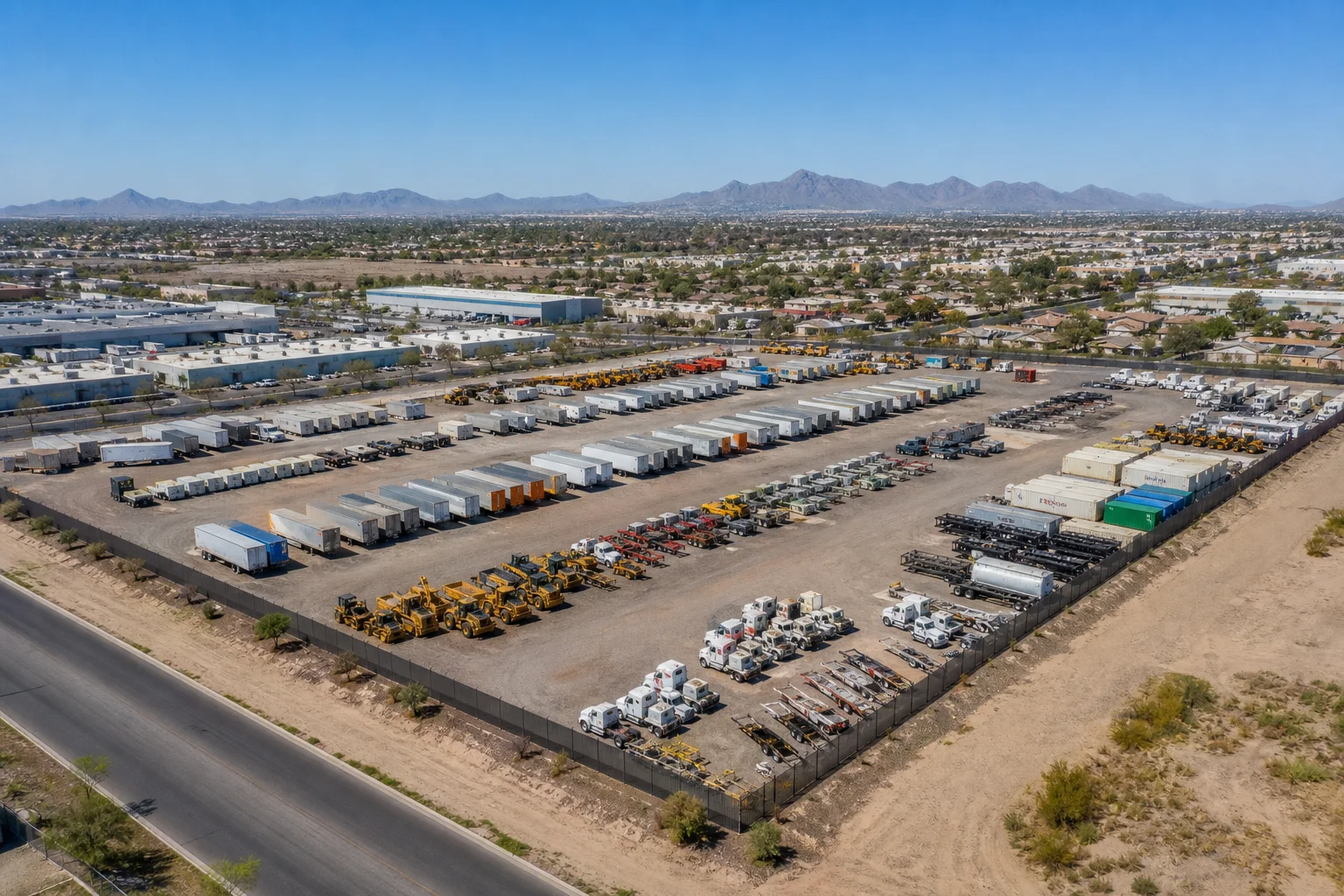
Industrial outdoor storage in Mesa has become one of the most sought-after and least available commercial real estate assets in the Phoenix metro. Demand from transportation operators, contractors, and fleet-dependent businesses has outpaced supply for several years, and structural zoning constraints show no sign of resolving the gap quickly.
By David Pierce, MHG Commercial
What Industrial Outdoor Storage Is and Why It Differs from Self Storage
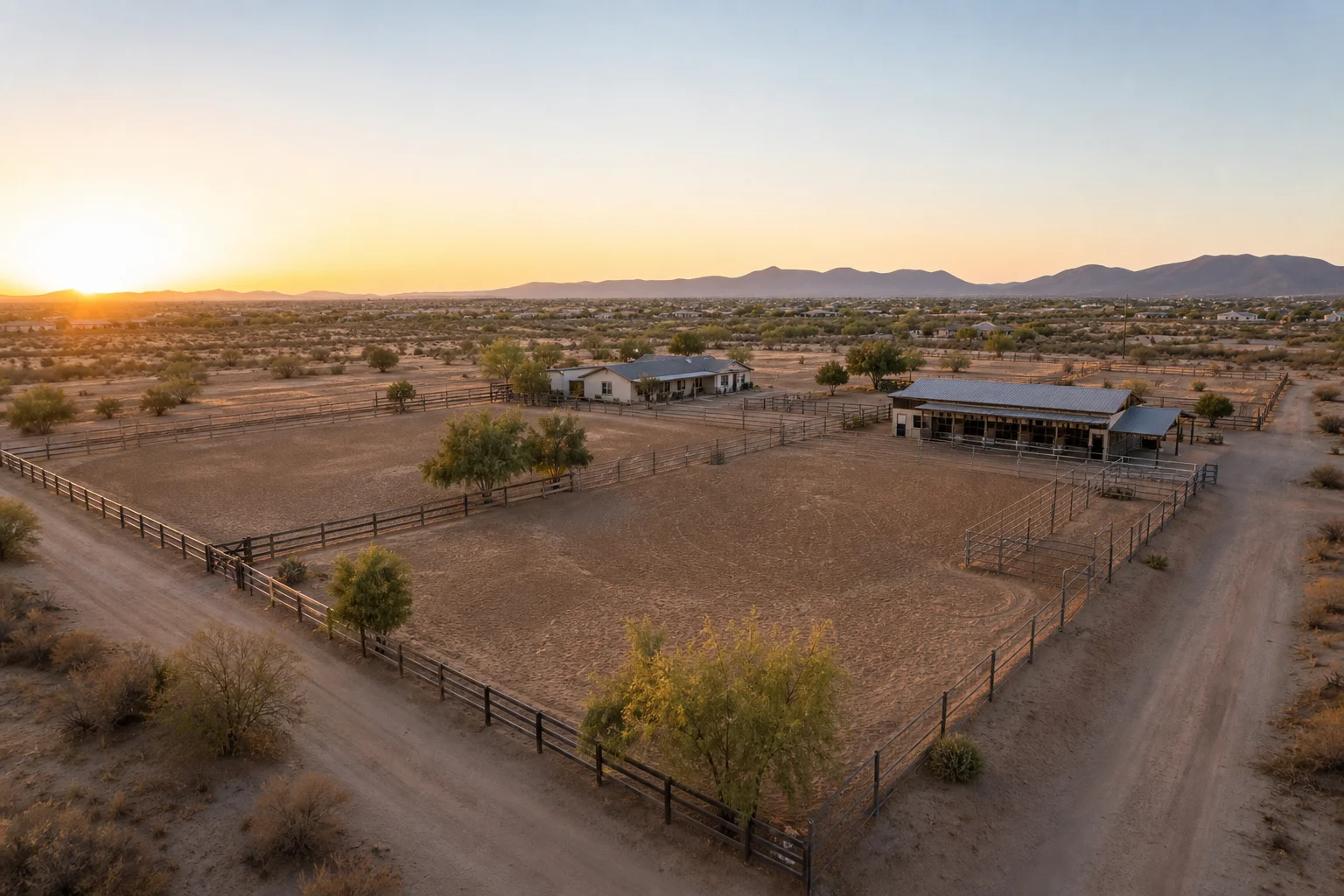
Industrial outdoor storage (IOS) is a property type that provides open-air yard space for commercial uses: trailer parking, heavy equipment staging, container storage, fleet vehicle housing, and bulk material staging. A typical site offers a secure perimeter, a graded or paved yard surface, commercial power access, and minimal enclosed building area.
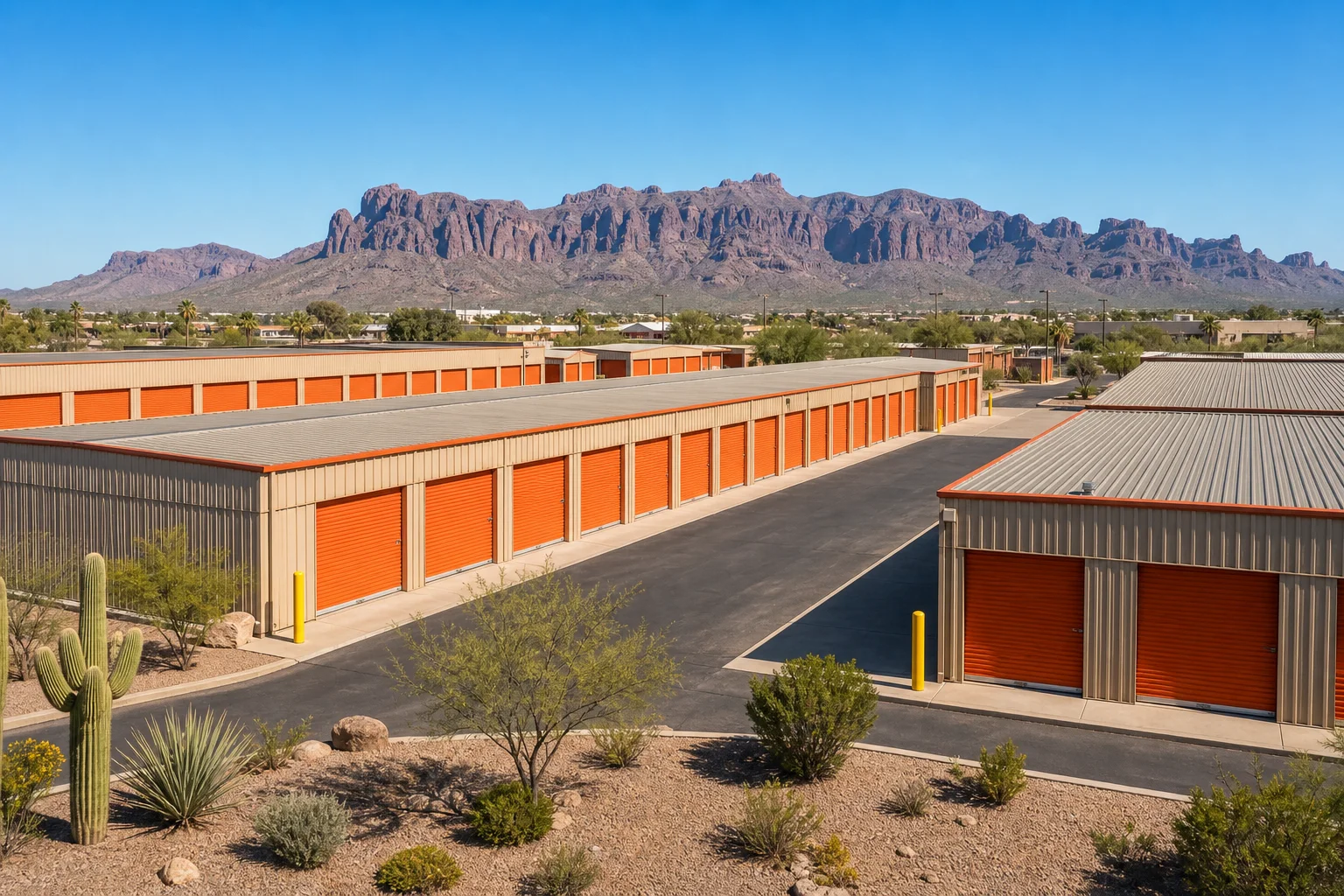
This is not the same as self storage. A self storage facility rents individual storage unit spaces for personal property, typically household goods or business records, on short monthly terms. IOS serves companies with active operational needs and commercial equipment that cannot move indoors. The distinction shapes zoning requirements, lease structures, and the economics of site acquisition in ways that make IOS considerably harder to locate and evaluate than conventional storage property.
Since before the first industrial revolution shifted how goods were manufactured and distributed, open land near transportation routes has been a core logistical asset. That history continues in modern form: today's IOS operators are the contemporary version, staging equipment and fleet close to the job sites and delivery corridors that drive their business.
Why Mesa Has Emerged as a Priority Market for Industrial Users
Mesa sits at a freeway crossroads that makes it one of the best-positioned markets in the East Valley for industrial users. US-60, Loop 202, and Loop 101 provide easy access to Tempe, Chandler, Gilbert, Scottsdale, and central Phoenix. For operators moving goods and heavy equipment across the metro daily, that connectivity translates directly into operational efficiency.
The city of Mesa has taken a business-friendly approach to industrial development in its Falcon Field corridor and Elliot Road Technology Corridor. Those areas have attracted manufacturing, logistics, and distribution users, which in turn increases demand for industrial outdoor storage in Mesa from contractors and service providers working on or near those facilities.
Population growth in the East Valley has driven construction activity at a sustained pace over the past 24 months. That activity requires contractors and utility companies to stage equipment and materials close to their job sites. The result is a deep pool of operators actively seeking outdoor space within practical distance of active work.
The Supply Shortage Keeping IOS Inventory Tight
If you read broker commentary on the Phoenix industrial market over the past 18 months, one theme appears consistently: industrial outdoor storage vacancy is not just low, it is structurally constrained in a way that normal market cycles do not quickly correct. Commercial real estate research from firms including CBRE and JLL has documented sustained East Valley industrial demand through 2023 and 2024, with the outdoor storage segment showing some of the tightest conditions in the metro.
Several factors drive this:
Residential absorption of buffer land. As Mesa and neighboring communities added housing, parcels at the urban-industrial fringe were absorbed into residential or mixed-use projects. The evolution of Mesa's urban core to include entertainment corridors, music venues, and dining districts along Main Street has accelerated this dynamic near the city center.
Limited entitlement pipeline. IOS did not attract institutional capital attention at the same rate as warehouse and distribution properties until recently. That meant few projects moved through the entitlement process during years when demand was building. Supply response requires a minimum of 12 to 18 months from site selection through permitting, site work, fencing, and certificate of occupancy. Projects entering the pipeline now will not deliver inventory until late 2027 at the earliest.
Sticky tenancy. Operators in this space invest in their locations and rarely vacate voluntarily. When a site does become available, it typically moves off-market before it appears online through any public listing platform.
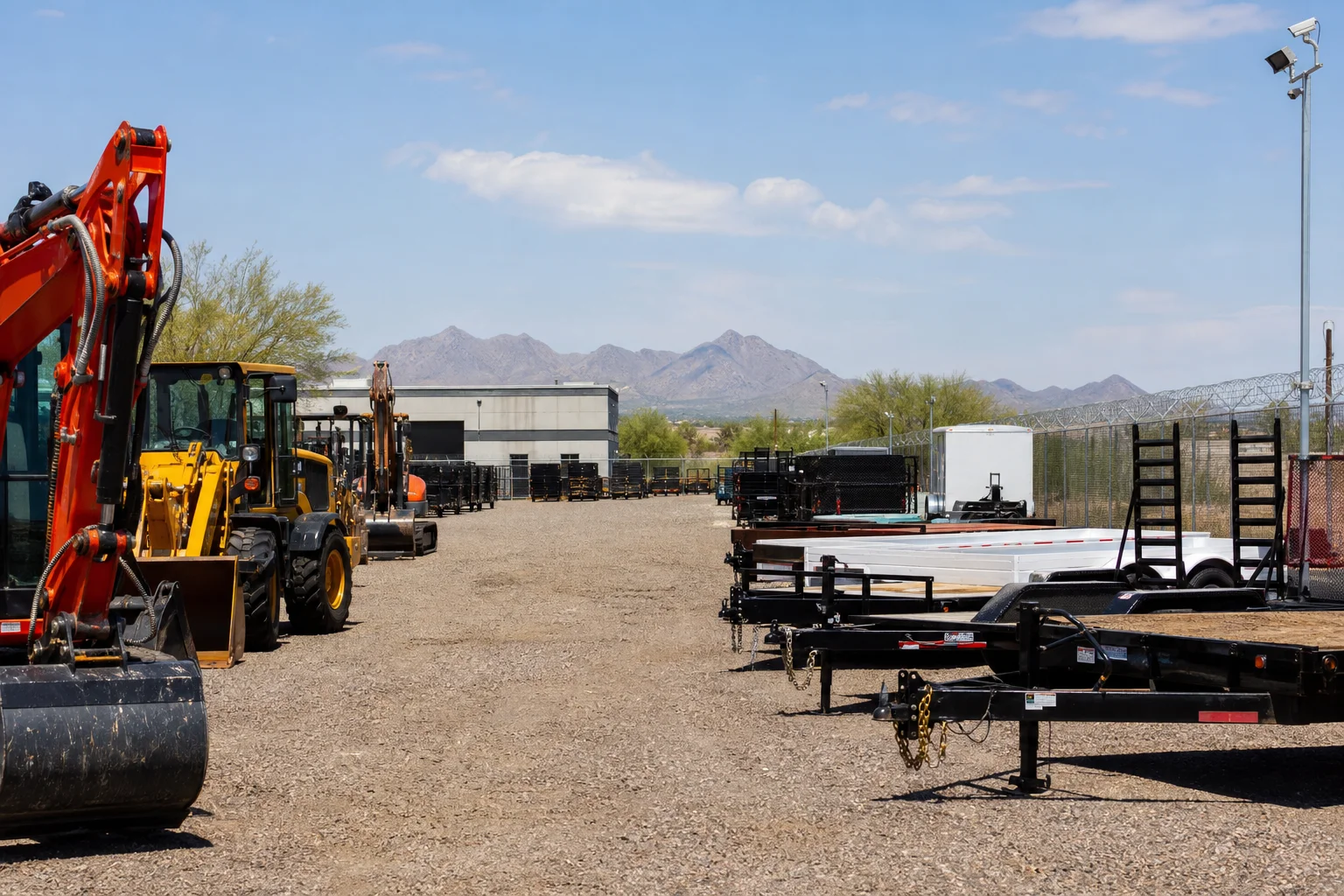
Evaluating Industrial Outdoor Storage in Mesa: Site Selection Criteria
When evaluating industrial outdoor storage in Mesa, the best sites share a consistent set of characteristics. Whether you are acquiring for investment or searching for operational space, these criteria determine whether a property can practically serve its intended use.
Usable acreage. IOS transactions typically begin at two to three acres. The usable footprint, after setbacks, easements, and any existing building area, determines real capacity for vehicle parking and equipment staging.
Zoning classification. Mesa's heavy industrial and general industrial designations are the most consistently applicable for IOS uses. Light industrial or general commercial parcels may not permit outdoor storage of heavy equipment or commercial vehicles as a matter of right. Confirming permitted uses is part of the process before any offer is made.
Access and turning radius. Easy entry for large trucks is an operational requirement. Gate width, turning space, and the condition of the approach from the nearest arterial road all affect whether a site is usable for the tenant types most likely to need it.
Ground surface. Gravel, compacted base, or paved surfaces affect cost to occupy and which tenant types a site can support. A native dirt yard may require substantial improvement before a container operator or equipment rental company can use it effectively.
Fencing and security. Perimeter fencing, lighting, and camera infrastructure are expected by most IOS tenants. The condition of existing security improvements directly affects time to occupancy and lease-up pace.
Zoning and Entitlement Realities in the East Valley
The entitlement process for IOS in the Phoenix metro reflects a regulatory history developed around conventional industrial uses rather than outdoor storage specifically. Mesa and surrounding municipalities have generally accommodated IOS within existing industrial zoning, but the rules are not uniform and the due diligence required to confirm permitted uses is not trivial.
Investors and tenants evaluating IOS sites in Mesa should verify:
- Whether outdoor storage of commercial vehicles and heavy equipment is permitted by right under the current zoning designation
- Whether a conditional use permit is required, and if so, what the approval timeline and conditions typically look like
- Whether the site has any recorded deed restrictions or overlay district requirements that limit outside storage visible from public rights-of-way
The revolution in industrial logistics, driven by e-commerce growth and distributed supply chains, has increased the volume of goods moving through Phoenix-area facilities. That activity has not yet produced a corresponding revolution in how municipalities code for outdoor industrial uses, which is part of why the gap between supply and demand persists.
Frequently Asked Questions
What is the typical lease term for industrial outdoor storage in Mesa?
IOS leases in the Phoenix metro typically run three to five years, often with renewal options. Shorter terms are possible for smaller sites but uncommon when tenants invest in site improvements. Operators with long-term needs prefer extended initial terms to protect their location and justify the cost of setting up operations.
How does IOS compare to self storage as an investment property?
Self storage generates revenue from individual storage unit rentals, typically on month-to-month terms, serving personal property needs. IOS produces income from commercial tenants with business-critical outdoor space requirements, often at higher per-acre rates with longer lease terms. Great customer service and responsive property management matter to IOS tenants, who depend on consistent gate access and site maintenance to run daily operations.
Is industrial outdoor storage appropriate for a 1031 exchange?
Yes. IOS qualifies as like-kind real estate under IRS Section 1031, making it a viable option for investors seeking to defer capital gains from the sale of another investment property. Strict timelines apply: 45 days to identify a replacement property and 180 days to close. A qualified intermediary must be engaged before sale proceeds are received.
What size sites are typical for IOS transactions in Mesa?
Most IOS transactions in the Phoenix metro involve sites ranging from two to 20 or more acres. The most common range for East Valley IOS is three to ten acres, depending on tenant profile and available land basis. Larger sites often accommodate multiple tenants or a single operator with extensive fleet and equipment inventories.
Why do IOS properties rarely appear on open listing platforms?
Because vacancy is low and demand is persistent, most IOS properties in Mesa change hands through direct broker relationships before a formal listing goes online. Owners in this space receive unsolicited inquiries from qualified tenants regularly. Active engagement with a broker who has direct relationships in the East Valley industrial market is the most reliable way to access available sites.
Connect with a Phoenix Commercial Real Estate Broker
Industrial outdoor storage in Mesa rewards preparation and direct market access. Sites that meet the criteria rarely stay available long, and the best transactions typically involve off-market conversations well before a property appears online. Contact our brokerage to discuss current East Valley IOS inventory, site selection priorities, and acquisition strategy for this asset class.