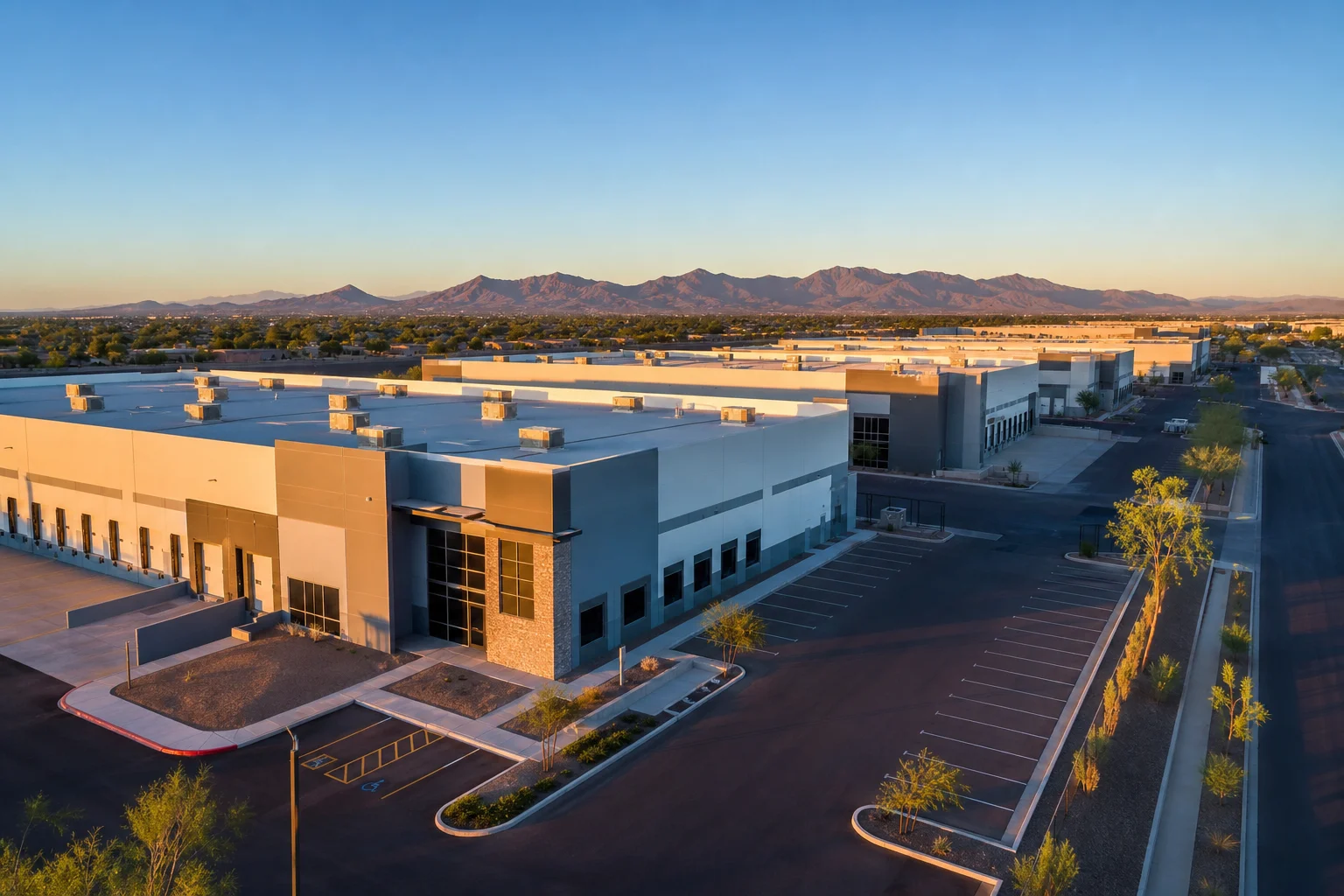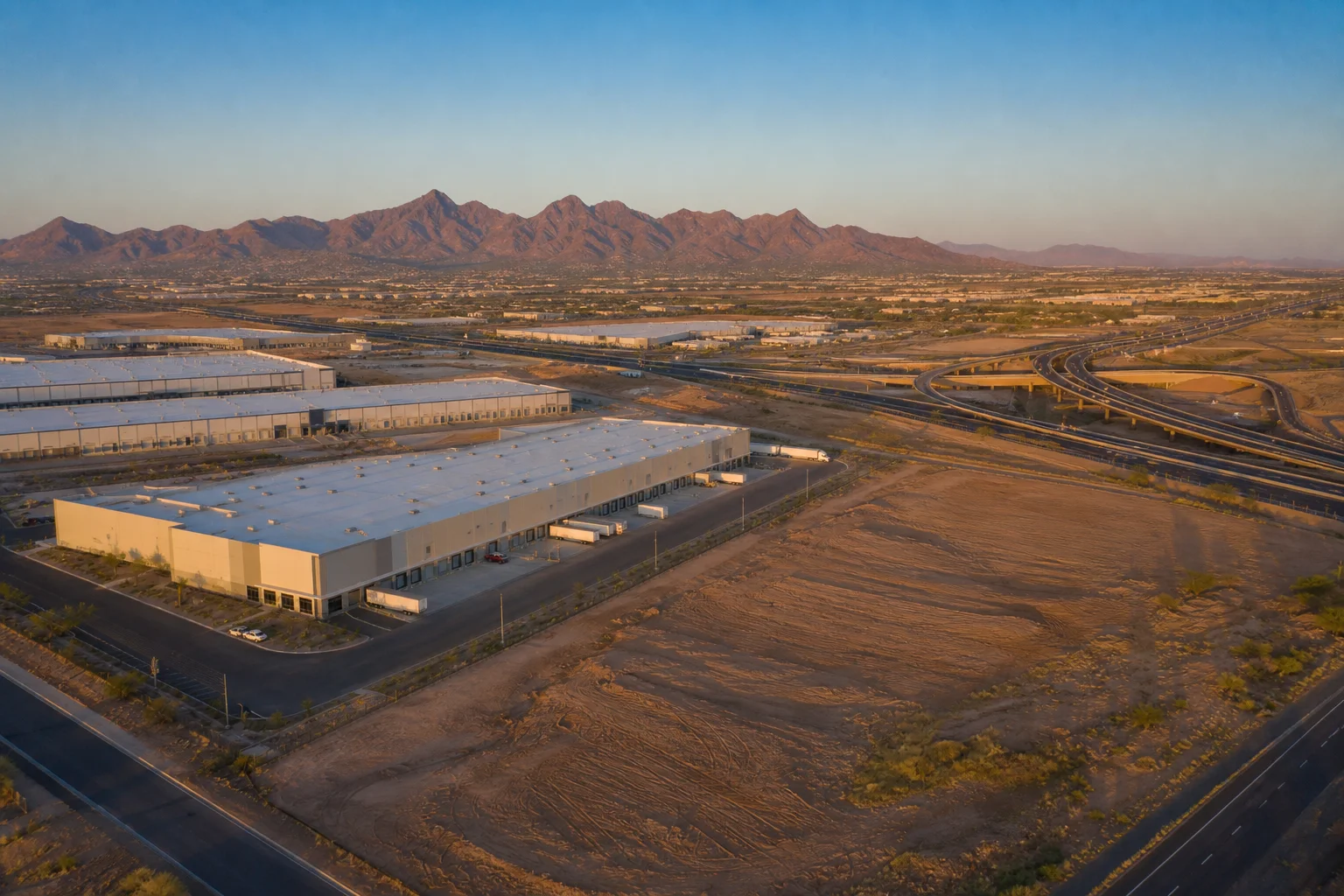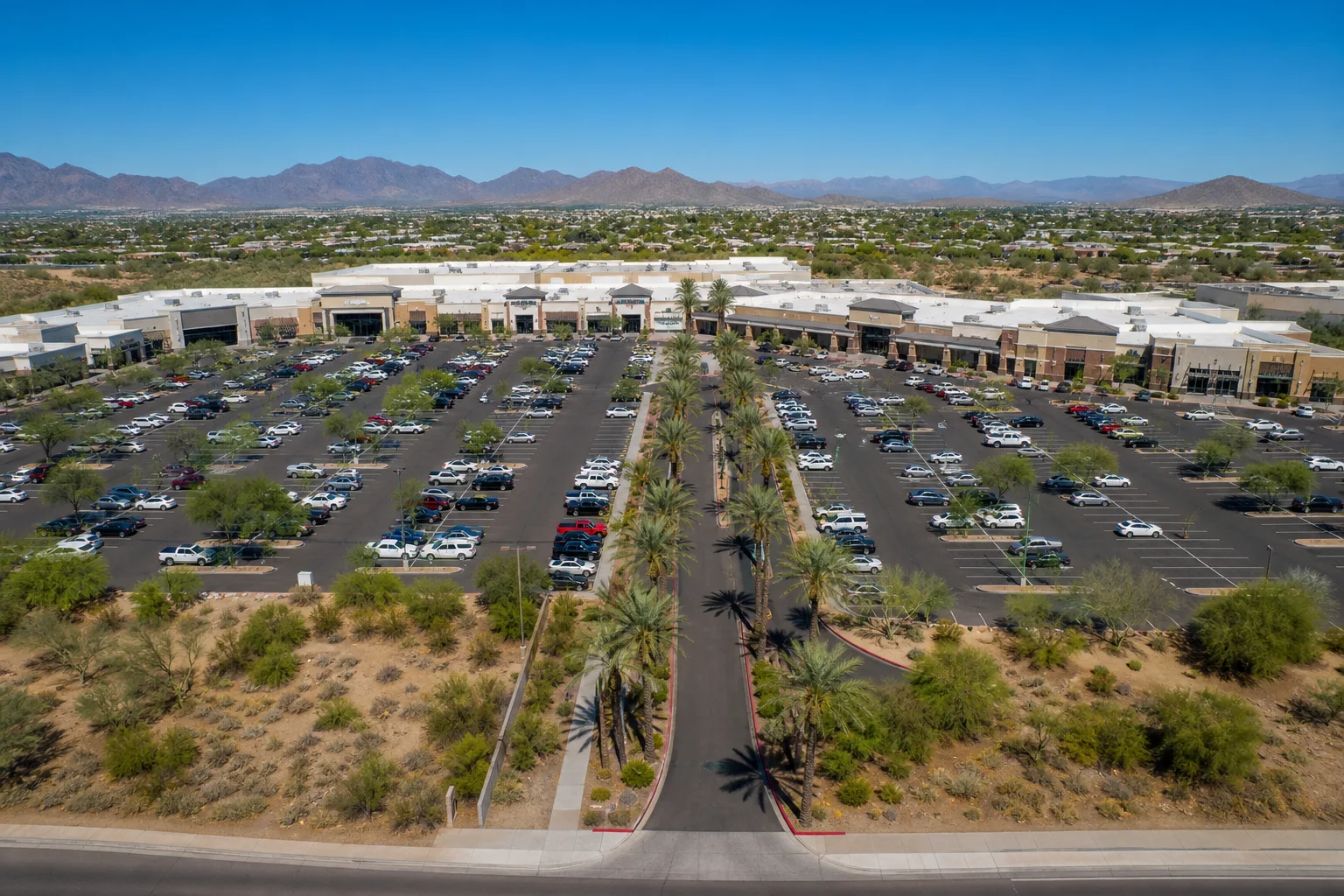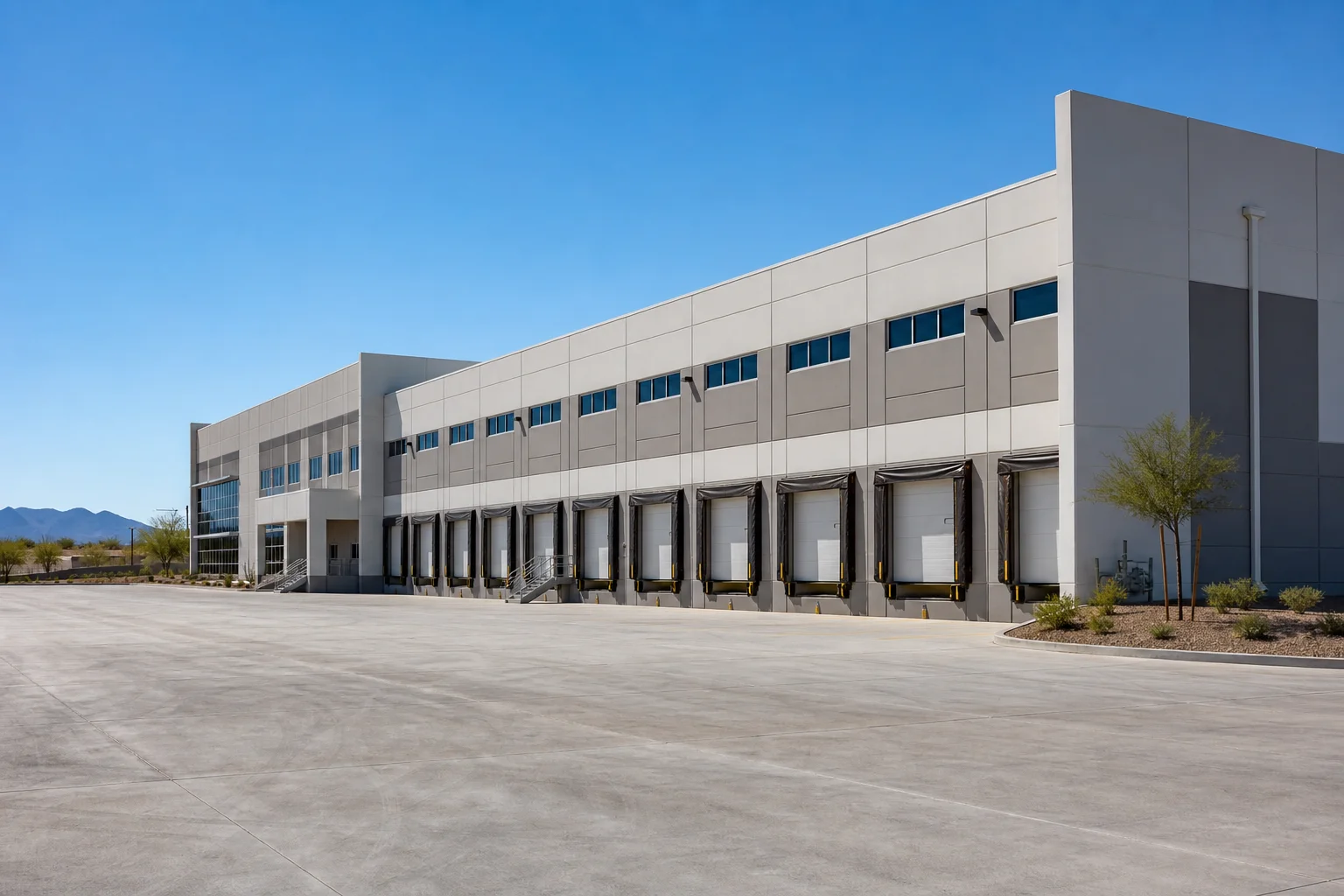
Phoenix's industrial market remains one of the most competitive in the Sun Belt, and finding the right industrial space for lease in Phoenix demands a clear picture of which corridors serve last-mile logistics, flex tenants, and bulk distribution. From the Deer Valley corridor in the north to Chandler and Tempe in the Southeast Valley, this guide covers the submarkets, what drives space rent, and the lease factors that matter before you commit.
By David Pierce, MHG Commercial
Why Phoenix Industrial Real Estate Continues to Attract National Capital
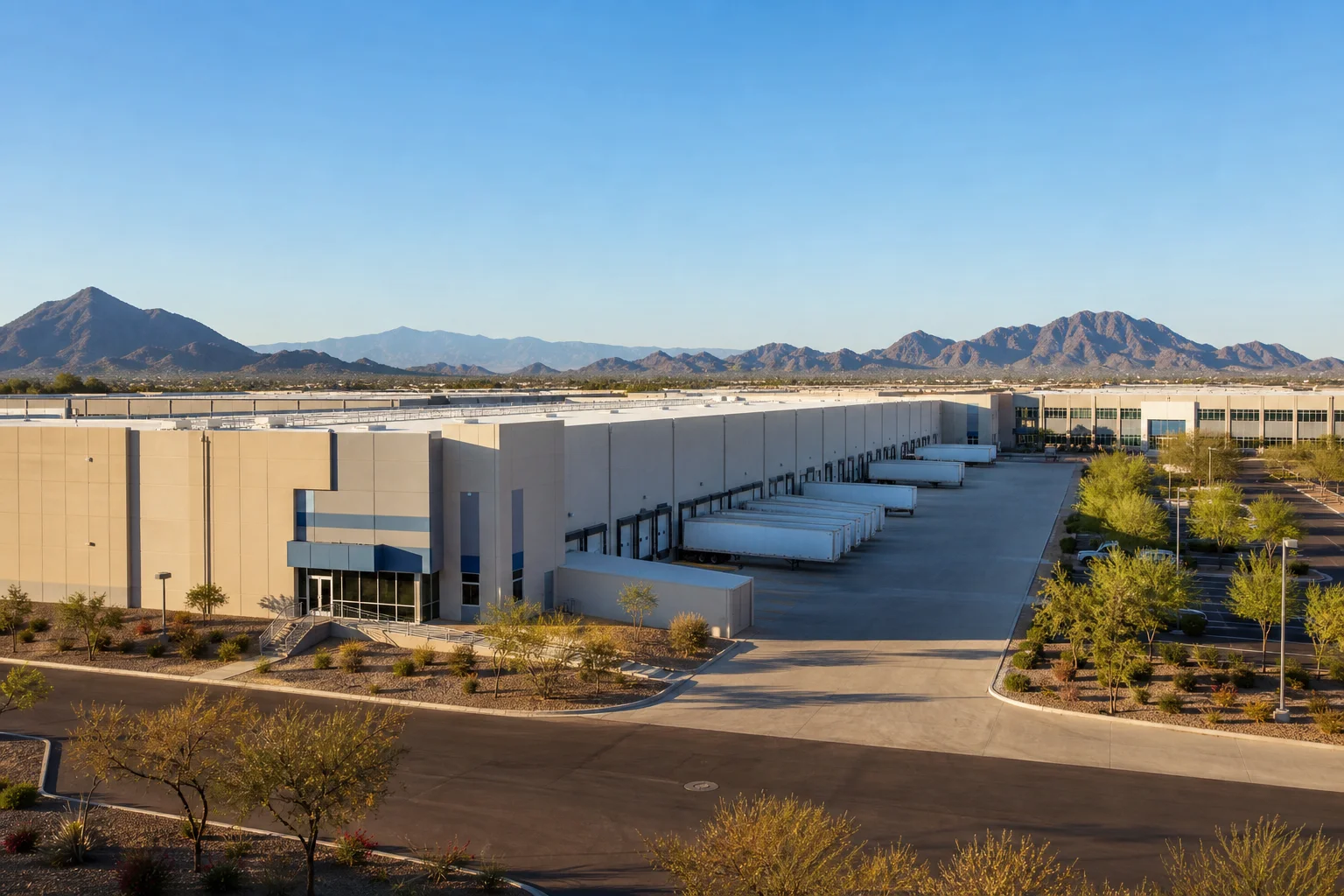
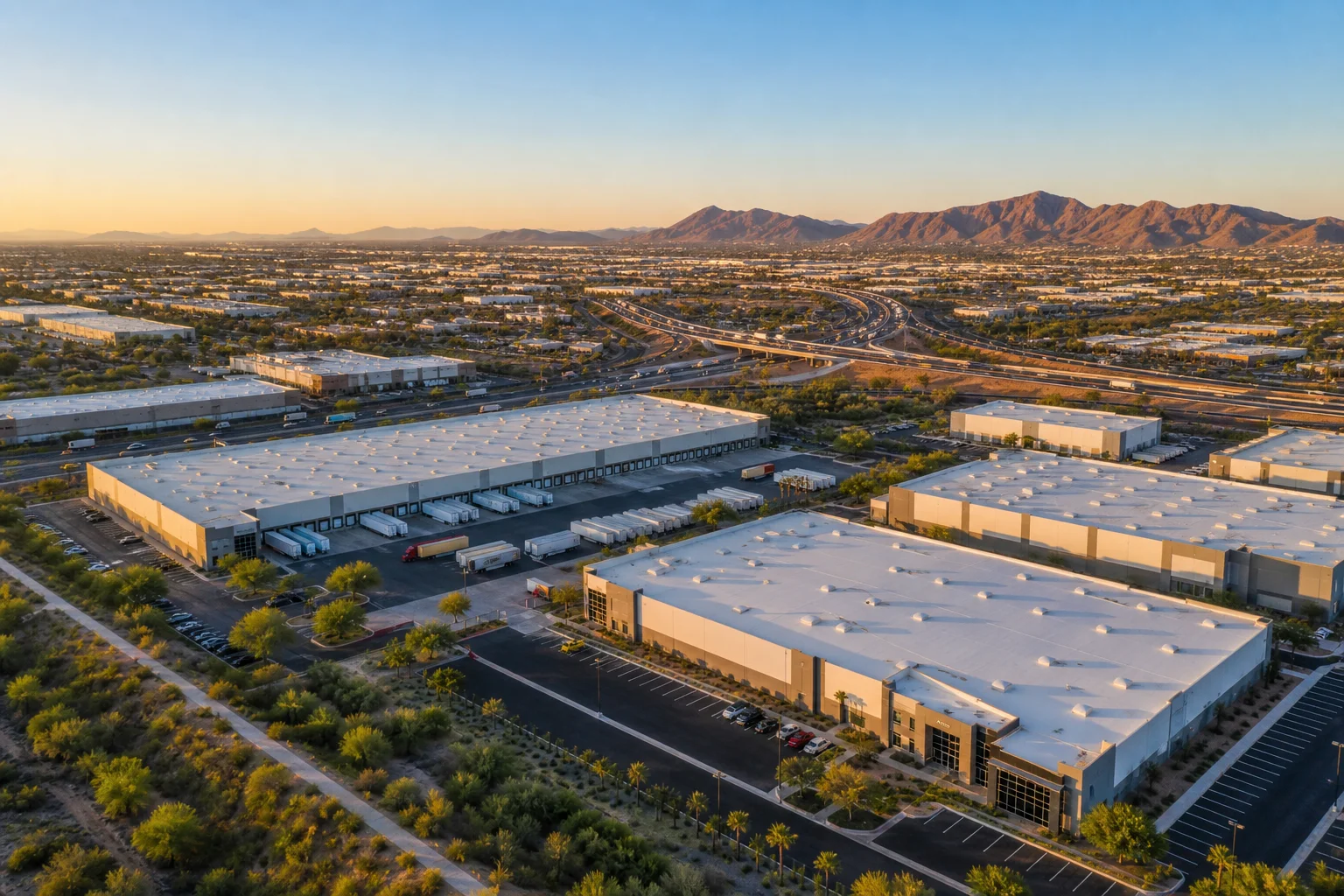
The Phoenix industrial real estate market has absorbed sustained investor and tenant demand through multiple economic cycles, a pattern rooted in geography, population growth, and supply chain restructuring. Phoenix, Arizona sits at the convergence of I-10, I-17, and I-40, making it a natural staging point for freight moving between California ports, Texas distribution hubs, and the broader Southwest.
According to CBRE's 2024 Phoenix Industrial MarketView, the metro recorded historically low vacancy rates through the delivery cycle, with new completions absorbed at a pace that kept available supply constrained relative to demand. Colliers International's 2023 Phoenix Industrial Report reinforced that picture, noting that net absorption outpaced deliveries in several submarkets for consecutive quarters.
For investors and owner-users evaluating commercial real estate positions in the region, the underlying demand drivers: population inflow from California and the Midwest, reshoring of semiconductor and manufacturing activity, and persistent e-commerce growth, show no near-term reversal.
Submarkets That Define the Phoenix Industrial Market
Phoenix industrial is not a uniform market. Each corridor has its own tenant profile, infrastructure quality, and typical space available at distinct price points.
Deer Valley and the North Phoenix Corridor
The Deer Valley submarket runs along I-17 north of Loop 101 and extends toward the Loop 303. It attracts light manufacturing, tech-adjacent logistics, and professional services tenants who need functional industrial square footage alongside proximity to Scottsdale's professional labor pool. Warehouse space in this corridor commonly ranges from 20,000 to 200,000 square feet, with flex space well represented among smaller bay products. Space rent here has historically tracked at a modest premium to the metro average, reflecting the labor and access advantages.
Sky Harbor and the Airport Corridor
The area immediately surrounding Phoenix Sky Harbor International Airport supports time-sensitive freight and logistics tenants for whom airside proximity justifies a higher occupancy cost. Industrial space in this corridor commands above-market space rent per square foot because of limited land availability and direct access to the airport's cargo infrastructure. Vacancy rates in this submarket typically run well below the broader Phoenix industrial average.
Southeast Valley: Chandler, Gilbert, and Tempe
Chandler and Gilbert have become the preferred address for semiconductor supply chain, advanced manufacturing, and precision industrial users. The TSMC fab campus and its supplier ecosystem have intensified competition for industrial real estate across this corridor, compressing space available at any given time. Tenants looking for industrial space for lease in Phoenix near these facilities should engage a broker early, as qualified product often leases before it reaches broad market exposure.
What Separates Flex Space from Traditional Warehouse Space
Flex space occupies the operational middle ground between office and heavy industrial. A standard flex building in the Phoenix metro offers clear heights of 16 to 24 feet, a mix of dock-high and grade-level doors, and a dedicated office or showroom component, typically 10 to 30 percent of total square footage, that is climate-controlled and finished to commercial office standards.
For small and mid-size businesses, flex space solves a genuine problem: the need for a professional customer-facing environment alongside functional warehouse square footage, without leasing two separate units. Distribution companies, medical device and diagnostics firms, technology services companies, and light assembly operations are consistent users of flex product across the Phoenix area.
Space rent for flex space runs higher on a per-square-foot basis than bulk warehouse space because of the dual-use build-out cost and the smaller bay sizes that typify flex parks. Tenants should budget accordingly and verify that the office-to-warehouse ratio matches their actual operational mix before executing a letter of intent.
Last-Mile Logistics and the Distribution Tenant Landscape
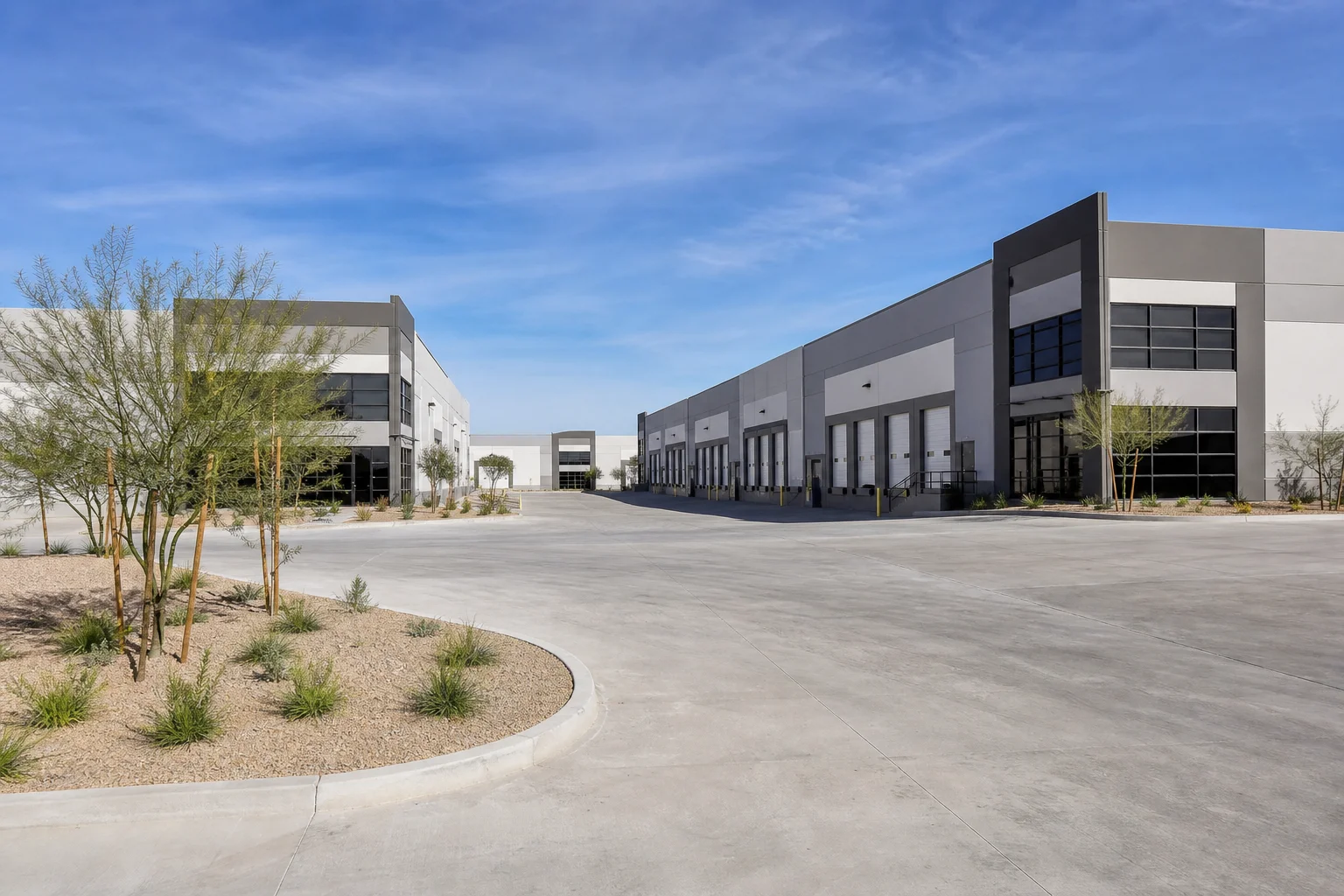
Last-mile logistics has fundamentally shifted how distribution tenants evaluate warehouse space. Rather than optimizing purely for building size and dock count, last-mile operators weigh proximity to residential population density, freeway on-ramp access, and local labor availability at scale.
In the phoenix industrial market, last-mile demand concentrates in infill locations near major population cores: west Phoenix along I-10, the Tempe and Chandler corridor, and increasingly in north Scottsdale and the Cave Creek Road industrial parks. These positions allow delivery operators to reach the bulk of the metro area within a 30-minute drive window, which is the operational benchmark for same-day and next-day parcel programs.
Warehouse space in true infill corridors tends to be older product with clear heights of 18 to 24 feet, but tenants accept those trade-offs for the locational advantage. New Class A distribution space at comparable infill positions is rare and commands a meaningful premium in space rent over suburban alternatives. Tenants with flexibility on timing are sometimes better served by pre-leasing space in planned projects rather than competing for existing availabilities.
Lease Structure Factors That Affect Total Occupancy Cost
Industrial real estate leases involve more moving parts than a headline rental rate. Several structural variables materially affect total occupancy cost and should be evaluated before any space is shortlisted.
Clear Height: Modern distribution and logistics operations typically require 28 to 36-foot clear height for efficient racking utilization. Many legacy Phoenix industrial buildings cap at 18 to 24 feet, which directly limits pallet positions per square foot and throughput capacity.
Power Infrastructure: Advanced manufacturing, cold storage, and data-intensive users require three-phase power with adequate amperage. Confirming existing electrical capacity against projected load before the letter of intent stage avoids renegotiation costs later.
Dock and Grade Door Ratio: The proportion of dock-high doors to grade-level drive-in doors determines which tenant types can operate efficiently in a given building. Distribution-heavy users prioritize dock-high access; fleet service, retail fulfillment, and light industrial tenants often prefer grade-level configuration.
NNN Lease Structure: Industrial leases in Phoenix are predominantly triple-net. Tenants pay base rent plus their pro-rata share of property taxes, insurance, and common area maintenance. The full cost stack, not just the quoted space rent per square foot, is the number that belongs in your underwriting.
Tenant Improvement Allowance: Landlord-funded TI has become a negotiating variable in larger transactions. In a tighter market, TI allowances compress. Understanding current market norms for TI by submarket and building class is one area where a broker with active deal flow adds direct economic value.
Frequently Asked Questions
What does industrial space for lease in Phoenix typically cost per square foot?
Space rent varies by submarket, building class, clear height, and lease structure. Flex space consistently runs higher per square foot than bulk distribution space because of the dual-use build-out. Published averages from CBRE and Colliers lag real-time conditions by one to two quarters. For current pricing in a specific corridor, a broker tracking live transactions will give you a more accurate number than any published report.
What is the difference between flex space and warehouse space in the Phoenix market?
Flex space combines industrial square footage with a finished office or showroom component, usually 10 to 30 percent of the building, and features lower clear heights and mixed door configurations. Warehouse space is optimized for storage and throughput: higher ceilings, more dock doors, and minimal office build-out. Rental rates, tenant profiles, and typical lease terms differ meaningfully between the two product types.
How do I assess vacancy rate data for a specific Phoenix industrial submarket?
CBRE, JLL, and Colliers publish quarterly industrial vacancy data broken out by submarket, including Deer Valley, Sky Harbor, and the Southeast Valley. Because reported vacancy reflects deals that have already closed, pairing published data with a broker who tracks space available in real time gives the most accurate picture of current conditions. Vacancy rate reporting also excludes sublease space, which can represent meaningful opportunity in certain corridors.
What should I understand about space rent before comparing Phoenix industrial properties?
Space rent is only one line of your occupancy budget. Under a triple-net lease, tenants pay property taxes, insurance, and common area maintenance in addition to base rent. Requesting a full operating cost estimate that includes all pass-through charges, not just the quoted rent per square foot, is the only way to make an accurate apples-to-apples comparison across competing spaces in the phoenix area market.
Is there quality industrial real estate available for last-mile distribution in the Phoenix area?
Yes, though supply at infill locations with modern specifications is constrained. Last-mile operators lease industrial space actively across infill Phoenix, Tempe, and west Phoenix along I-10. Competition for well-located space available at functional clear heights is significant, and quality product often leases quietly before it reaches broad listing exposure. Engaging a broker with real-time market access is the most direct path to identifying options before they are absorbed.
Talk to a Phoenix Industrial Real Estate Specialist
If you are evaluating industrial space for lease in Phoenix for last-mile logistics, flex operations, or regional distribution, Pierce CRE at MHG Commercial brings active transaction knowledge across every major Phoenix industrial submarket. Contact our brokerage to discuss your square footage requirements, submarket priorities, and timeline.