


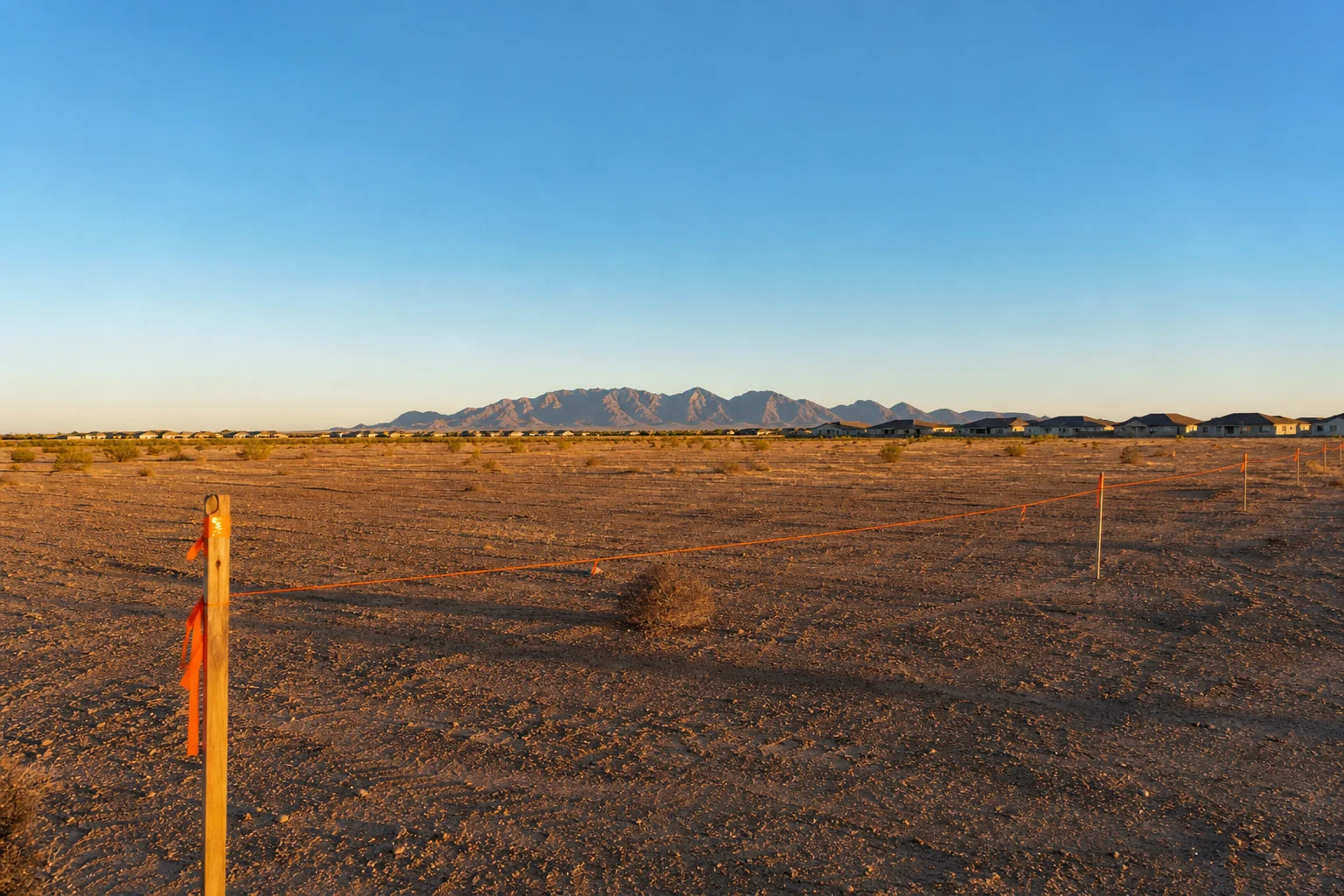
Entitling a raw parcel in Queen Creek turns undeveloped dirt into a buildable site with an approved zoning designation, a recorded plat, and utility commitments in hand. For investors working through land brokerage deals in this corridor, the rezoning path is the single biggest driver of timeline, cost, and eventual value.
By David Pierce, MHG Commercial
What Entitling a Raw Parcel in Queen Creek Actually Involves
Raw land has no development rights beyond whatever the county or municipal zoning code allows on paper. Entitlement is the legal and administrative process that converts that raw parcel into a property with an approved use, a recorded plat, and confirmed utility service. In Queen Creek, that means moving a parcel through the town's General Plan review, a formal rezoning application, site plan approval, and often a development agreement before a single foundation gets poured.
Most buyers underestimate how much of a deal's value sits inside this process rather than the dirt itself. A parcel zoned for agriculture and a similar parcel entitled for retail or industrial use can carry very different prices, even sitting on the same road. The gap is the entitlement work, and it is the reason experienced investors buy raw parcels ahead of the rezoning rather than after.
Queen Creek's Zoning Framework and General Plan Consistency
Queen Creek zones land under its own municipal code, separate from Maricopa or Pinal County designations that may still apply to a parcel before annexation. The town's General Plan lays out where it wants retail corridors, industrial sites, and residential growth to land over the next several decades, and every rezoning request gets measured against that document first.
A rezoning application that conflicts with the General Plan's land use map faces a steeper climb, even if the market clearly supports the requested use. Planning staff will flag the inconsistency early, and council members tend to defer to the plan unless the applicant can show why circumstances have changed since it was adopted. Confirming General Plan consistency before writing an offer on a raw parcel is one of the fastest ways to avoid a wasted entitlement budget, and it gives investors a clearer view of what density the site can actually support.
The Rezoning Process, Step by Step
Every parcel entitlement in Queen Creek runs through a similar sequence, though timelines shift depending on the requested use and how much public comment a project draws.
Pre-Application Meeting and Site Analysis
Before filing, an applicant meets with planning staff to walk through the parcel's zoning history, access points, and any known constraints: floodplain, easements, or adjacent land uses. This meeting produces the first real details on what the town will and will not support, and it shapes the site plan long before formal submission.
Formal Application and Staff Report
The applicant submits a rezoning application, a narrative, and supporting exhibits. Staff reviews the request against the General Plan and prepares a report with a recommendation for the Planning and Zoning Commission. This report becomes the backbone of the public record and the document council members read before their own vote.
Public Hearing and Council Vote
The Commission holds a public hearing, takes comment from neighboring property owners, and forwards a recommendation to the Town Council. Council holds its own hearing and votes to approve, deny, or approve with conditions. Conditions of approval, things like landscaping buffers, traffic improvements, or use restrictions, get recorded against the property and run with the land regardless of who owns it later.
Infrastructure and Utility Access Before You Buy
Zoning approval only solves half the problem. A parcel can carry the right zoning designation and still be undevelopable if water, sewer, and power are not available at the property line. Queen Creek has grown fast enough that infrastructure capacity varies block to block: some corridors have full utility access ready for immediate connection, while others require the buyer to fund line extensions before a permit gets pulled.
Before closing on any raw parcel, confirm what infrastructure actually reaches the site: water meter size and availability, sewer connection points, road access and any required right-of-way dedication, and power capacity for the intended use. A civil engineer's utility availability letter is worth more at this stage than any broker's assurance, and it should be pulled before earnest money goes hard.
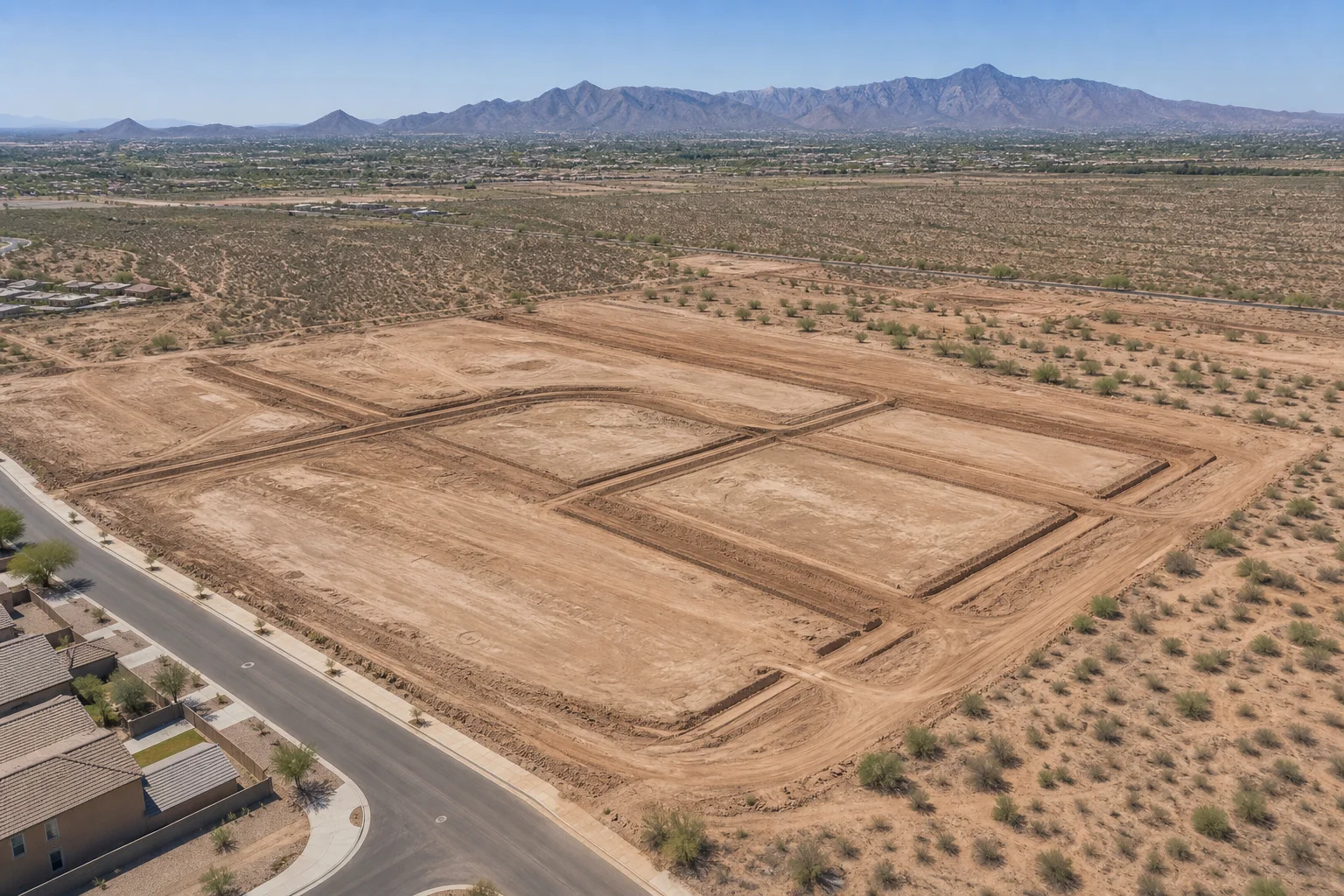
Lot count and site layout also depend on these findings. A parcel that looks like it supports a full run of residential lots on a plat map may support fewer once required detention basins, access easements, and utility corridors get carved out for future homes. Run the numbers with a civil engineer before the entitlement application locks in a site plan, not after.
Timeline, Carrying Costs, and Financing During Entitlement
Entitling a raw parcel in Queen Creek is as much a financing exercise as a zoning exercise, since the holding period has to be funded somehow. Entitlement typically runs several months to over a year depending on the complexity of the request and how much public comment the project draws. That holding period carries real cost: property taxes, loan interest if the parcel was financed, and the opportunity cost of capital that is not yet producing income.
Financing a raw parcel through entitlement looks different than financing a stabilized property. Lenders view unentitled land as higher risk since there is no guaranteed use or income stream, which typically means shorter loan terms, higher rates, and larger equity requirements. Some investors structure a purchase with an extended due diligence or entitlement contingency period specifically to keep control of the process without committing full capital until zoning is secured.
Investing in raw parcels ahead of entitlement means underwriting both the zoning outcome and the holding period. Investors comparing raw parcels across the Phoenix market should model the entitlement timeline into their return assumptions rather than treating it as a rounding error. A parcel that closes with zoning already in hand commands a premium precisely because it removes this holding cost and uncertainty for the next buyer.
Building the Right Team for a Queen Creek Entitlement
Successful entitlement work depends on assembling the right partners early: a land use attorney familiar with Queen Creek's council and planning staff, a civil engineer who can produce accurate utility and grading studies, and a broker who tracks available parcels, recent rezoning outcomes, and comparable properties that have already cleared entitlement across the corridor.
This is also where a new development strategy gets built or broken. A parcel entitled for the wrong use, or entitled without input from the end builder, often needs a second rezoning before it works for its eventual buyer, whether that buyer is building a single home or a full subdivision. Involving a developer or end user in the entitlement application, even informally, tends to produce a more marketable property than entitling speculatively and hoping demand catches up.
Real estate investors who have worked through supply constraints in other Phoenix submarkets recognize the pattern in Queen Creek: available raw parcels are shrinking as residential and industrial development fills in the corridor, and land that clears entitlement now holds a scarcity value that raw, unzoned dirt does not.
Frequently Asked Questions
How long does it take to entitle a raw parcel in Queen Creek? Timelines vary by use and complexity, but most rezoning requests run several months from pre-application meeting to council vote. Projects with significant public comment, infrastructure gaps, or General Plan inconsistencies can extend well past a year. Building a realistic timeline into your financing and carrying cost model before closing avoids surprises mid-process.
Can I buy a raw parcel in Queen Creek before it is zoned for my intended use? Yes, and many investors do, often with a due diligence or rezoning contingency built into the purchase contract. This structure lets the buyer control the parcel and begin the entitlement process without paying full price for land that has not yet cleared zoning. A land use attorney can help structure the contingency correctly.
What is the difference between annexation and rezoning? Annexation brings a parcel into Queen Creek's town limits and under its municipal zoning code, typically from county jurisdiction. Rezoning changes the use designation on a parcel already inside the town. Some parcels require both steps in sequence before a site plan can move forward.
Does entitled land in Queen Creek sell for more than raw, unzoned land? Generally yes. Entitled parcels remove the buyer's zoning risk and holding cost, which typically shows up as a price premium compared to raw land carrying the same underlying use potential. The exact premium depends on the strength of the entitlement, market demand for the approved use, and how much work remains before construction.
Do entitlement conditions transfer if the parcel is sold? Yes. Conditions of approval, site plan requirements, and any development agreements are recorded against the property itself, not the original applicant. A new owner inherits both the approved zoning and any conditions attached to it, which is why reviewing the full entitlement record is a required step before purchase.
Talk to a Queen Creek Land Broker Before You Buy
Entitlement risk is easiest to manage before a purchase closes, not after. Contact our brokerage to review available parcels in Queen Creek and the zoning path each one still needs to clear.