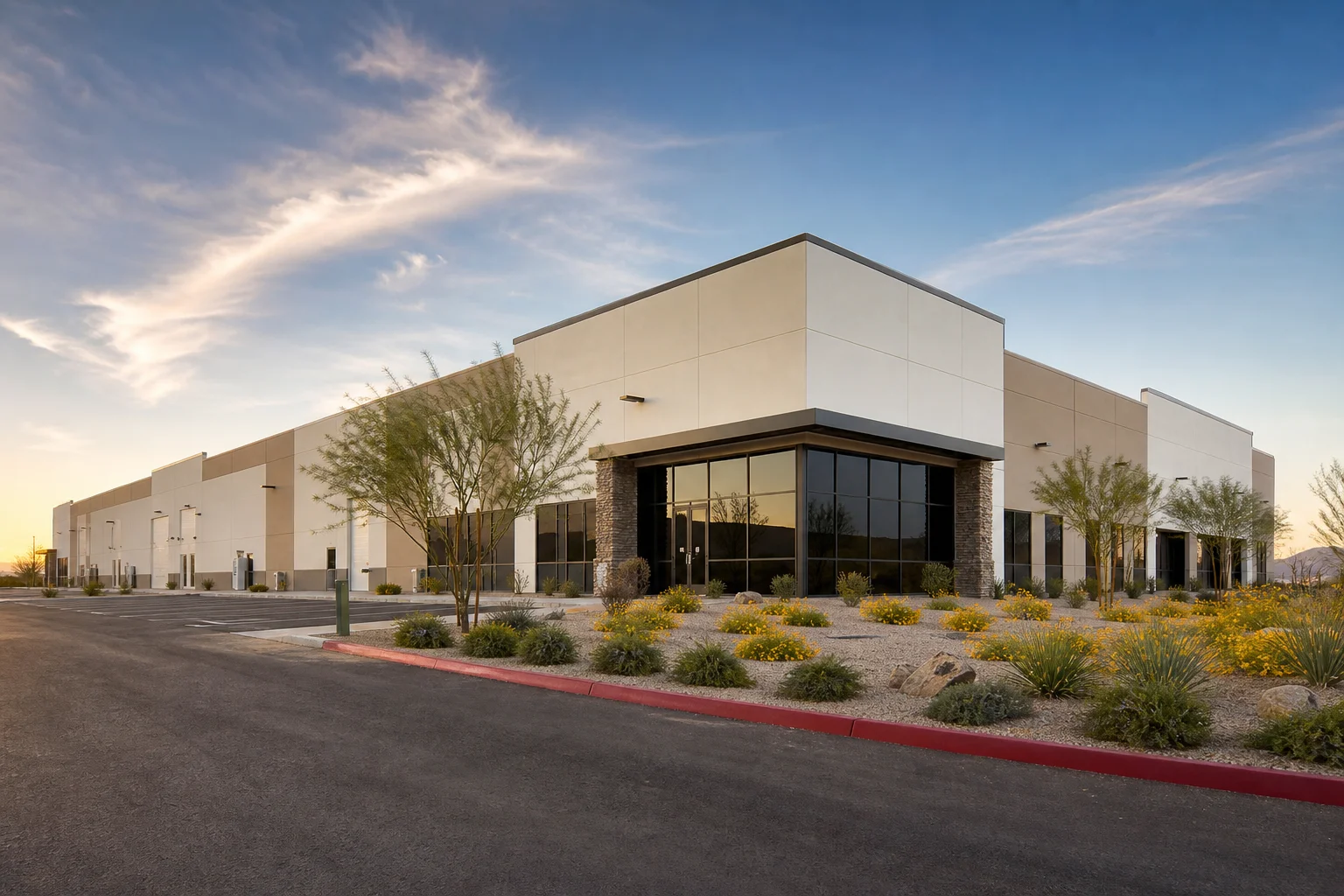
Medical office building investing in the Gilbert and San Tan health corridor positions capital at the intersection of Phoenix's strongest suburban growth market and a documented national shift toward outpatient care delivery. With Mercy Gilbert Medical Center and Terraza Medical Village anchoring clinical demand, this East Valley corridor presents commercial real estate fundamentals grounded in population growth and tenant durability.
By David Pierce, MHG Commercial
Why the East Valley Health Corridor Commands Medical Office Investor Attention
Gilbert and the broader San Tan area have undergone sustained residential and commercial expansion that has pulled healthcare services outward from central Phoenix. The U.S. Census Bureau confirmed Gilbert among the fastest-growing cities in Arizona across the 2010 to 2020 decade, a trajectory that has carried into the mid-2020s as new housing communities continue to develop east of the Loop 202 freeway.
That population growth directly drives demand for healthcare services, including primary care, specialty care, behavioral health, and ancillary health services. Those demand categories translate into sustained tenant interest in purpose-built clinical real estate. In commercial real estate markets, healthcare tenants occupy a distinct position: they sign longer initial leases, invest heavily in tenant improvements that make relocation expensive, and rarely vacate well-located space at the end of a term without compelling reason.
CBRE's Healthcare Real Estate Outlook, published annually and most recently updated in 2024, documented that medical office buildings nationally have maintained lower average vacancy rates than general office markets across multiple economic cycles. The East Valley, with its concentrated population growth and hospital anchor presence, has tracked that national pattern.
Medical Office Buildings as a Distinct Commercial Real Estate Asset Class
A medical office building requires infrastructure that generic office building space does not. Enhanced electrical capacity to support imaging and diagnostic equipment, reinforced flooring for radiology suites, clinical plumbing at procedure rooms and nursing stations, and HVAC systems designed to meet healthcare infection control standards represent capital investments that go well beyond standard commercial real estate tenant improvements.
Those infrastructure costs are largely absorbed by tenants, not property owners, which creates a structural dynamic favorable to investors. A specialty group that has invested in a procedure room buildout or an imaging suite is not going to relocate without absorbing significant replacement cost. That relocation friction is one of the fundamental reasons medical office buildings command investor interest across commercial real estate markets.
JLL's Healthcare Real Estate Perspectives, a recurring publication covering outpatient real estate trends, has noted that medical office properties adjacent to major hospital campuses consistently absorb faster than off-campus medical office properties in the same markets. The mechanism is straightforward: hospital systems generate referral traffic that fills nearby outpatient space, creating a tenant pipeline that conventional office markets do not have access to.
Population Growth and the San Tan Demand Thesis
The Maricopa Association of Governments tracks population and employment data across the Phoenix metro, and East Valley cities including Gilbert, Chandler, and Queen Creek have consistently appeared at the top of its growth projections for the 2020 to 2040 planning window. A growing residential base generates proportional demand for health services, which in turn generates demand for the office building space required to deliver those services at scale.
What distinguishes the Gilbert and San Tan health corridor from other East Valley commercial real estate submarkets is the intentional clustering of clinical infrastructure. Rather than dispersed medical office development, this corridor has seen the emergence of planned health centers and medical office parks proximate to its hospital anchor. That clustering benefits investors through cross-referral economies among tenants and through the patient flow the anchor institutions bring to the area.
Ambulatory surgery centers, diagnostic imaging centers, and outpatient specialty clinics have each expanded their footprints in this corridor as healthcare providers follow the population growth and seek adjacency to the hospital campuses that generate consistent referral volume.
Terraza Medical Village and Mercy Gilbert as Corridor Anchors
Two institutions define the clinical gravity of this market. Mercy Gilbert Medical Center, operated by Dignity Health, functions as the primary acute care anchor for Gilbert and a significant share of the San Tan patient population. Hospital-adjacent commercial real estate has historically benefited from the referral networks those institutions generate, a relationship documented in CBRE's repeated analysis of medical office absorption patterns across suburban markets.
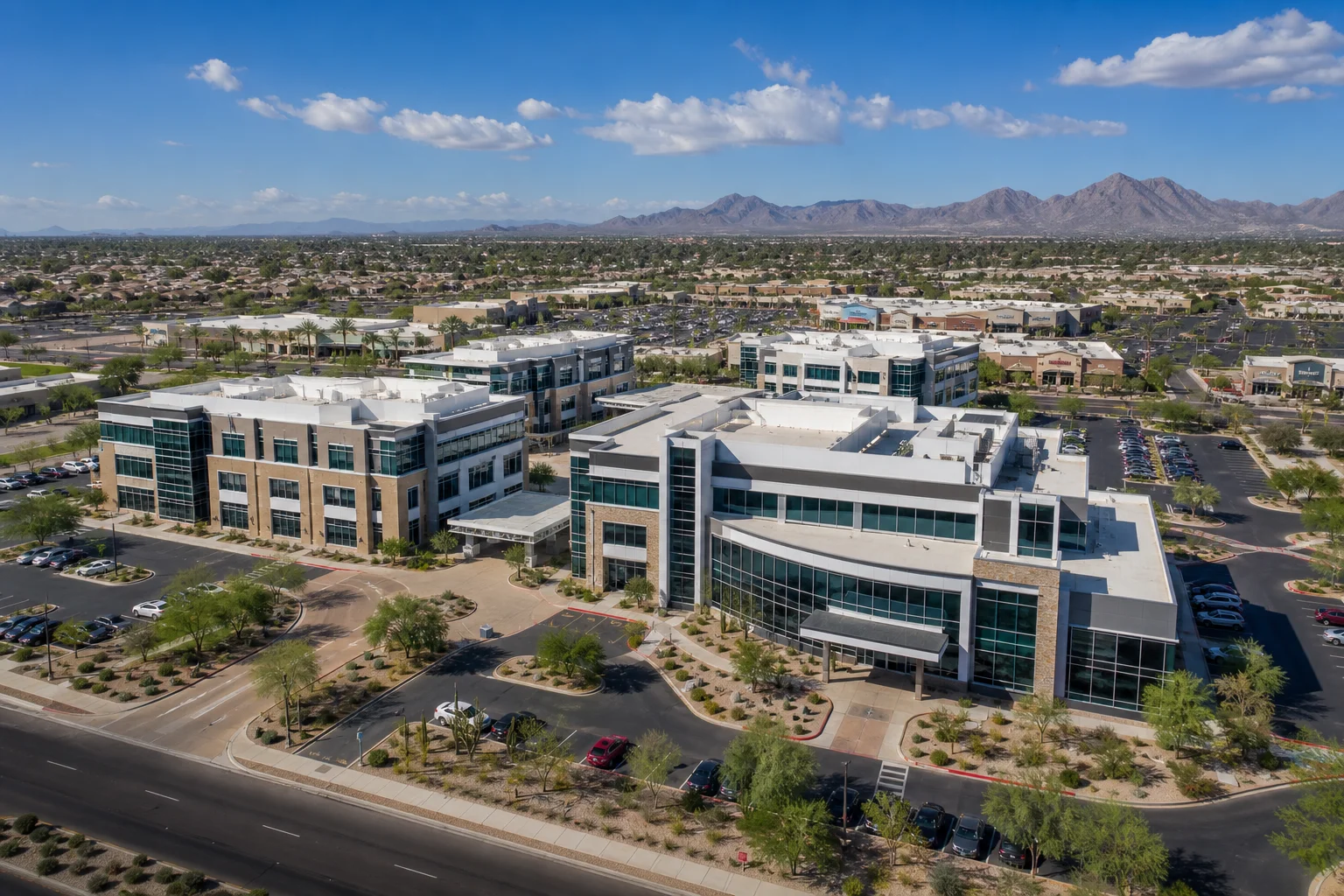
Terraza Medical Village is a multi-building medical office campus developed to serve the patient population proximate to Mercy Gilbert Medical Center. It houses a range of specialty practices across multiple buildings in a campus environment that supports access for both patients and providers. For investors evaluating medical office building opportunities in the East Valley, Terraza Medical Village represents the existing supply benchmark for this corridor: what purpose-built, anchor-proximate clinical real estate looks like at scale in this market.
The value of anchor proximity is not speculative. Properties within the referral geography of Mercy Gilbert and Terraza Medical Village have demonstrated faster tenant absorption and stronger lease renewal rates than comparable medical office building inventory positioned farther from the anchor cluster. That geographic premium is central to the investment thesis for medical office building investing in the Gilbert and San Tan health corridor, and it aligns with JLL's national research on hospital-adjacent outpatient real estate performance.
Due Diligence for Medical Office Building Investing in the Gilbert and San Tan Health Corridor
Underwriting a medical office building in the East Valley requires attention to factors that differ materially from standard commercial real estate acquisition due diligence.
Tenant credit quality. Healthcare tenants range from hospital systems carrying investment-grade credit to independent specialty practices that carry the credit profile of small businesses. That mix affects income stability and available financing terms in any medical office building acquisition, and it should be mapped against the rent roll before any offer is structured.
Infrastructure condition and capacity. Clinical buildouts age differently than standard office finishes. Electrical capacity, plumbing, and HVAC systems supporting clinical use require thorough assessment before close. An imaging suite that has operated for a decade may have infrastructure constraints that limit re-tenanting flexibility and affect the property's repositioning value.
Lease rollover concentration. A building with multiple lease expirations clustered in the same two-year window represents meaningful occupancy risk. Stagger analysis across the rent roll is a standard component of medical office underwriting in this market and any comparable commercial real estate setting.
Zoning and use entitlement. Not all commercial zones in Gilbert and the San Tan area permit every type of clinical use. Behavioral health, substance use treatment programs, and certain ancillary health services face additional regulatory scrutiny. Confirm entitlement for the intended use before committing capital to any property in this corridor.
Evaluating Submarket Position Within the East Valley
The Gilbert and San Tan health corridor is not a single-price market. A property positioned two blocks from Mercy Gilbert Medical Center commands different rent and occupancy dynamics than a multi-tenant building situated several miles east in the San Tan Village area. Understanding where a specific property sits relative to the anchor cluster, the trade area population density, and the competitive medical office supply pipeline requires granular local knowledge that regional data alone does not supply.
CBRE's 2024 Healthcare Real Estate Outlook documented that medical office vacancy nationally remained below general office vacancy, but localized supply additions in growing suburban markets can create short-term headwinds in specific nodes of the East Valley. Investors should conduct a property-level competitive supply analysis for the specific trade area they are underwriting rather than relying on corridor-wide metrics. The existing inventory in this market is not uniform, and the quality of a property's location within the anchor geography is a primary determinant of long-term performance.
Frequently Asked Questions
What makes a medical office building different from a standard office building for investment purposes?
A medical office building requires clinical-grade infrastructure that standard office building space does not, including enhanced electrical capacity, clinical plumbing, and healthcare-grade HVAC systems. Tenants absorb significant capital to build out that infrastructure, which creates substantial relocation friction. Those factors contribute to longer lease terms and lower vacancy rates compared to conventional commercial real estate office properties.
Is the Gilbert and San Tan health corridor still absorbing new medical office supply?
The corridor has demonstrated consistent absorption driven by East Valley population growth and the referral networks of Mercy Gilbert Medical Center and Terraza Medical Village. Investors should review the current competitive supply pipeline for their specific submarket radius rather than relying on corridor-wide trends, as absorption conditions vary meaningfully across different nodes of the East Valley.
What lease terms are typical for medical office tenants in this market?
Medical office leases in the Phoenix metro, including the East Valley and San Tan corridor, typically run five to ten years on initial terms with renewal options built in. Those longer lease periods reflect the capital investment tenants make in clinical buildouts and are a defining characteristic of the investment thesis for medical office building acquisitions in this market.
What are the primary risks in medical office building investing in this corridor?
Tenant credit concentration, infrastructure obsolescence, lease rollover clustering, and zoning constraints for certain healthcare uses represent the primary risks. Location relative to the Mercy Gilbert and Terraza Medical Village anchor cluster is a key variable: properties outside the referral geography of those anchors typically show weaker absorption and higher re-tenanting costs across the East Valley market.
How does a 1031 exchange apply to medical office building acquisitions?
A medical office building qualifies as like-kind replacement property under Internal Revenue Code Section 1031, which broadly covers commercial real estate held for investment or productive business use. Standard qualified intermediary timelines and identification rules apply. Investors should work with a qualified intermediary and a tax advisor before structuring any exchange involving commercial property in Arizona.
Partner with a Commercial Real Estate Specialist in the East Valley
Medical office building investing in the Gilbert and San Tan health corridor represents one of the more data-grounded opportunities in the Phoenix metro, and the right acquisition depends on submarket-level knowledge that goes beyond published market reports. Contact our brokerage to discuss current inventory, off-market opportunities, and how this corridor aligns with your investment criteria.