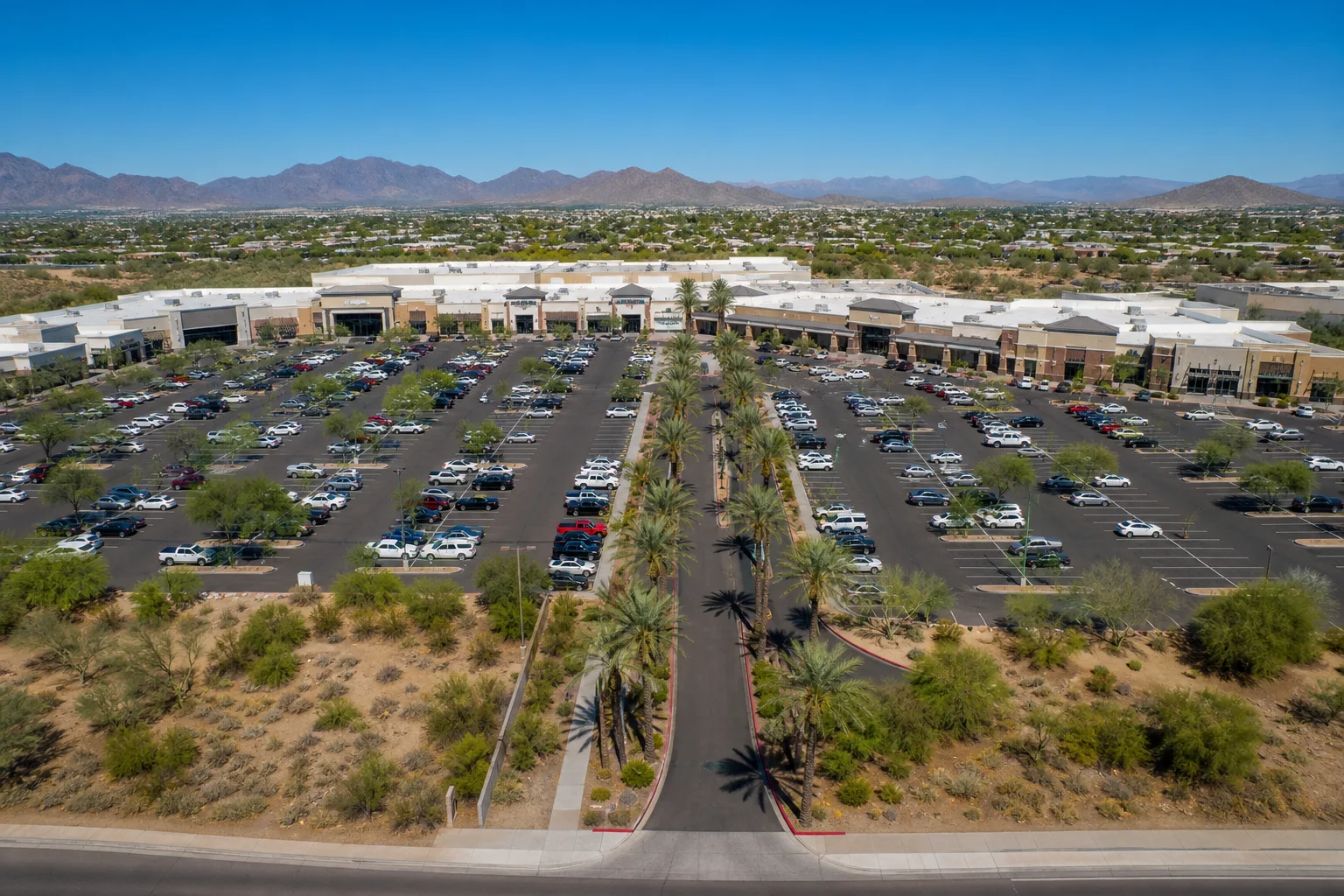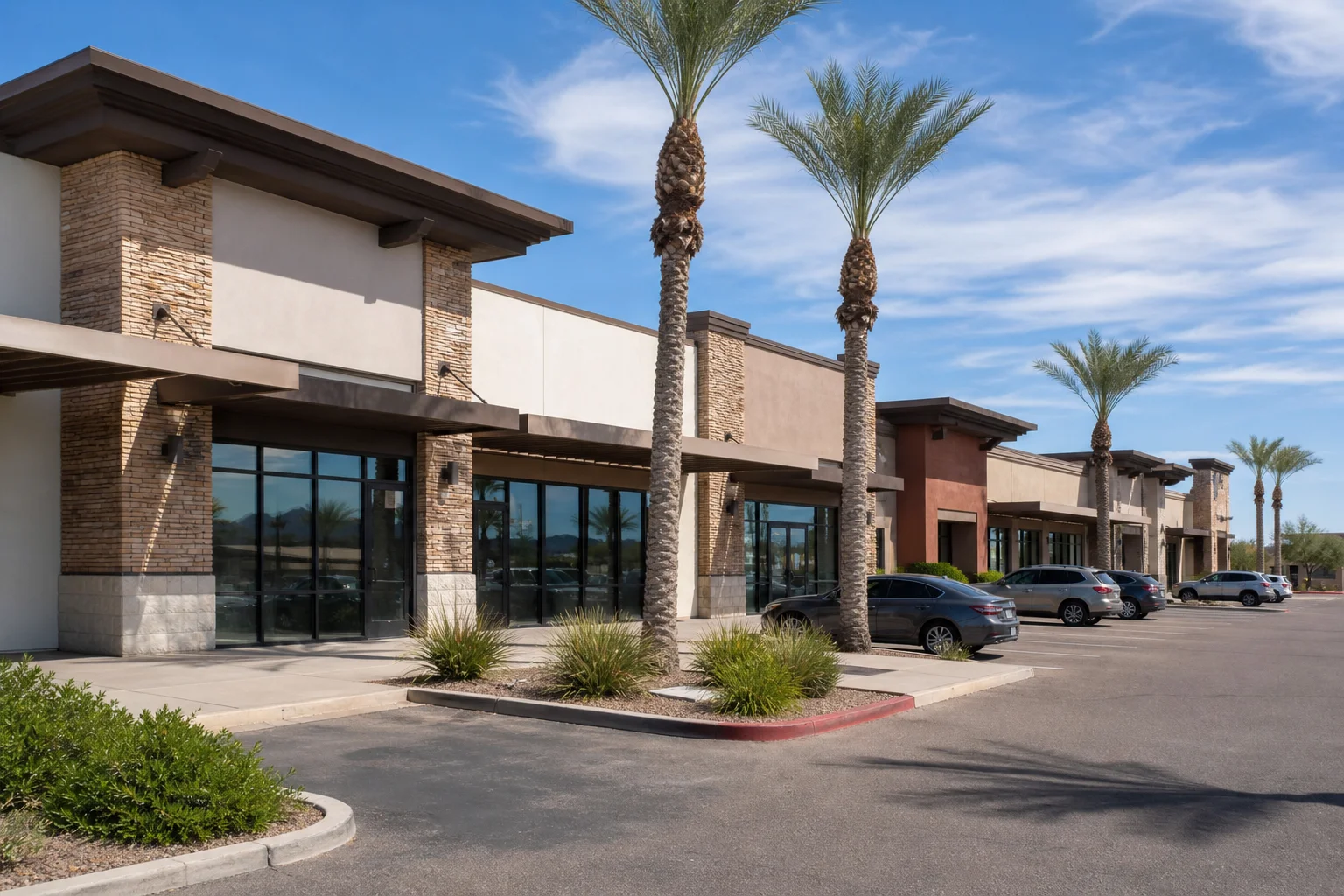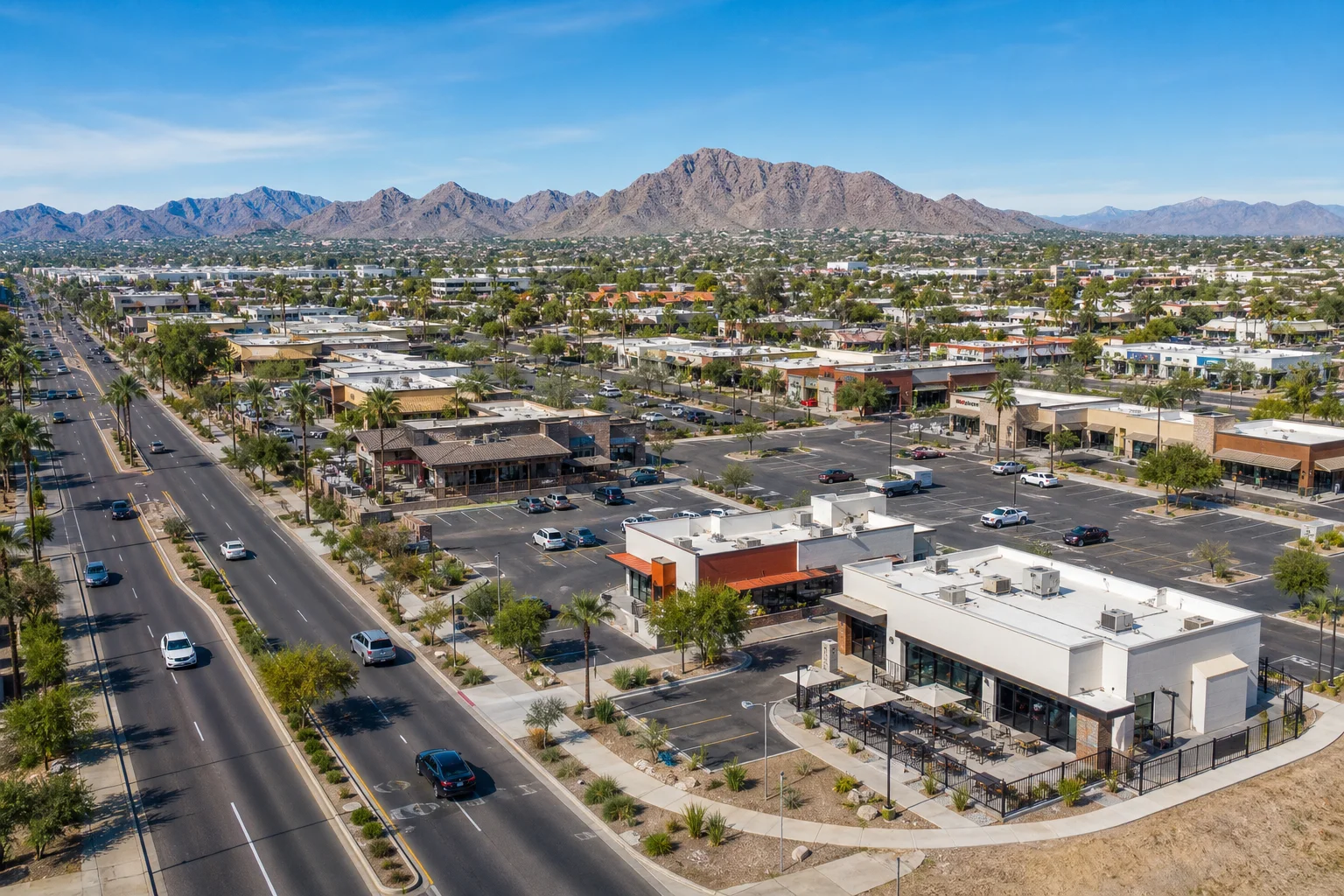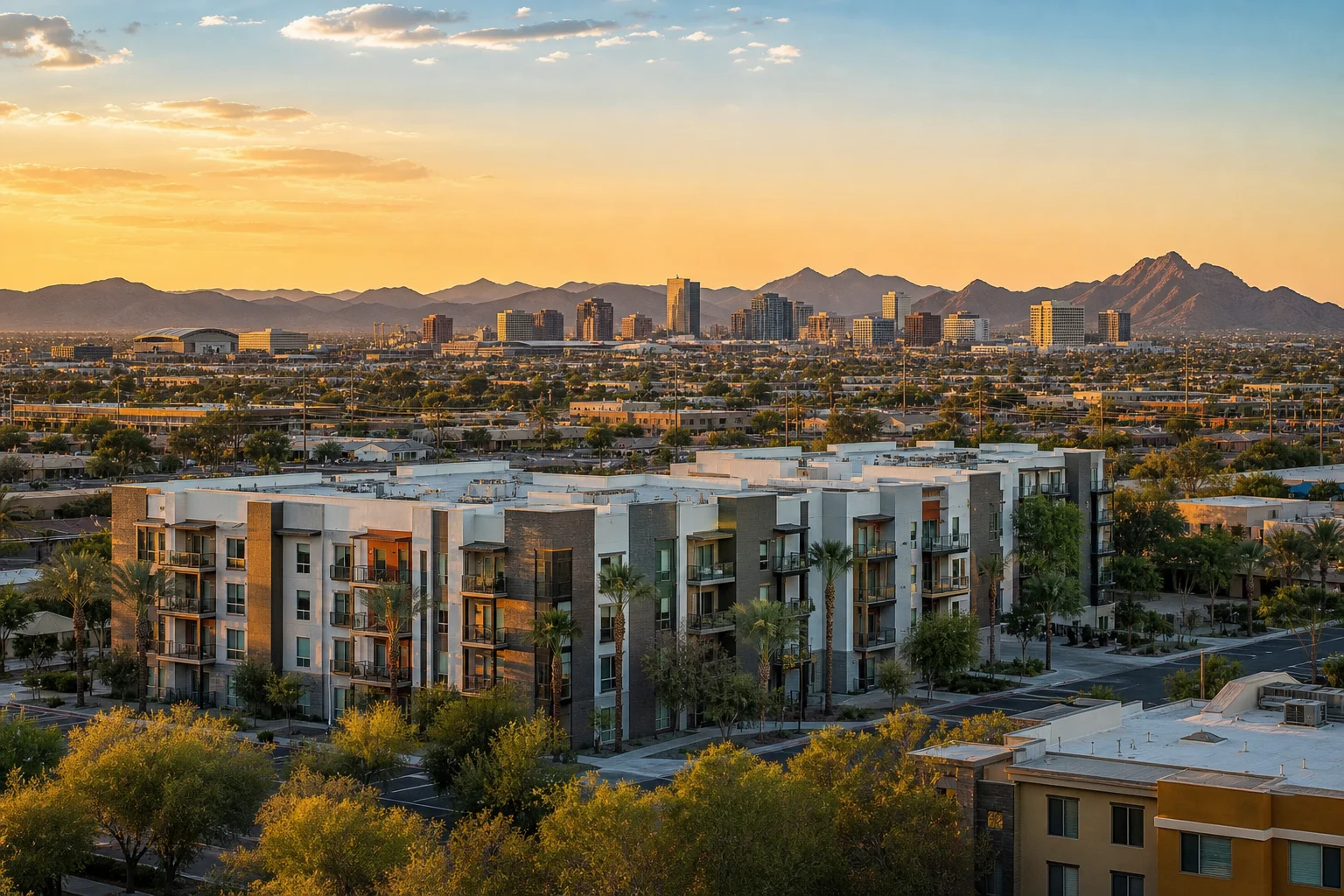
Retail investment sales in Arizona are holding steady through 2026 as Phoenix metro retail cap rates signal a market recalibrating toward value rather than speculation. Investors weighing retail assets in Chandler, Tempe, Gilbert, and Scottsdale are finding compressed yields in core corridors while secondary nodes offer wider spreads worth serious attention.
By David Pierce, MHG Commercial
How Cap Rates Are Moving Across Phoenix Retail Corridors
Phoenix metro retail cap rates in 2026 reflect two distinct pressures pulling in opposite directions. Demand from 1031 exchange buyers continues to compress yields on grocery-anchored centers and single-tenant net lease properties along high-traffic corridors in Chandler and Scottsdale. At the same time, elevated borrowing costs since 2022 have forced sellers and buyers to recalibrate their underwriting assumptions.
According to CBRE's 2025 U.S. Cap Rate Survey, grocery-anchored retail in Sun Belt markets was pricing between 5.75% and 6.75% cap, while unanchored strip centers in the same submarkets ranged from 6.50% to 7.50%. These ranges shift based on tenant credit, lease term remaining, and the specific submarket.
In Mesa and Gilbert, where population growth continues to outpace the national average, demand for necessity-based retail remains strong. Investors who understand the local commercial real estate market are prioritizing assets with long-term leases to national tenants because those provide predictable cash flow and lower re-tenanting risk.
Single-Tenant Net Lease: The Benchmark for Arizona Retail Sales
Net lease commercial real estate remains the clearest benchmark for retail investment sales in Arizona. A single-tenant asset leased to a QSR chain, pharmacy, or dollar store brand gives investors clean cash flow details without the operational complexity of managing multiple tenants. The sale price is directly tied to the lease term, tenant credit rating, and rent escalation schedule.
For a seller, positioning a single-tenant retail asset correctly means presenting complete cash flow details: base rent, scheduled bumps, responsibility split for repairs and taxes, and any co-tenancy clauses. Buyers comparing deals in Tempe versus Scottsdale will run parallel underwriting models, so the details need to be accurate and complete from day one.
The commercial real estate market in Arizona has seen strong absorption of net lease retail product in 2025 and into 2026. Deal sizes on single-tenant retail typically range from $1.5M for a smaller pad site to $10M or more for a branded location in a prime intersection, with larger portfolios reaching well above that threshold.
Multi-Tenant Strip Centers and Value-Add Retail Opportunity
Multi-tenant retail centers introduce more variables but also more opportunity for investors who understand lease-up risk. A center with 20% vacancy in a growing Phoenix submarket represents a real opportunity if the surrounding demographics support new tenancy and the current cash flow covers debt service.
Arizona business growth continues to generate demand from local operators and regional chains looking for retail space. Mesa, Chandler, and Gilbert have seen strong interest from healthcare-adjacent businesses, fitness operators, and food and beverage concepts. Each new lease signed converts potential into actual cash flow, which directly affects the asset's resale value.
When evaluating a multi-tenant retail strip, buyers should review the existing leases for rent-to-market gaps, upcoming expirations, and the mix of national versus local businesses. A center with strong national anchors and complementary local tenants tends to outperform pure local lineups in customer traffic and retention.
How 1031 Exchanges Shape Retail Investment Sales in Arizona
A significant share of retail investment sales in Arizona are driven by 1031 exchange buyers. These investors are replacing sold properties with like-kind commercial real estate to defer capital gains tax. The time pressure of a 1031 exchange (45 days to identify, 180 days to close) means these buyers move fast and often pay at or above market to secure the right asset.
The state of Arizona has consistently attracted exchange capital from California, the Pacific Northwest, and the Midwest. When an out-of-state investor acquires retail commercial real estate in Phoenix metro, they typically find relative value compared to coastal markets, even with today's higher financing rates. That dynamic supports sale volume across the Phoenix metro even in a tighter credit environment.
For a seller of retail commercial real estate in Phoenix, understanding who is likely to buy matters. Packaging the deal with clean financials, estoppel certificates, and a verified rent roll accelerates due diligence and reduces re-trade risk. A well-prepared offering gives the seller leverage in negotiations even in a more cautious market.
Arizona Business Growth and Its Effect on Retail Tenants
Retail real estate performance is ultimately a downstream function of business health. Arizona business formation has been above the national average for several consecutive years, according to the U.S. Census Bureau's Business Formation Statistics released in 2025. More businesses means more demand for retail space, both from startups leasing for the first time and from established operators expanding to new locations.
The Phoenix metro growth story is real but not uniform. Tempe and Scottsdale see strong demand from tech-adjacent retail and experiential concepts. Gilbert and Chandler absorb service retail and medical outpatient. Mesa offers some of the best pricing in the valley for investors willing to go slightly off the premium corridors, with cash-on-cash returns that often outperform tighter-cap assets in premium zones.
For business Arizona investors and out-of-state capital alike, tracking population inflow, median household income by zip code, and new residential construction permits provides a leading indicator of retail demand. These metrics help predict which assets will see rent growth over a three-to-five year hold period.
Online retail continues to shift the tenant mix in physical stores, but the data does not support a collapse of brick-and-mortar commercial. According to the National Retail Federation's 2025 State of Retail report, physical store sales still represent the dominant share of total retail sales in the United States, particularly in grocery, food and beverage, and services categories. A customer visiting a physical location still converts at significantly higher rates than online channels across many retail segments.
Frequently Asked Questions
What are typical cap rates for retail investment sales in Arizona right now? As of 2026, Phoenix metro retail cap rates generally range from around 5.5% for grocery-anchored centers with long-term national leases to 7.5% or higher for unanchored strips or assets with near-term lease expirations. The exact rate depends on tenant credit, remaining lease term, location, and current financing costs. Verify current market data with a local commercial broker before underwriting any deal.
How does a 1031 exchange affect the timeline for buying retail commercial real estate? A 1031 exchange requires identifying replacement property within 45 days of the relinquished sale closing and completing the acquisition within 180 days. This compresses due diligence significantly. Buyers using a 1031 should have target properties in view before the original closing so the identification window does not eliminate quality retail commercial real estate options in the Phoenix metro.
What cash flow details should I review before acquiring a retail asset? Focus on the rent roll, lease terms, escalation schedules, and tenant financial health. Review operating expenses including property taxes, insurance, and common area maintenance to understand true net operating income. Analyze vacancy assumptions, re-tenanting costs for near-term expirations, and debt service coverage at current financing rates to stress-test your hold assumptions and confirm the flow details match the asking price.
Is Mesa a strong submarket for retail investment in 2026? Mesa offers pricing advantages compared to Scottsdale and Tempe, with solid fundamentals driven by population growth and ongoing commercial development. Investors focused on yield and value-add often find better cash-on-cash returns in Mesa than in premium submarkets. Tenant quality and exit liquidity require careful due diligence, but Mesa remains one of the more compelling value plays in the Phoenix metro retail market.
How does arizona business growth affect retail property values? Strong arizona business formation increases demand for retail leasable space, reduces vacancy, and supports rent growth across submarkets. Higher net operating income with stable cap rates translates directly to higher property values. Tracking local business license filings and new employer announcements is a practical way to gauge retail demand momentum in any Phoenix metro submarket before committing to an acquisition.
Talk to Pierce CRE About Your Arizona Retail Investment Goals
Retail investment sales in Arizona reward investors who do the fundamental work: verifying cash flow details, reviewing lease structures, and understanding submarket dynamics before committing capital. David Pierce brings direct transaction experience across the Phoenix metro commercial real estate market to every client engagement. Contact our brokerage to discuss acquisition targets, disposition strategies, or portfolio analysis for your retail and commercial objectives.