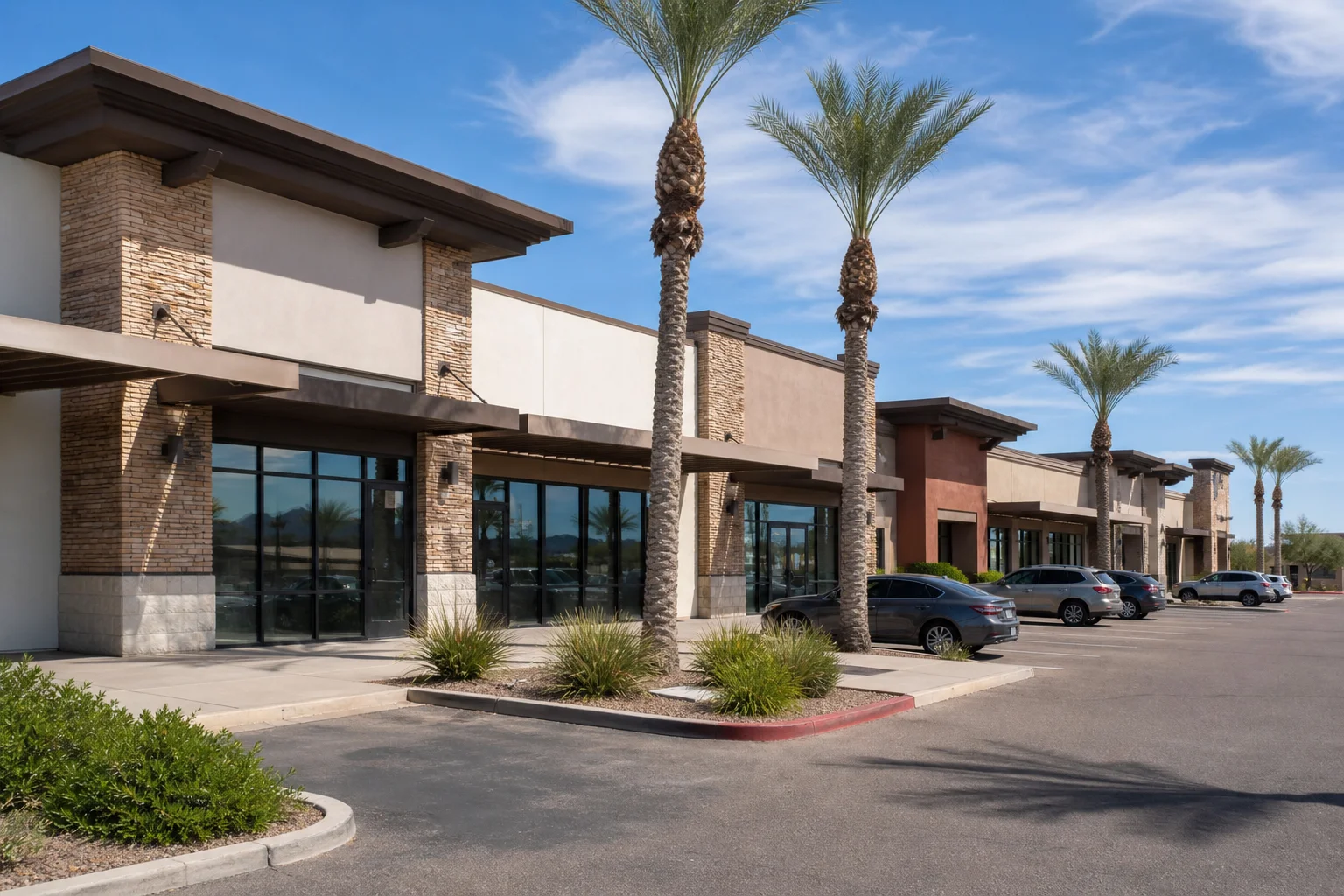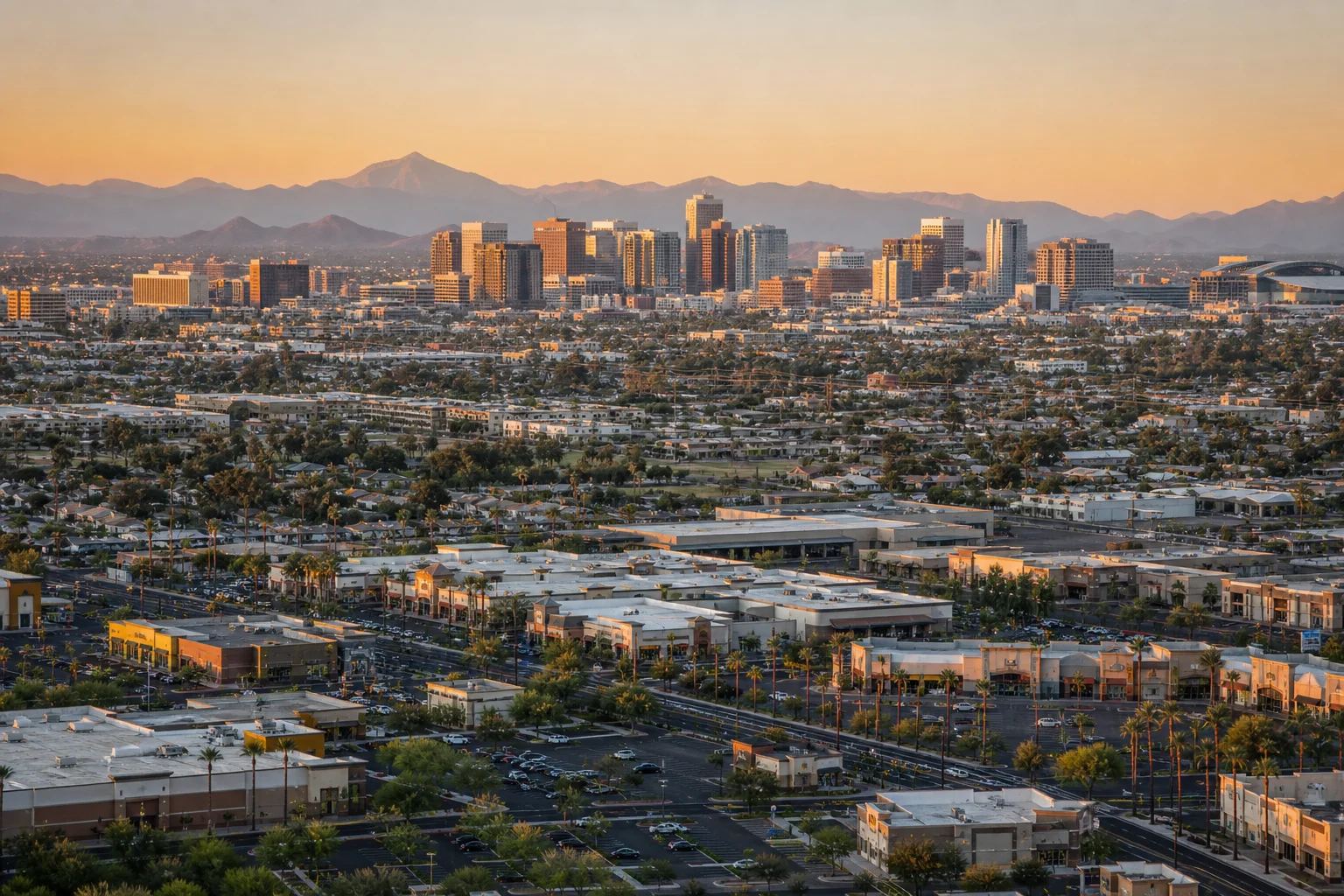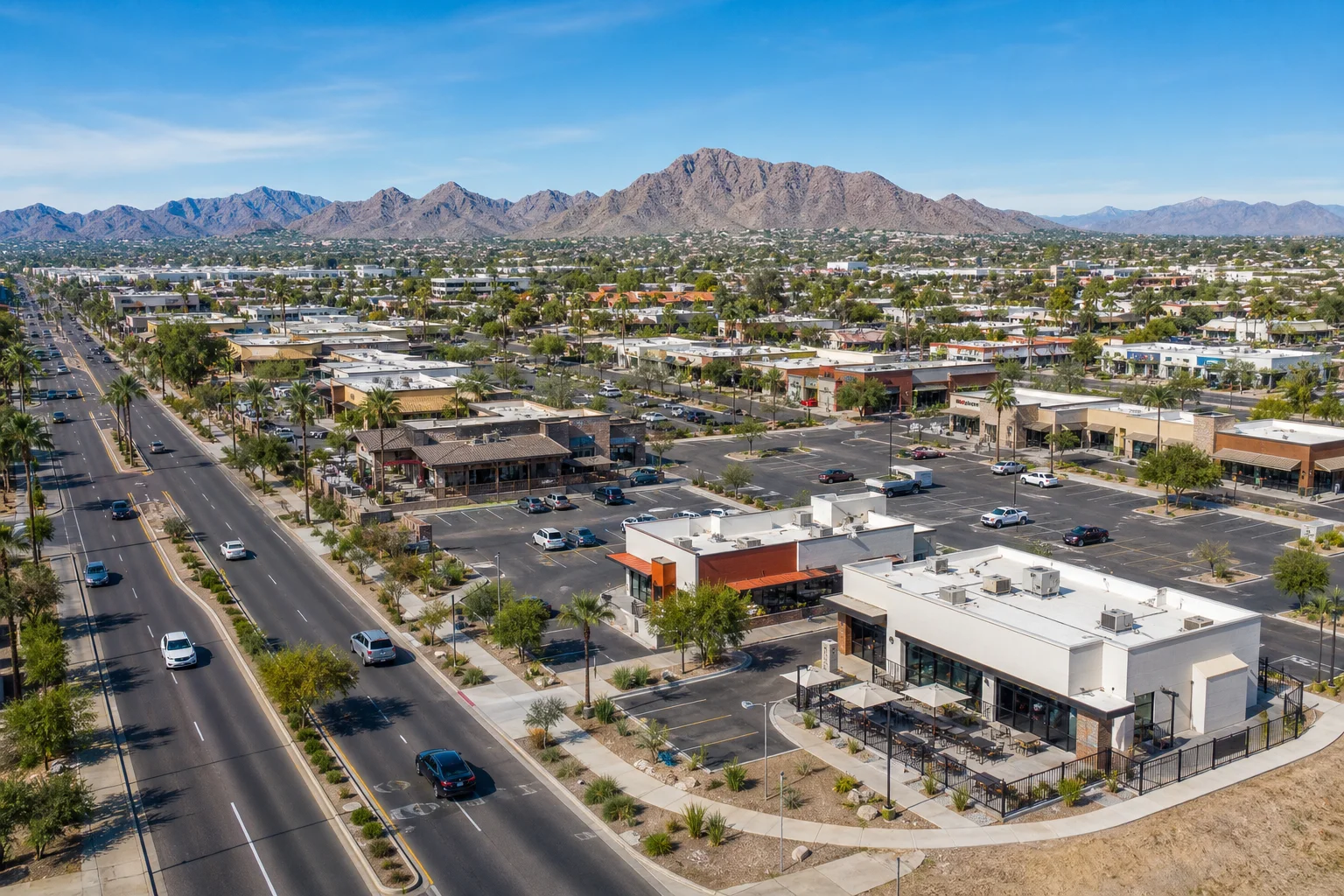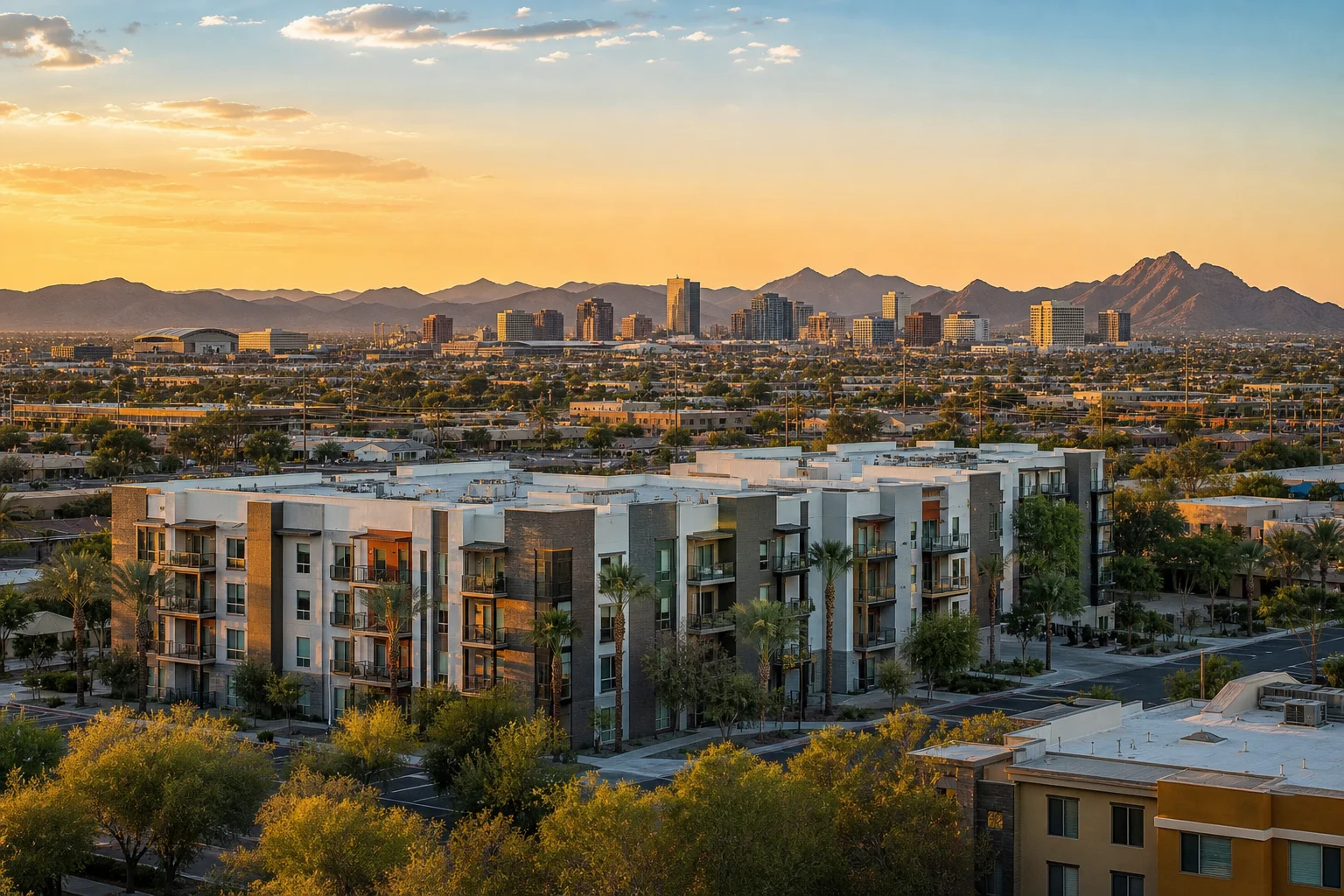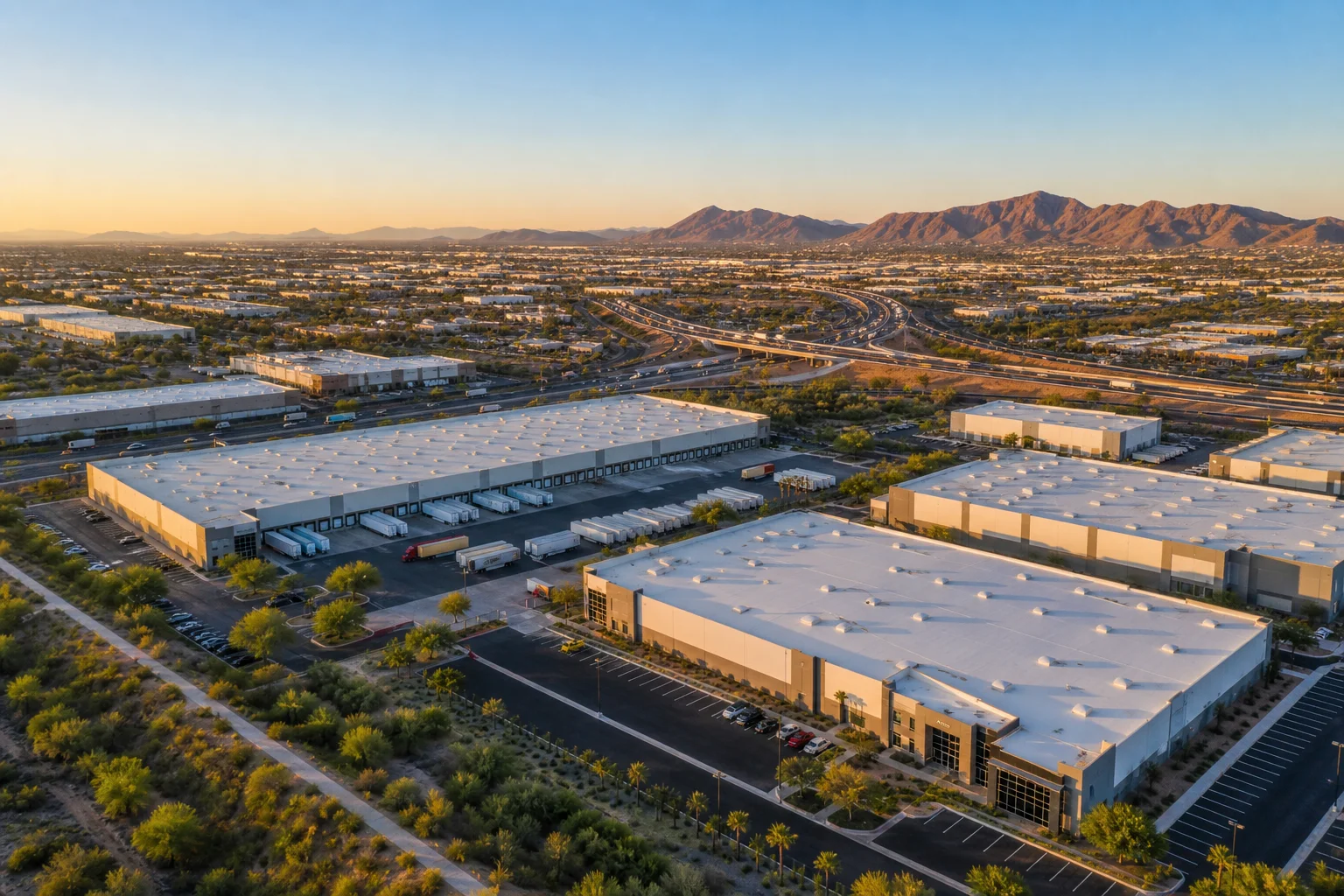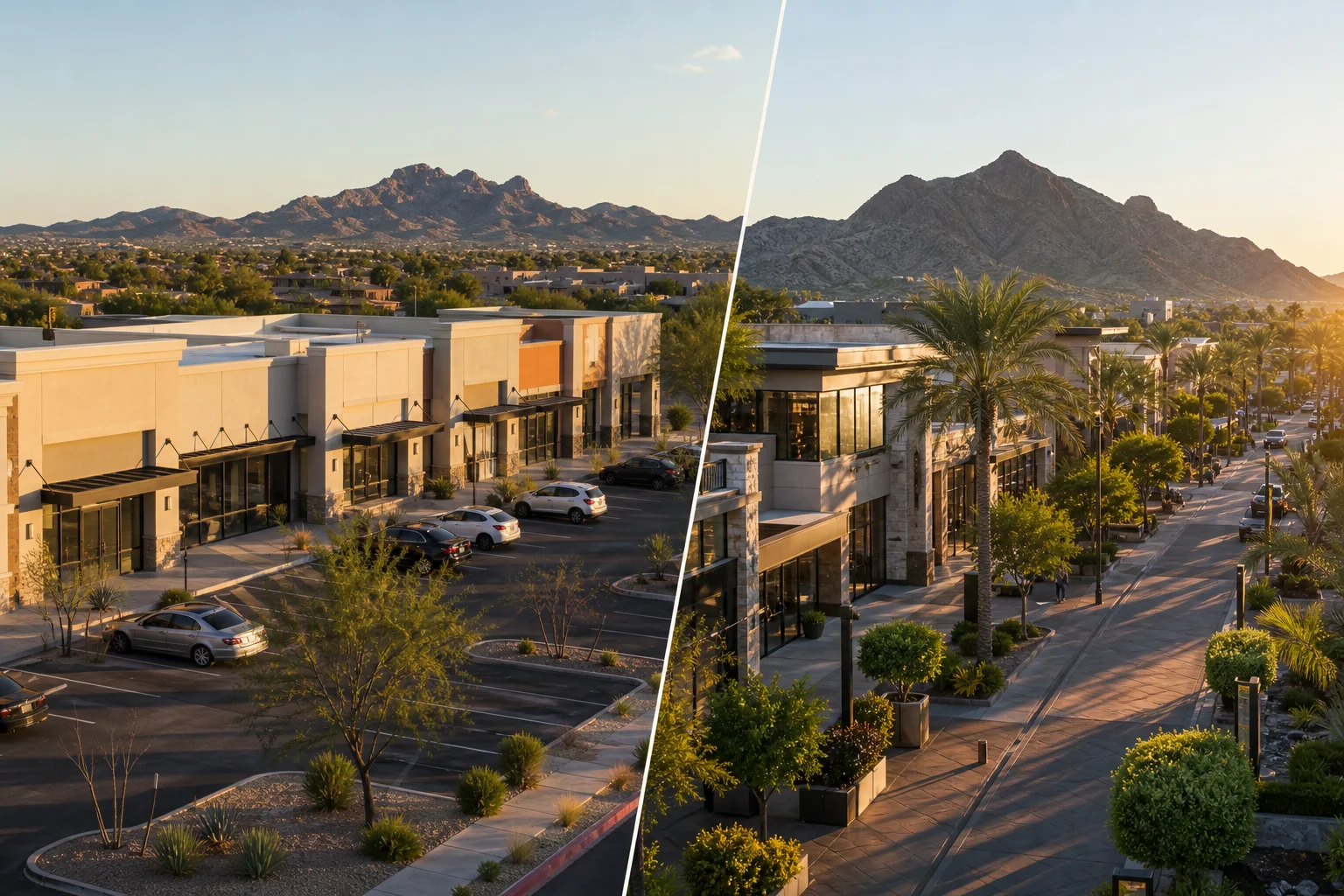
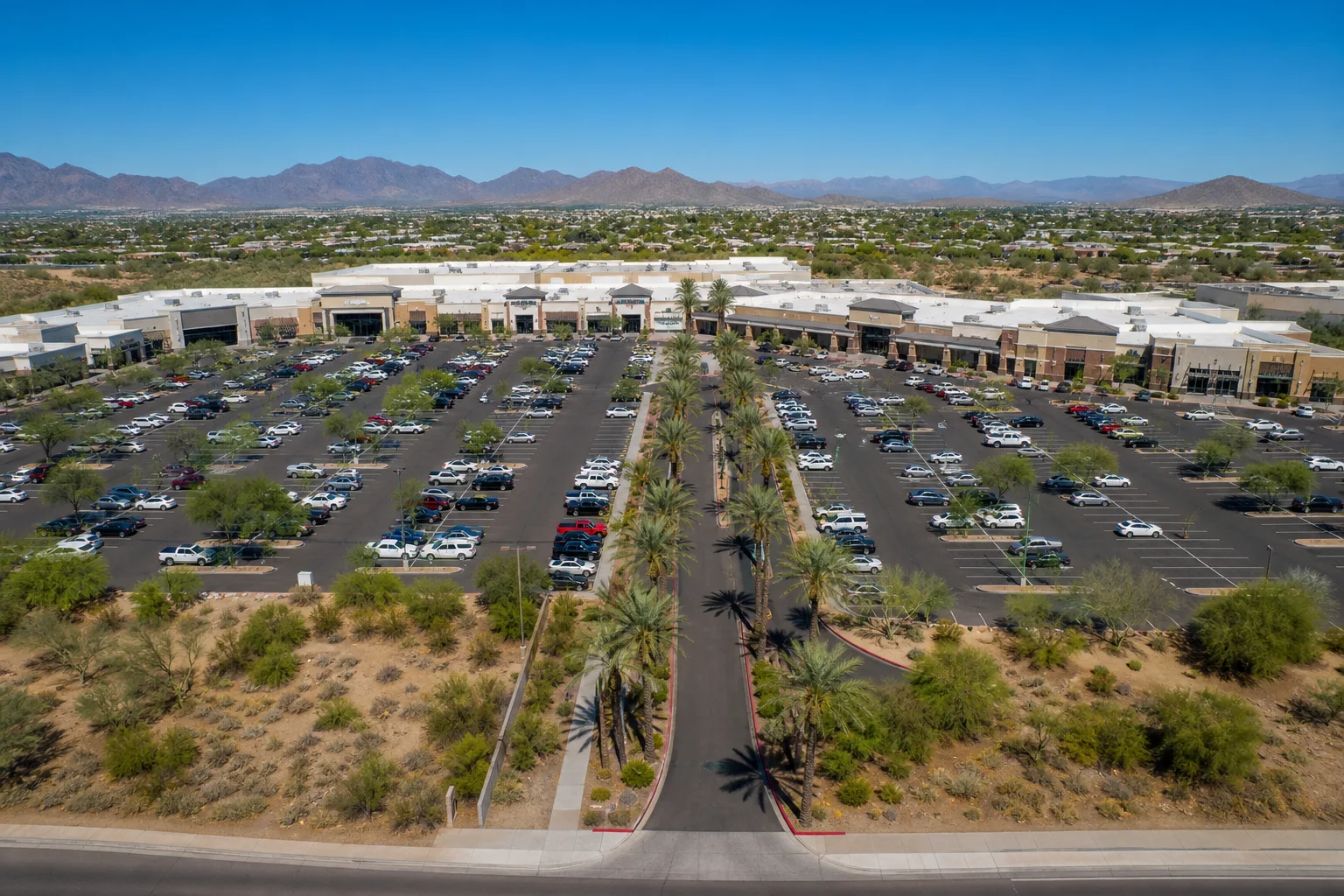
Finding retail space for lease in Phoenix metro starts with understanding how submarkets differ rather than simply identifying what space is available. Vacancy rates, household income profiles, traffic volumes, and landlord expectations vary substantially from Deer Valley and bell road in North Phoenix to Paradise Valley, Indian School, and the corridors of the East Valley.
By David Pierce, MHG Commercial
Retail Space for Lease in Phoenix Metro: Reading the Submarket Map
Phoenix retail does not operate as a single unified market. The metro spans roughly 40 miles east to west and carries meaningful variation in demographics, density, and commercial character across that footprint. For practical purposes, the market divides into five zones: North Phoenix (Deer Valley north to Anthem and the bell road corridor), the Camelback and Biltmore zone, Central and Midtown Phoenix, the East Valley (Chandler, Gilbert, Tempe, Mesa), and the West Valley (Glendale, Peoria, Surprise, Goodyear).
Before evaluating any specific phoenix retail space listing, a tenant should define the trade area that serves their customer and work backward from that geography to identify viable submarkets. A concept that depends on affluent discretionary spending will find its strongest footing in Paradise Valley and the Camelback Corridor. A service or convenience operator may find better occupancy economics along bell road or in the West Valley while still accessing adequate population density.
North Phoenix: Deer Valley and Bell Road Corridors
Deer Valley anchors North Phoenix retail, with the heaviest concentration of national and regional tenants clustered near the Loop 101 and I-17 interchange. Space available in Class A format here leases at premium rents for the submarket. Inline suite vacancies in the 1,200 to 3,500 SF range move quickly when they come to market, particularly in centers with national grocer or home improvement anchors.
Bell road extends east to west through North Phoenix and represents one of the metro's most accessible retail corridors by vehicle. Properties along bell road range from recently renovated neighborhood centers with strong traffic counts to older strip product with deferred maintenance. Asking rents vary widely based on center condition and anchor strength, which creates opportunity for tenants who know how to evaluate the difference.
The North Phoenix submarket has benefited from sustained in-migration. Anthem, Desert Hills, and North Gateway zip codes have added substantial household volume over the past decade, and that growth supports continued retail absorption along the Deer Valley and bell road nodes.
Paradise Valley, Indian School, and the Camelback Corridor
Paradise valley commands the highest retail rents in the Phoenix metro. Zoning restrictions limit new supply, and the adjacent residential base includes some of the highest household incomes in Arizona. Phoenix retail space in the Paradise Valley zone draws food, wellness, boutique, and financial services concepts. Landlords in this submarket are selective: expect rigorous credit review, NNN lease structures with above-market base rent, and limited tenant improvement allowances relative to the rents charged.
The Camelback Corridor from 24th Street to 44th Street carries a similar profile. Indian school Road, running parallel to Camelback one mile to the south, offers a more accessible entry point. For a tenant looking to lease phoenix retail space at below-Camelback rents, Indian School can deliver acceptable visibility and occupancy cost, particularly in centers that have undergone recent renovation.
Phoenix retail along indian school has attracted repositioning capital in recent years, with several centers completing facade upgrades and tenant mix improvements. The rent gap between Indian School and Camelback Road product has compressed in select nodes, though secondary vacancies in older buildings still represent value relative to the corridor's traffic and household income base.
East Valley: Chandler, Gilbert, and Tempe
Chandler and Gilbert have absorbed more Phoenix metro population growth than any other East Valley cities over the past decade. That growth has created consistent retail demand, and Class A anchored centers in Chandler carry occupancy rates that rank among the lowest vacancy levels in the metro. Space available in top-tier Chandler projects tends to move quickly, often before formal marketing begins. Tenants who want to lease phoenix commercial space in Chandler should engage a broker with existing landlord relationships rather than waiting for publicized vacancies.
Gilbert retail has followed a similar trajectory, particularly along Williams Field Road, Higley Road, and the Santan Village corridor. The submarket skews toward family-oriented concepts, health and wellness, and fast-casual food, reflecting the household composition of the surrounding residential base.
Tempe operates differently. Arizona State University drives significant foot traffic through the Mill Avenue and Sun Devil Stadium corridors. Leasing tenant representation in Tempe requires knowledge of both the university-driven demand cycles and the employment peaks generated by tech and financial services employers along the Elliot Road corridor.
Central Phoenix and the West Valley
Downtown and Midtown Phoenix have added retail through mixed-use multifamily development and light rail activity. The retail space lease format here differs from suburban product: gross and modified gross leases are more common, parking ratios are lower, and tenants rely more on walkability and transit access than on drive-by vehicle exposure. Select corridors near Roosevelt Row have stabilized, and landlord concessions are available for tenants willing to accept secondary positions in emerging blocks.
The West Valley presents a different opportunity profile. Phoenix retail space in Glendale, Surprise, Avondale, and Goodyear carries below-metro-average rents and above-average availability. Population growth in these cities has been strong, but in some corridors retail supply has not fully absorbed the new household base, which means landlords have more concession flexibility than is typical in the East Valley.
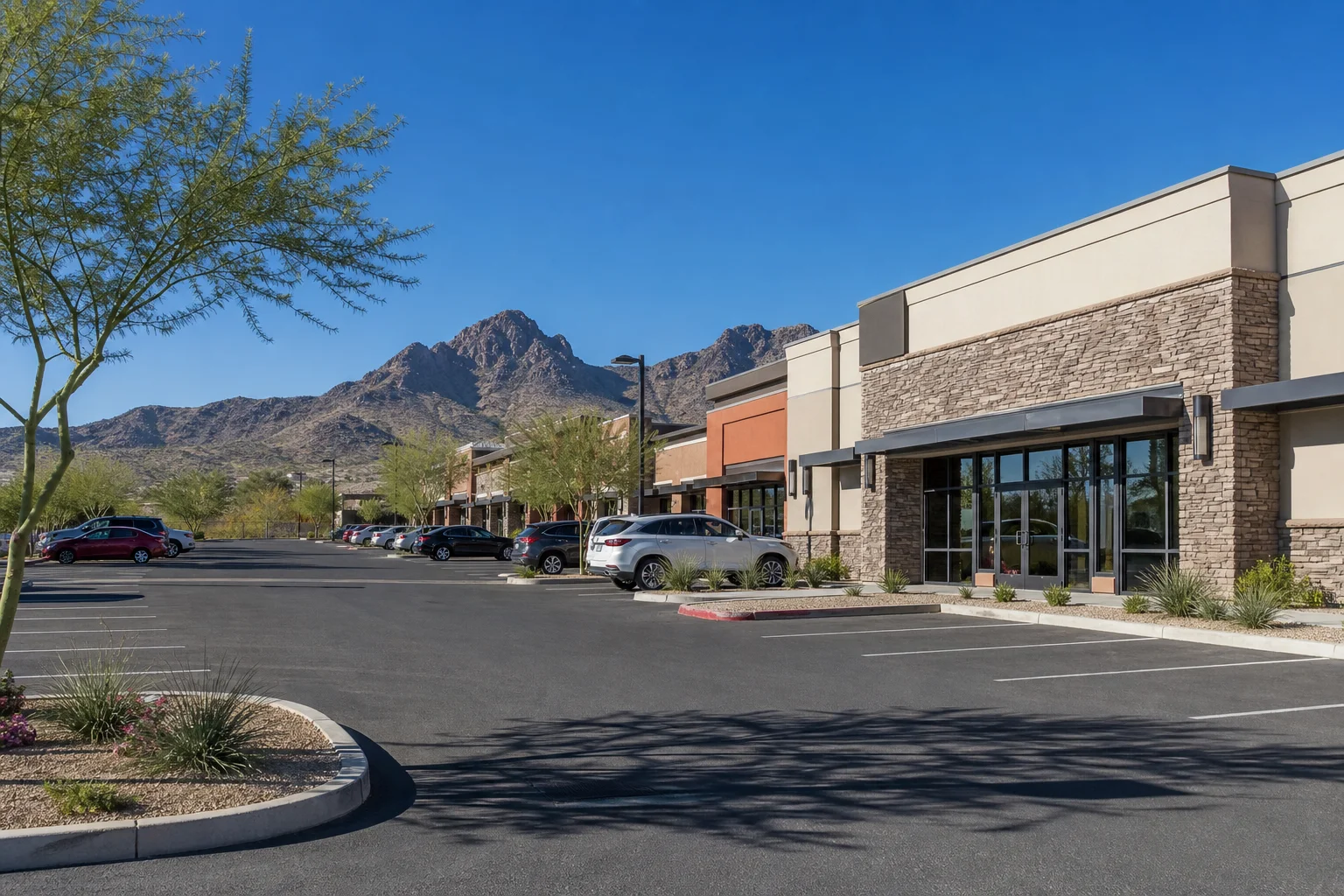
What to Verify Before Signing a Retail Lease
Traffic counts. ADOT publishes segment traffic data by roadway section. Volumes on baseline road through Tempe and Chandler differ from counts on the same baseline road segment farther east in Gilbert. That gap directly affects drive-by awareness for concepts dependent on unplanned visits.
CAM reconciliation history. Request three years of actual CAM expense statements from the landlord. Base rent covers only part of occupancy cost. Operating expense pass-throughs on older product can materially increase effective rent above the quoted base.
Co-tenancy provisions. If the concept depends on anchor-generated traffic, negotiate co-tenancy protections that permit rent abatement or early termination if the primary anchor vacates.
Permitted use language. Confirm the permitted use clause covers the full operating scope. Narrow language can restrict expansion of the concept without requiring a lease amendment.
TI allowance versus actual buildout cost. Phoenix construction costs have remained elevated through 2025. Verify that the offered allowance reflects current labor and material pricing for the delivery condition specified.
Frequently Asked Questions
What submarkets have the most phoenix retail space available right now?
As of mid-2025, the West Valley (Glendale, Surprise, Avondale, Goodyear) and secondary Central Phoenix corridors carry the highest vacancy concentrations in the metro. East Valley Class A centers, Paradise Valley, and the Camelback Corridor are supply-constrained, with limited space available at any given time. Tenants with flexibility on submarket will find more options and concession willingness in West Valley and older Midtown product.
How does commercial leasing in Phoenix differ by property class?
Class A anchored centers carry the lowest vacancy rates, highest base rents, and most demanding landlord qualification requirements. Class B and C product offers more flexibility on terms and concessions but may carry higher effective rent due to operating expense inefficiencies in aging buildings. The right choice depends on the concept's traffic generation model and financial capacity to absorb rent risk during ramp-up.
What is the standard lease term for phoenix retail space?
Initial terms of 5 to 10 years are standard in Class A anchored centers. Shorter terms of 3 to 5 years appear more frequently in secondary and older strip center product. Landlords in competitive submarkets like Chandler and Paradise Valley typically require a minimum 5-year initial term for any significant buildout investment.
What role does tenant representation play in a phoenix retail lease?
A leasing tenant representation broker works exclusively for the tenant. The broker conducts market surveys, evaluates competing options, negotiates economic and operational lease terms, and coordinates due diligence. In most phoenix commercial leasing transactions, the tenant does not pay a direct fee: the broker is compensated from the landlord-side commission structure embedded in the lease economics.
Are there use restrictions for retail space in Paradise Valley?
Paradise Valley maintains restrictive commercial zoning, and the town's planning commission reviews new retail concepts for consistency with community character. Certain use categories face significant approval hurdles. Tenants targeting paradise valley retail space should engage a broker with local zoning knowledge before committing to a site, as the approval timeline can add months to a project schedule.
Connect With Pierce CRE for Retail Space in Phoenix Metro
Selecting retail space for lease in phoenix metro involves matching the right submarket to your business model, then negotiating a lease that protects occupancy cost over the full term. Contact our brokerage for a direct conversation about phoenix retail space in Chandler, Deer Valley, Paradise Valley, and across the metro.