



A reverse 1031 exchange lets real estate investors acquire a replacement property before the relinquished property sells, protecting deal timing when market conditions favor buying first. Understanding reverse 1031 exchange mechanics is critical for Phoenix metro investors who cannot afford to lose a target acquisition while waiting for an existing asset to close.
By David Pierce, MHG Commercial
How a Reverse 1031 Exchange Works
In a standard 1031 exchange, an investor sells a relinquished property first, then identifies and acquires a replacement property within strict IRS deadlines. A reverse exchange flips this sequence entirely. The investor acquires the replacement property before the sale of the existing asset, parks title with an exchange accommodation titleholder, and then sells the relinquished property within 180 days.
Revenue Procedure 2000-37, published by the Internal Revenue Service in October 2000 (IRS, Internal Revenue Bulletin 2000-40, 2000), established the safe harbor rules that allow taxpayers to defer capital gains taxes through a reverse exchange structure. Without this framework, parking title with a third party would constitute constructive receipt and disqualify the property exchange.
The primary benefits of a reverse exchange are deal certainty and timing flexibility. Rather than racing to identify and close a replacement property after a sale, the investor secures the target asset first and manages the relinquished property disposition within the 180-day safe harbor window.
The Exchange Accommodation Titleholder
The exchange accommodation titleholder (EAT) is the legal mechanism that makes a reverse exchange possible. An EAT is a single-purpose LLC formed solely to hold title to either the replacement property or the relinquished property during the exchange period. The taxpayer cannot hold both properties simultaneously in their own name, as dual ownership would constitute constructive receipt.
Revenue Procedure 2000-37 describes two configurations:
Exchange last, buy first: The EAT takes title to the replacement property while the taxpayer retains the relinquished property, completes the sale, and then receives the replacement property from the EAT at closing.
Exchange first, park the relinquished side: The EAT acquires the relinquished property from the taxpayer to facilitate a forward exchange when the replacement has already been identified but a clean title transfer sequence is required.
The buy-first configuration is the most common structure for reverse exchanges in Phoenix metro commercial real estate. It allows the investor to secure a target asset immediately while the investor identifies a qualified buyer for the relinquished property on a realistic timeline.
IRS Safe Harbor Rules and Reverse 1031 Exchange Mechanics
IRS regulations under Revenue Procedure 2000-37 create a safe harbor for reverse exchanges that meet specific conditions. These rules govern the deadlines, agreements, and restrictions that determine whether a reverse exchange qualifies for full capital gains deferral.
The 180-day clock starts the day the EAT acquires legal title to the parked property. Within that window:
- The investor must identify the relinquished property within 45 days if it was not identified before the EAT acquisition date
- The property sold must close escrow before the 180-day period expires
- The EAT must execute a qualified exchange accommodation agreement (QEAA) with the taxpayer at the start of the arrangement
The IRS does not grant extensions for this deadline. Title defects, lender delays, and escrow complications do not toll the clock. The 180-day rule is absolute: if the investor cannot sell the relinquished property within that window, the exchange fails. Capital gains taxes become due on the full recognized gain, and any bridge financing costs already incurred are not recoverable through the deferred tax benefit.
These regulations also require that the QEAA be in place from the date the EAT acquires title. An exchange accommodation agreement executed after the EAT acquisition date falls outside the safe harbor, exposing the taxpayer to capital gains taxes as though no exchange reverse arrangement existed.
Costs and Financing in a Reverse Exchange
Reverse exchanges carry higher transaction costs than forward 1031 property exchange structures. Because the EAT holds legal title to the replacement property before the investor's sale closes, conventional lenders typically will not extend a standard mortgage directly to the taxpayer. Financing is issued at the EAT entity level, which usually requires commercial bridge financing.
Budget line items for a typical commercial reverse exchange include:
- EAT formation and management fees, commonly $5,000 to $15,000 depending on transaction complexity
- Qualified intermediary fees, typically $2,500 to $6,000 for commercial transactions
- Bridge loan origination and closing costs
- Two rounds of title and escrow fees as title transfers from EAT to taxpayer at closing
For Phoenix metro retail and industrial deals in the $2M to $15M range, these costs are modest relative to deferred capital gains taxes on a low-basis investment property. An investor deferring a $1.5M gain at a combined federal and Arizona rate near 33% is deferring roughly $495,000 in taxes, making a total exchange cost of $25,000 to $35,000 highly favorable.
The exchange reverse process also requires lenders with prior EAT experience. Not all Arizona commercial lenders have handled EAT-collateralized structures, so identifying a lender early, before the replacement property closes, is essential to avoid delays that compress the 180-day window.
When a Reverse Exchange Makes Strategic Sense
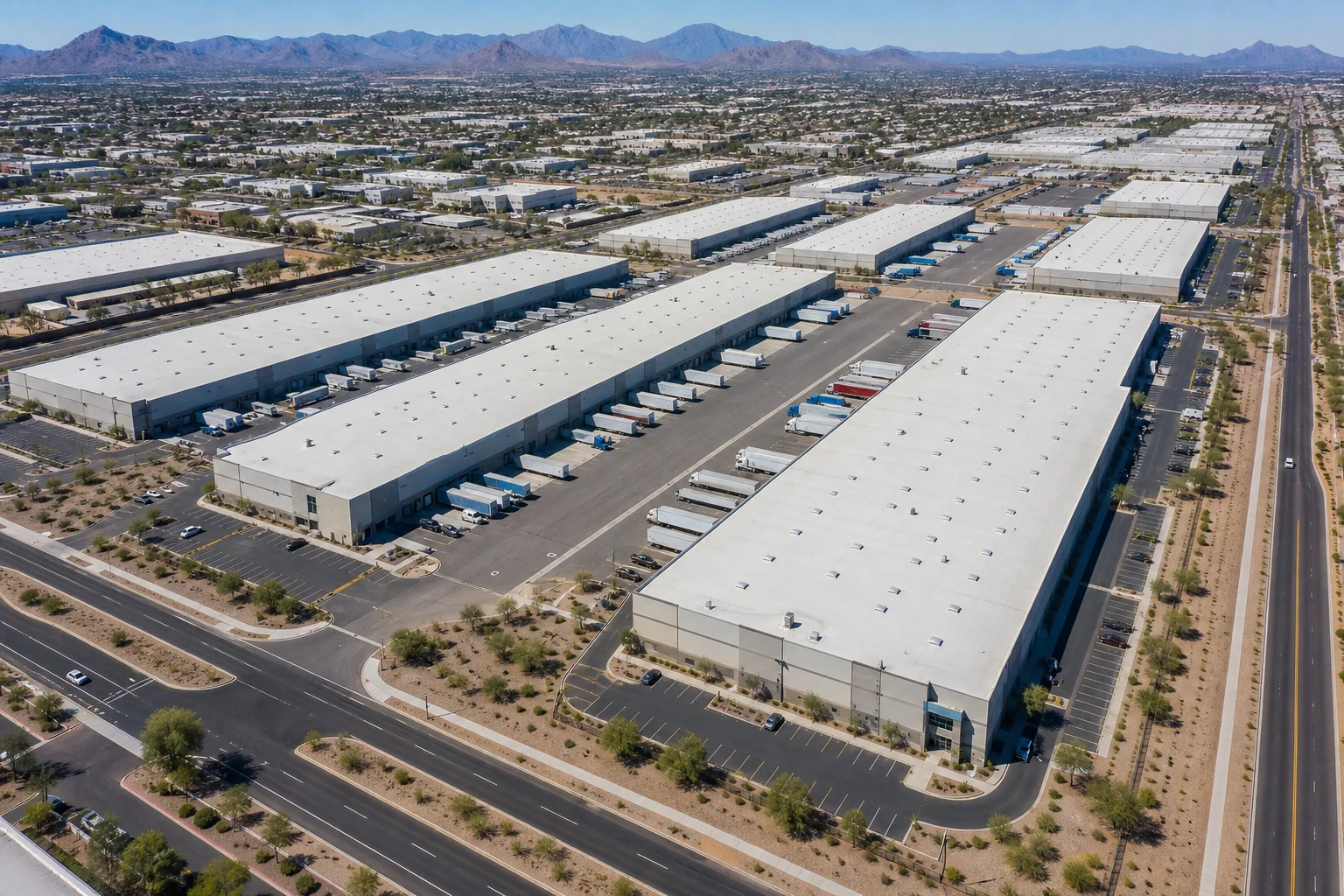
The reverse exchange structure is best suited to situations where a replacement property cannot wait for a forward exchange timeline. Phoenix metro industrial and net lease retail have seen consistent demand from both local operators and institutional buyers, and quality assets in Chandler, Tempe, Gilbert, and Scottsdale routinely attract multiple offers within days of listing.
A property exchange reverse approach fits real estate investors who:
- Have identified a high-demand replacement asset with a hard close date or a competing buyer
- Are selling in a softer market but acquiring in a competitive one
- Hold an investment property as the relinquished side with a longer than average escrow timeline due to title complexity or extended lender due diligence requirements
The reverse exchange reverse exchange dynamic differs from a forward 1031 in where market risk sits. In a forward exchange, the investor identifies replacement property after the sale closes and risks losing the target during the identification window. In a reverse exchange, that risk shifts entirely to the disposition side. If the investor cannot sell the relinquished property within 180 days, the exchange fails regardless of how smoothly the replacement property acquisition was executed.
Marketing the relinquished property should begin immediately after the EAT takes title, not after the replacement property closes. Every day of delay shortens the runway available to complete the sale and defer capital gains taxes.
Frequently Asked Questions
Can Arizona investors use a reverse exchange for any property type?
Yes. Reverse exchanges apply to all qualifying real property held for investment or productive business use, including commercial retail centers, industrial buildings, office properties, multifamily, and land. IRS safe harbor rules under Revenue Procedure 2000-37 apply regardless of property class or Arizona location, provided the exchange accommodation and QEAA documentation requirements are met.
Who can serve as the exchange accommodation titleholder?
The EAT must be a separate legal entity, typically a single-member LLC, that is not owned by the taxpayer and is not simultaneously serving as the qualified intermediary on the same exchange. Most qualified intermediary firms form a dedicated EAT LLC for each reverse exchange and charge a separate management fee for operating that entity during the exchange period.
What happens if the relinquished property does not sell within 180 days?
The exchange fails, and the taxpayer recognizes the full capital gain as if no exchange occurred. Capital gains taxes become due on the entire gain, and the EAT transfers title of the replacement property to the taxpayer with no tax benefit retained. No partial deferral is available for a reverse exchange that misses the 180-day deadline.
How does a reverse exchange affect financing for the replacement property?
Because the EAT holds title during the exchange period, the taxpayer typically cannot be listed as the borrower on a conventional mortgage. Most transactions require bridge financing at the EAT entity level. Once the exchange completes and title transfers to the taxpayer, permanent financing can replace the bridge loan. Lender selection should happen early to avoid delays that compress the 180-day window.
Are reverse exchanges commonly used in Phoenix commercial real estate?
They are less common than forward 1031 exchanges because of higher complexity and cost. However, in competitive acquisition markets where quality replacement property trades quickly, reverse exchanges provide deal access that a forward exchange timeline cannot guarantee. Phoenix metro commercial brokers and qualified intermediaries handle these transactions regularly for investors with low-basis assets and time-sensitive targets.
Work With a Phoenix Commercial Real Estate Broker Who Knows 1031 Timing
Reverse 1031 exchange mechanics require tight coordination between buyer, seller, qualified intermediary, exchange accommodation titleholder, and lender. David Pierce at Pierce CRE works with Phoenix metro investors on acquisition and disposition strategy, 1031 exchange timing, and commercial property identification across retail, industrial, and land asset classes. Contact our brokerage to map a reverse exchange timeline against your target property.