


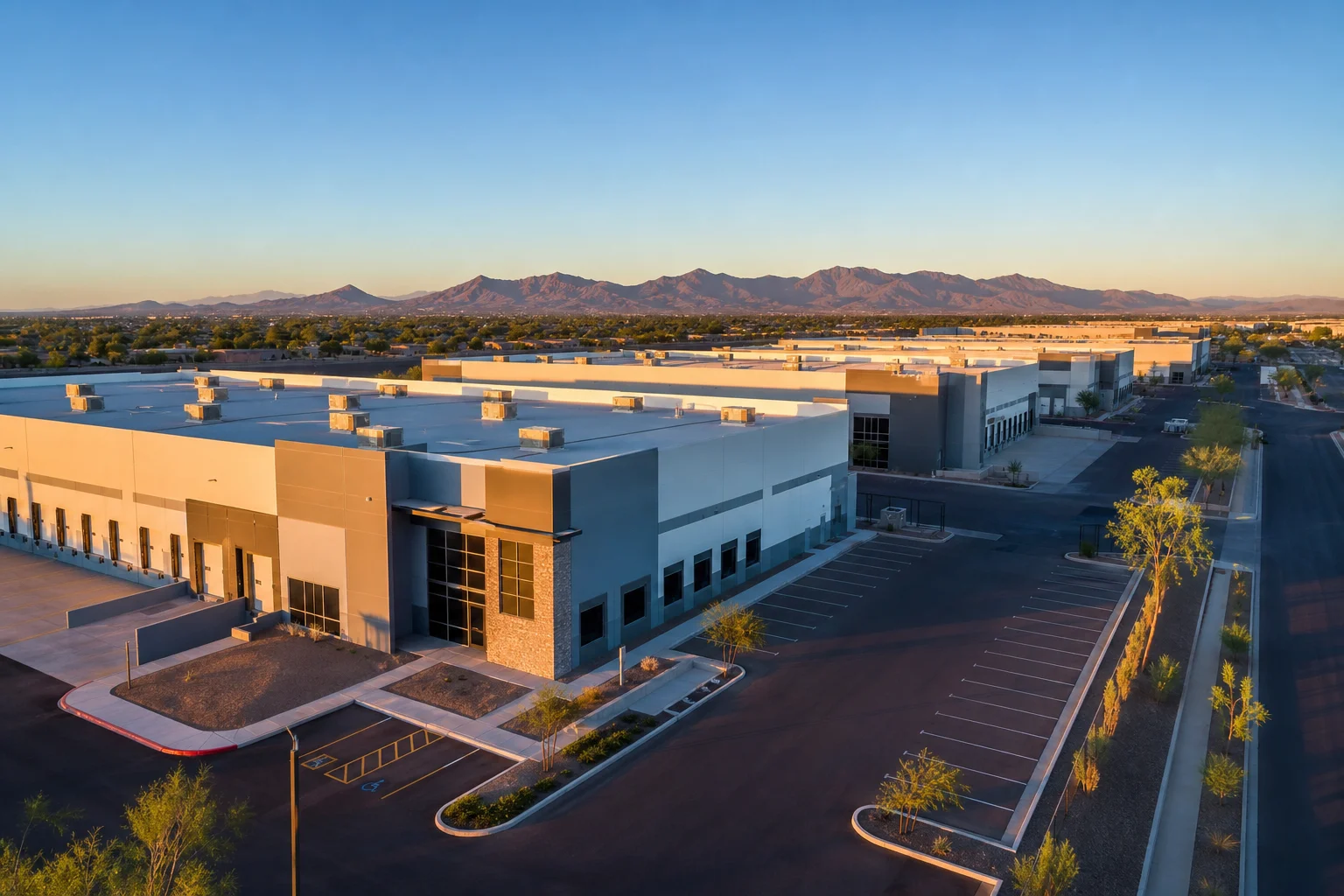
A sale-leaseback strategy for Phoenix industrial owner-operators converts owned real estate into working capital without displacing operations. By selling a facility to an investor and signing a long-term lease to remain in place, operators unlock significant liquidity while retaining full operational control, one of the most practical tools in commercial real estate today.
By David Pierce, MHG Commercial
How a Sale-Leaseback Transaction Actually Works
In a sale-leaseback, a business that owns its industrial property sells it to an investor and simultaneously signs a lease, typically spanning 10 to 20 years, allowing the seller to continue operating from the same location. The business converts a fixed asset into liquid capital. The investor acquires a stabilized, income-producing commercial real estate asset with a creditworthy tenant already in place.
The transaction closes like any commercial real estate sale. The seller receives full market value at closing. The investor collects rent over the lease term and holds the property as a long-term asset. Both parties benefit: the operator gains financial flexibility, and the investor gains a predictable income stream secured by a tenant whose business depends on remaining in that space.
What distinguishes a sale leaseback from a standard property sale is that operations never move. The business continues from the same address, the same team stays in place, customer relationships remain unaffected, and supply chain logistics continue without interruption. The only structural change is that title moves to the investor while the operator assumes a tenant role.
For Phoenix metro industrial operators, this structure is especially relevant. Chandler, Tempe, Gilbert, and the East Valley have seen industrial property values rise substantially over the past decade. Owners who purchased or built facilities years ago may be sitting on significant equity entirely locked inside their operations and unavailable without a transaction.
Why Phoenix Industrial Properties Are Strong Candidates
The Phoenix industrial market has attracted institutional investors seeking stabilized assets across the Sun Belt. Distribution centers, light manufacturing facilities, flex industrial buildings, and last-mile logistics properties in the metro area remain in consistent demand from both domestic and international capital.
When investors underwrite industrial sale-leaseback transactions, they look for properties that are core to the tenant's business, not easily replicated elsewhere, and located in supply-constrained submarkets. Phoenix checks those boxes. Vacancy rates across industrial submarkets in Chandler, Mesa, and Gilbert have stayed low relative to older markets, which elevates the appeal of long-term leaseback structures to institutional buyers.
The East Valley in particular has become a preferred location for industrial users tied to regional distribution and light manufacturing because of its access to the Loop 202, US-60, and the freight network connecting Phoenix to Los Angeles, Denver, and Texas markets. That access makes the real estate more defensible in the eyes of an investor evaluating lease risk over a 15-year term.
For owner-operators, investor appetite for Phoenix industrial product translates into competitive sale pricing. Owners often achieve valuations that outperform a conventional sale to an owner-user buyer, because in a sale-leaseback the operator stays, eliminating transition risk that typically pressures bids downward.
Financial Mechanics: Cap Rates and Lease Terms Drive the Value
Investors pricing industrial sale-leaseback transactions work from a capitalization rate applied to the net operating income, which in this structure equals annual rent. A lower cap rate means a higher purchase price for the seller. Phoenix industrial cap rates have generally ranged from the mid-5s to the low 7s depending on property quality, lease length, tenant credit, and location. Market conditions shift these numbers and no specific return should be assumed without current market analysis.
Lease structure has a direct effect on the cap rate an investor will accept. A 15-year absolute net lease with annual rent escalations produces a lower cap rate than a 5-year gross lease with no rent increases. Operators willing to commit to longer terms and accept triple-net lease responsibilities, covering property taxes, insurance, and maintenance, typically receive more favorable sale pricing.
Two financial variables matter most. The first is the initial rent as a percentage of property value, often called the implied yield or rent-to-value ratio. The second is the escalation schedule. A well-structured sale-leaseback ties rent growth to a fixed annual percentage or to CPI, giving both the operator and the investor predictable financial assumptions over the full term of the transaction. Operators should model the cumulative rent obligation over the lease period, comparing that total against the cost of retained ownership including debt service, capital expenditures, and the opportunity cost of holding illiquid equity.
Structuring the Lease to Protect Your Business Operations
The lease document in a sale-leaseback is not a standard landlord-tenant agreement. It is a long-term operating contract governing how the business runs its facility. Operators should negotiate key provisions before closing.
Renewal options protect the business. A 15-year initial term with two 5-year renewal options gives the operator flexibility to stay beyond the base term if the location remains core to operations. Termination rights, sublease permissions, and assignment clauses matter if the business is later acquired or merged into a larger entity.
Expansion rights deserve attention for growth-oriented operators. If the property sits on land with room for additional square footage, or if adjacent parcels could be acquired, negotiating a right of first offer on those parcels protects the business from being outbid on its own footprint as industrial demand grows across the Phoenix metro.
Capital expenditure responsibilities should be clearly outlined in the lease. In most industrial sale-leasebacks, the tenant carries routine maintenance. Roof, structure, and major mechanical system replacements sometimes remain landlord obligations depending on how the deal is negotiated. Understanding these commitments before signing is critical for accurate long-term financial modeling.
When a Sale-Leaseback Strategy Works for Phoenix Industrial Owner-Operators
Among the capital strategies available to Phoenix industrial owner-operators, a sale-leaseback stands out when the business needs liquidity without additional debt, faces an ownership transition, or is being acquired by a third party.
A sale-leaseback strategy for Phoenix industrial owner-operators makes the most sense when a business needs capital to fund expansion but does not want to add leverage. Proceeds can fund new equipment, additional headcount, acquisitions, or entry into new markets, all while preserving existing credit lines for operational needs.
When an owner is planning a 1031 exchange or approaching a succession event, a sale-leaseback can be structured alongside or in advance of other transactions. Owned real estate can also be part of a broader portfolio strategy if the operator holds multiple industrial or commercial real estate properties across the Phoenix metro.
When a private equity group acquires a business, a sale-leaseback at close is a standard move. The real estate proceeds reduce the equity check required to complete the acquisition, and the long-term lease becomes a predictable line item in the acquired company's cost structure.
Industrial operators running distribution, manufacturing, or supply chain functions from a single owned facility are among the most common candidates. The property is core to operations, the team is anchored to the location, and the operator has strong motivation to sign a long lease because relocating would be costly and disruptive.
Frequently Asked Questions
Does a sale-leaseback affect day-to-day business operations?
No. The transaction transfers property title to an investor, but the business retains full operational control under the lease. Staff, equipment, processes, and supply chain relationships remain unaffected. The only structural change is that monthly rent replaces a mortgage payment or the opportunity cost of holding illiquid equity. Operations continue from the same facility without interruption.
How is the sale price determined in a sale-leaseback transaction?
The sale price is derived by dividing annual rent by the investor's target cap rate. Because rent and cap rate are negotiated simultaneously, the operator influences both variables. A commercial real estate broker with sale-leaseback experience can model multiple scenarios to identify the combination that maximizes proceeds while keeping ongoing rent manageable for the business.
What lease length do Phoenix industrial investors typically require?
Most institutional investors expect a minimum initial term of 10 years. Fifteen-year initial terms are common for larger transactions. Shorter terms are possible for operators with strong credit profiles, but they generally result in higher cap rates and lower sale proceeds at closing.
Can a sale-leaseback work alongside a 1031 exchange?
Under IRS Section 1031 guidelines, a sale-leaseback does not qualify the seller for tax-deferred exchange treatment because the seller retains a leasehold interest in the property and has not fully divested from the real estate asset. Any operator considering a 1031 exchange alongside or following a sale-leaseback should consult a qualified tax advisor before finalizing the transaction structure.
What Phoenix industrial property characteristics attract investors most?
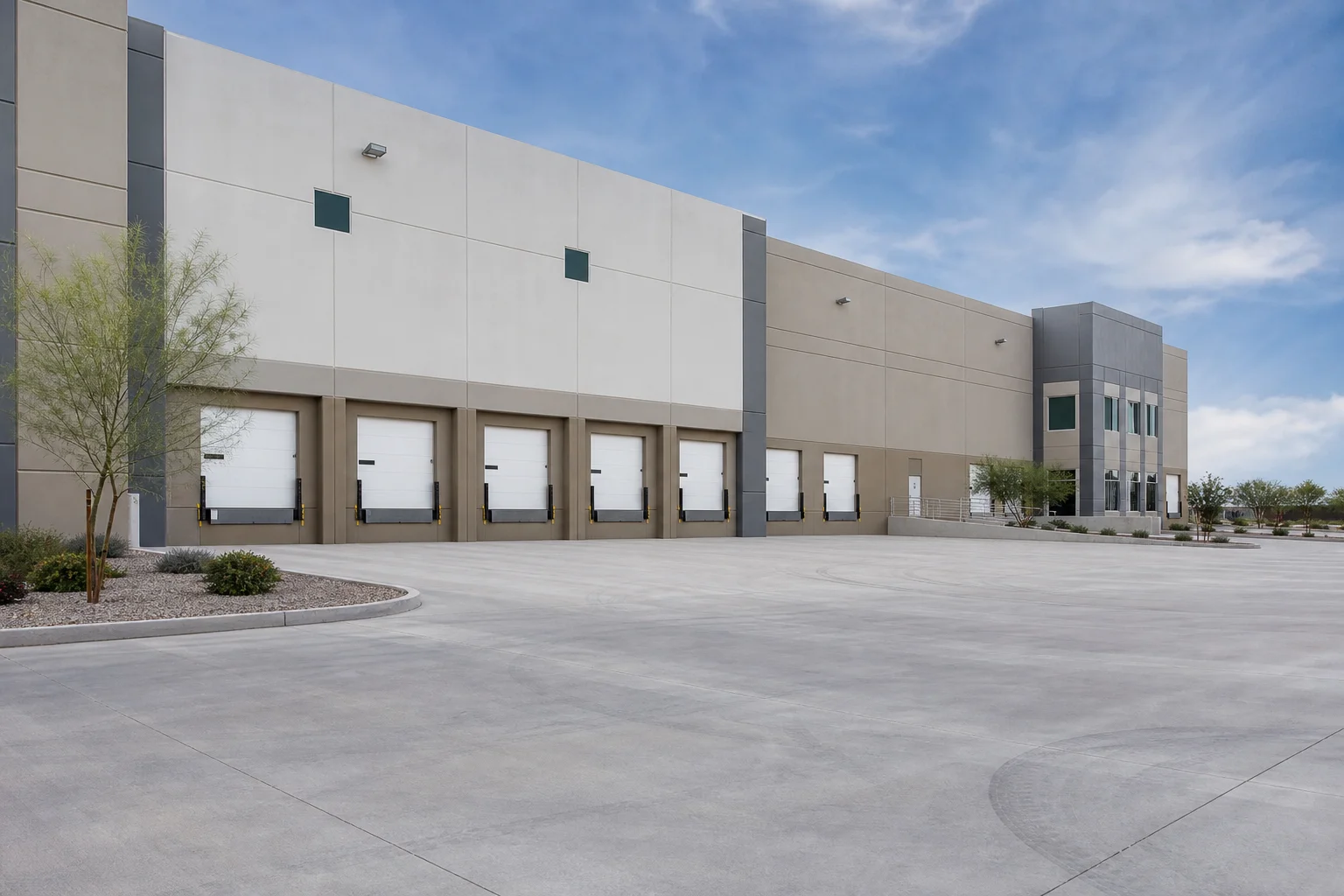
Single-tenant industrial buildings with clear heights of 24 feet or more, adequate truck court depth, and dock-high loading doors attract the strongest investor interest. Properties in established industrial corridors in Chandler, Mesa, Gilbert, and Tempe tend to command the most competitive pricing from institutional capital seeking long-term net-leased real estate assets.
Discuss Your Phoenix Industrial Property with David Pierce
If your business owns industrial or commercial real estate in the Phoenix metro and you want to understand what a sale-leaseback strategy for Phoenix industrial owner-operators could yield, the starting point is a current market valuation paired with a lease structure analysis. David Pierce at MHG Commercial works with operators across the Phoenix metro on industrial and commercial real estate transactions ranging from $500K to $100M+. Contact our brokerage to start a confidential conversation about your property and your options.