


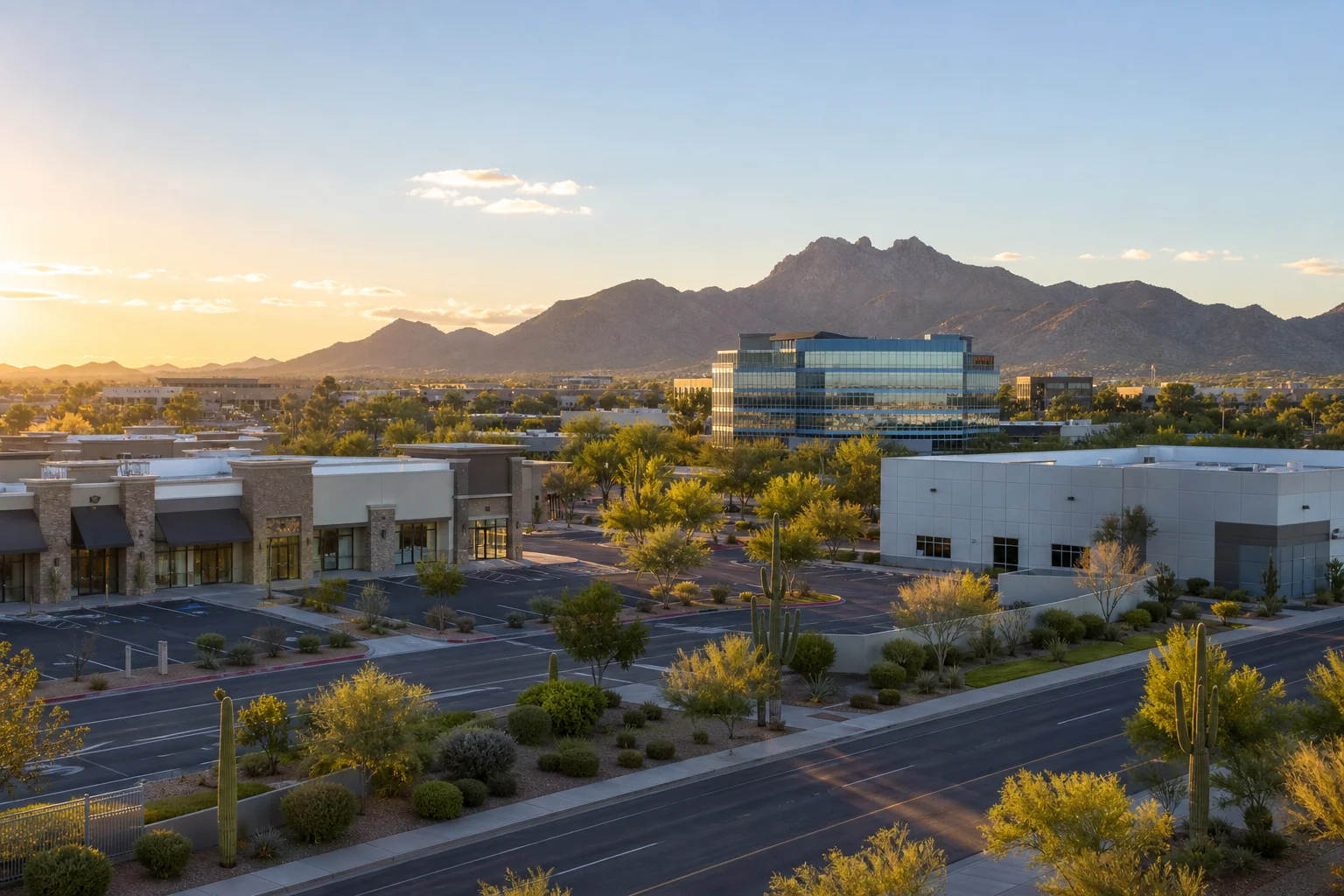
Commercial sale price per square foot in Scottsdale varies widely by property type, submarket, and building condition, which is why a single average number rarely tells the real story. Investors building investment portfolios in Phoenix metro need a comp set assembled the right way, not a headline figure pulled from a listing site.
By David Pierce, MHG Commercial
What Moves Commercial Sale Price per Square Foot in Scottsdale
Because commercial sale price per square foot in Scottsdale reflects so many inputs at once, treat any single quoted number as a starting point, not a verdict. Asset class is the biggest lever: a stabilized single tenant retail building, a value add industrial box, and a medical office suite each trade against a different buyer pool and a different set of comps. Submarket matters almost as much. Old Town Scottsdale, the Airpark, and South Scottsdale each carry their own supply, tenant demand, and zoning constraints, so a comp from one corridor does not automatically transfer to another. Building age, parking ratio, ceiling height for industrial, and remaining lease term on any in place tenant all shift the number further.
The Pierce CRE investment desk works transactions from roughly $500K through $100M plus, and price per square foot behaves differently across that range. A small owner user purchase underwrites against comparable owner user sales. An institutional acquisition underwrites against portfolio level return targets and a different financing structure entirely. Comparing a number from one end of that range against the other end without adjusting for it is one of the fastest ways to misread a comp set.
Is Price per Square Foot in Scottsdale Rising or Falling Right Now?
Direction varies by asset class and submarket at any given time, and it can move differently for industrial than for retail or office in the same quarter. Rather than relying on a headline market summary, pull closed sales from the trailing twelve months for the specific property type and submarket in question, then look at the trend across that set rather than any single sale. A broker working active listings and recent closings in Scottsdale can tell you what direction a specific asset class is actually moving in right now, which is more useful than a citywide average.
What Counts as a Good Price per Square Foot in Scottsdale?
There is no fixed threshold. What counts as a good price per square foot for commercial real estate in Scottsdale depends on the buyer's basis, financing terms, intended use, and exit timeline, not a number in isolation. A price that looks high against a stale comp set can be reasonable once you account for a shorter close, better tenancy, or lower deferred maintenance. Judge the number against a properly built comp set for that specific property type and submarket, not against a rule of thumb.
How to Build a Reliable Comp Set for a Scottsdale Commercial Property
Reading commercial sale price per square foot in Scottsdale comps correctly starts with matching property type and submarket before anything else. Start with the property type and submarket, then pull every closed sale that matches on both. From there, narrow by building size, age, condition, and use. A comp set built from mismatched property types will produce a number that looks precise and means very little.
How Many Comps Do You Need Before a Comp Set Is Reliable?
A comp set of two or three closed sales can mislead as easily as it can inform, since one outlier sale carries too much weight in a small sample. In most cases, five or more closed comps that genuinely match on property type, submarket, and condition give a more defensible range. When the pool of true matches is thin, which happens often in a tighter submarket like Old Town Scottsdale, widen the geography before you widen the property type.
How Current Do Comps Need to Be to Stay Valid?
Comps age quickly in a market that is moving. A sale from the trailing six to twelve months is generally the most reliable, since financing costs, buyer demand, and construction pricing can all shift within a year. An older sale is not automatically useless, but it needs to be weighted down and adjusted for the time gap rather than treated as equal to a recent closing.
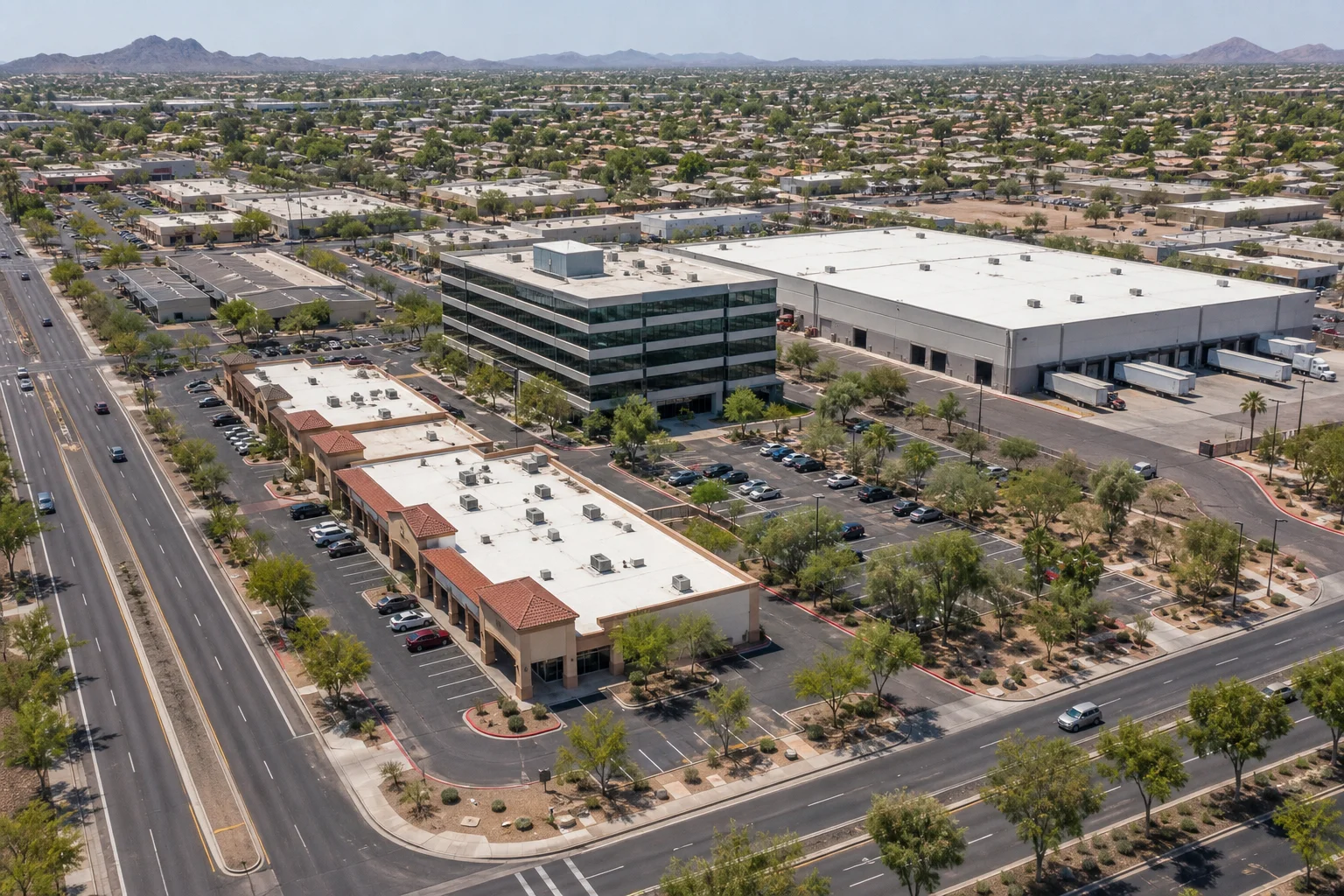
What Drives Price per Square Foot Differences Between Similar Scottsdale Properties
Two buildings on paper can look alike, similar size, similar age, similar submarket, and still trade at a meaningfully different number. Visibility and access off a major corridor, parking ratio, ceiling height and dock door count for industrial, and the strength and remaining term of in place leases all move the price independent of square footage. Deferred maintenance, roof and HVAC condition, and any environmental or zoning issue also factor into what a buyer is actually willing to pay per square foot, even when the building on the surface looks identical to its comp.
How Does Price per Square Foot Differ by Property Type in Scottsdale?
Office, retail, industrial, and medical each price against a different buyer pool and a different underwriting standard, so they are rarely comparable to each other directly. Retail leasing fundamentals, anchor tenancy, and pad site visibility drive retail pricing. Industrial pricing responds more to clear height, dock configuration, and functional layout than to interior finish. Office space pricing depends heavily on floor plate efficiency, parking ratio, and the class designation of the building. Medical office carries its own premium tied to buildout cost and tenant stickiness. Comparing a medical office sale against a general office sale, or a retail pad against an industrial flex building, will distort the number even when the square footage lines up.
Calculating Price per Square Foot and Avoiding Comp Mistakes
How Do You Calculate Price per Square Foot From a Sale Price?
Divide the total sale price by the building's total rentable or gross square footage, depending on which basis the comp set is using. The basis matters: a comp priced on rentable square footage and a comp priced on gross square footage are not directly comparable until you convert them to the same basis first.
What Mistakes Do Buyers Make When Comparing Comps?
The most common mistake is mixing property types or submarkets to pad out a thin comp set, which produces a number that looks statistically solid but is not actually comparable. A close second is ignoring occupancy and lease term, an owner user vacant building and a fully leased investment asset should never sit in the same comp set without an adjustment. Buyers also frequently use stale comps without adjusting for the time gap, or compare a shell condition sale against a building with existing tenant improvements as if the two were equivalent.
Does Price per Square Foot Include Tenant Improvements or Just the Shell?
It depends on what actually sold. A comp needs to state whether the price reflects a vacant shell, a building with existing tenant improvements left in place, or a sale that included a tenant improvement allowance credited back to the buyer. Comparing a shell sale directly against a finished, tenant occupied building without adjusting for that difference is one of the more common ways a comp set gets misread.
Price per Square Foot vs. Cap Rate: Which Should You Trust?
Price per square foot and cap rate answer different questions, and neither replaces the other. Price per square foot is a physical measure, useful for owner user purchases, land, and value add assets where income is not yet stabilized or is not the primary driver of value. Cap rate is an income measure, more useful once a property carries a stabilized, in place rent roll and the buyer is underwriting to a return. For a leased investment asset, cap rate usually carries more weight. For an owner user purchase, a value add asset, or land, price per square foot usually carries more weight. A properly built comp set uses both together rather than picking one and ignoring the other.
Frequently Asked Questions
Does a higher price per square foot always mean a worse deal? Not necessarily. A higher number can reflect a smaller building, a better location, existing tenant improvements, or lower deferred maintenance, all of which can justify the premium. Judge the number against a comp set built from genuinely similar properties before drawing a conclusion either way, and account for what the price actually included.
Can you compare price per square foot across office, retail, and industrial properties directly? Generally no. Each property type prices against a different buyer pool and underwriting standard, so a direct comparison across types distorts the number. Use price per square foot to compare within a property type and submarket, and rely on a broker to explain why two different asset classes carry different pricing.
What is considered a reliable number of comps for a Scottsdale comp set? Five or more closed sales that genuinely match on property type, submarket, and condition generally give a more defensible range when reading commercial sale price per square foot in Scottsdale comps than two or three would. In a tight submarket where true matches are scarce, widen the geographic radius before widening the property type, since a mismatched property type does more damage to reliability than a slightly wider radius.
Does price per square foot account for tenant improvement allowances? Only if the comp explicitly states it. A sale price that included a tenant improvement allowance credited back to the buyer will show a different net number than a comparable shell sale. Always confirm what condition each comp actually sold in before using it to set an expectation for your own property.
Get a Comp Set Built for Your Scottsdale Property
A reliable comp set takes a broker who tracks closed sales across property types and submarkets in real time, not a generic report. Contact our brokerage to get a comp set built around your specific property and timeline.