What ti allowance to ask for on a gilbert industrial lease typically comes down to lease term, credit, and shell condition. Tenants with 5-year commitments and strong credit can realistically target $30 to $50 per square foot in tenant improvement allowance. Shorter terms and thinner credit compress that range. Anchor your ask to a verified contractor bid before any letter of intent goes out.
By David Pierce, MHG Commercial
What Drives TI Allowance on Gilbert Industrial Leases
Tenant improvement allowance on a Gilbert industrial lease reflects four variables: shell condition, lease term, tenant credit, and submarket vacancy.
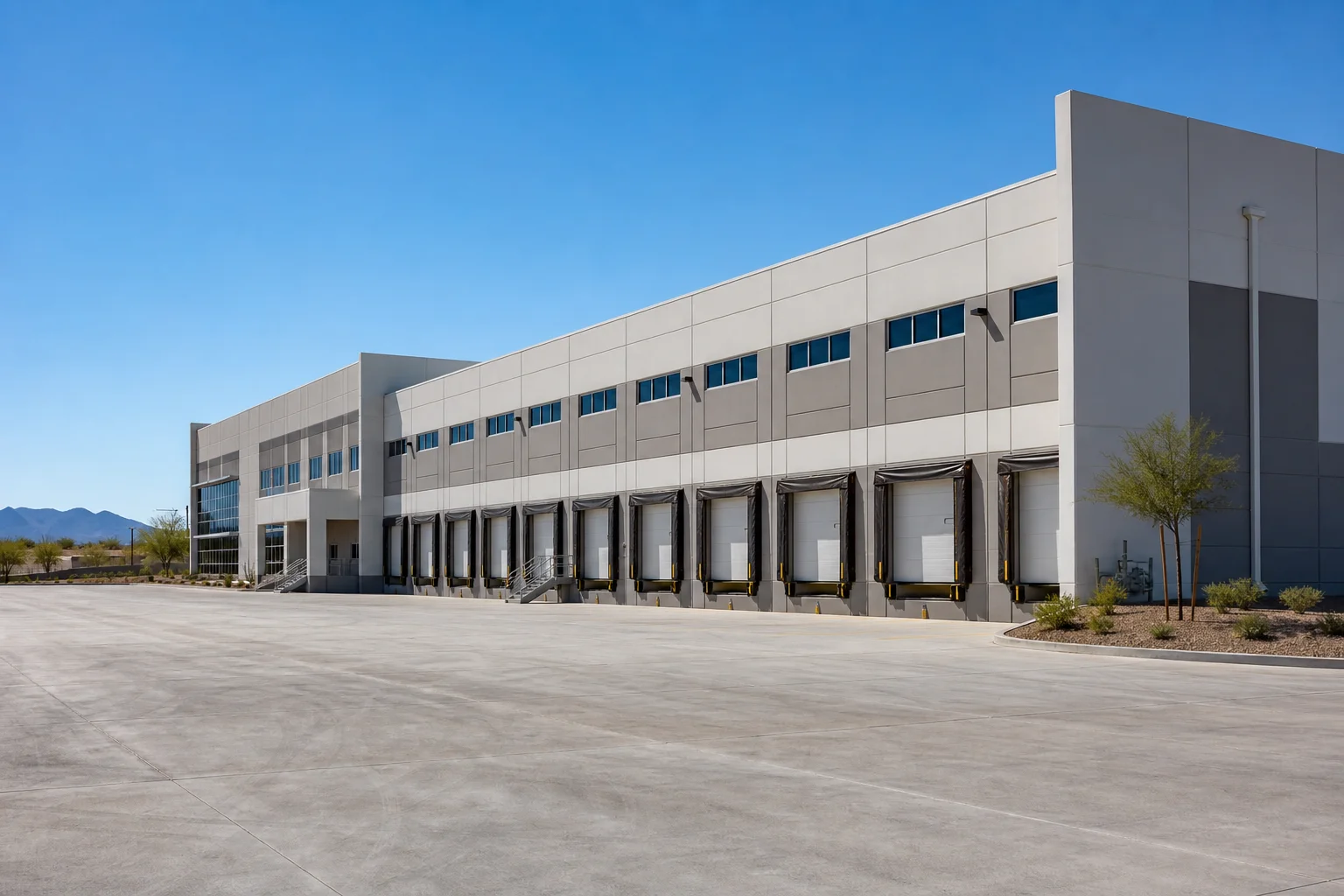
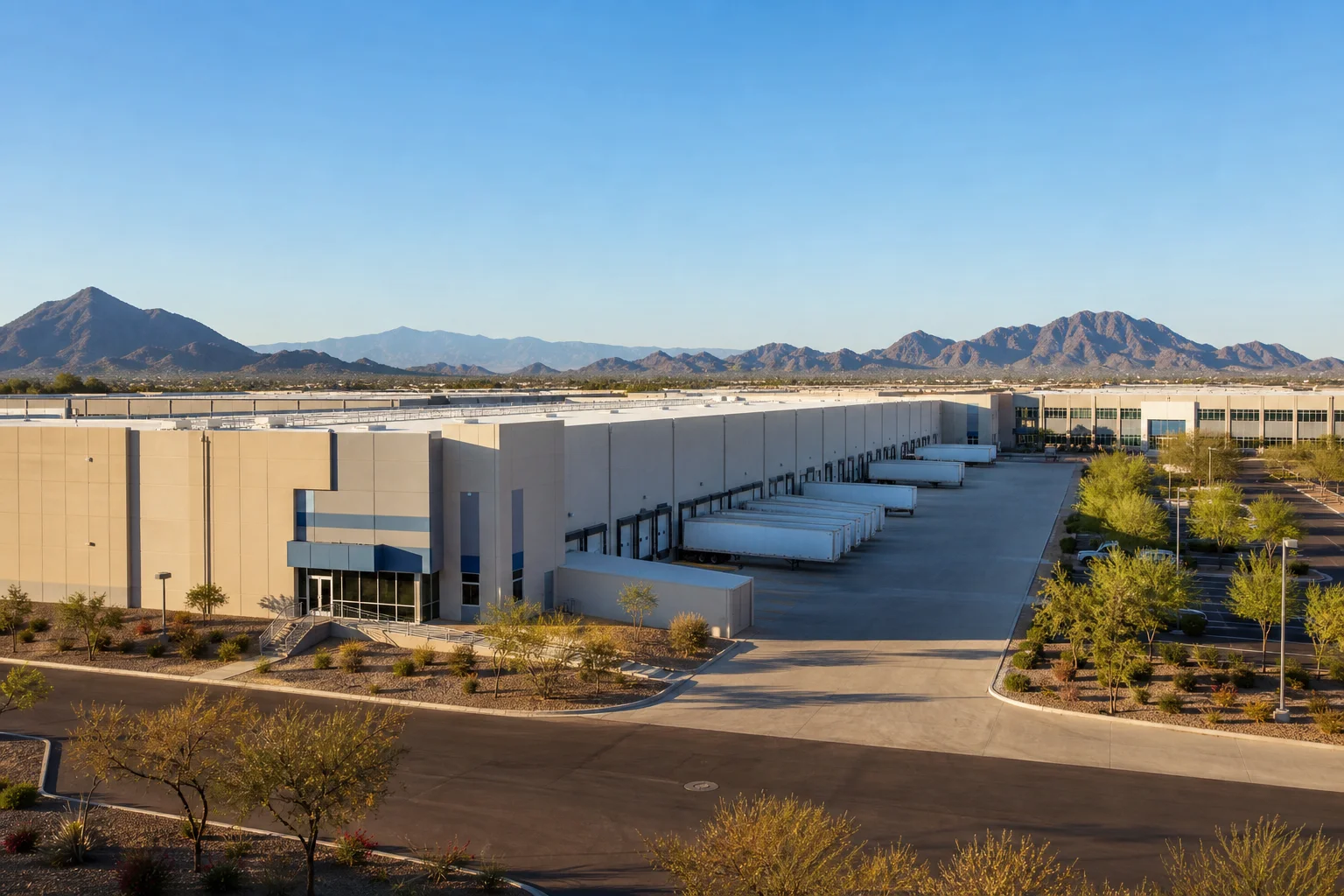
Cold dark shell properties (no HVAC, no lighting, bare concrete slab and tilt-up walls) carry a higher baseline allowance because the leased space requires more capital to reach operational condition. Warm shell properties arrive with restrooms, basic electrical service, and minimal office finish in place, reducing the landlord's required upfront contribution.
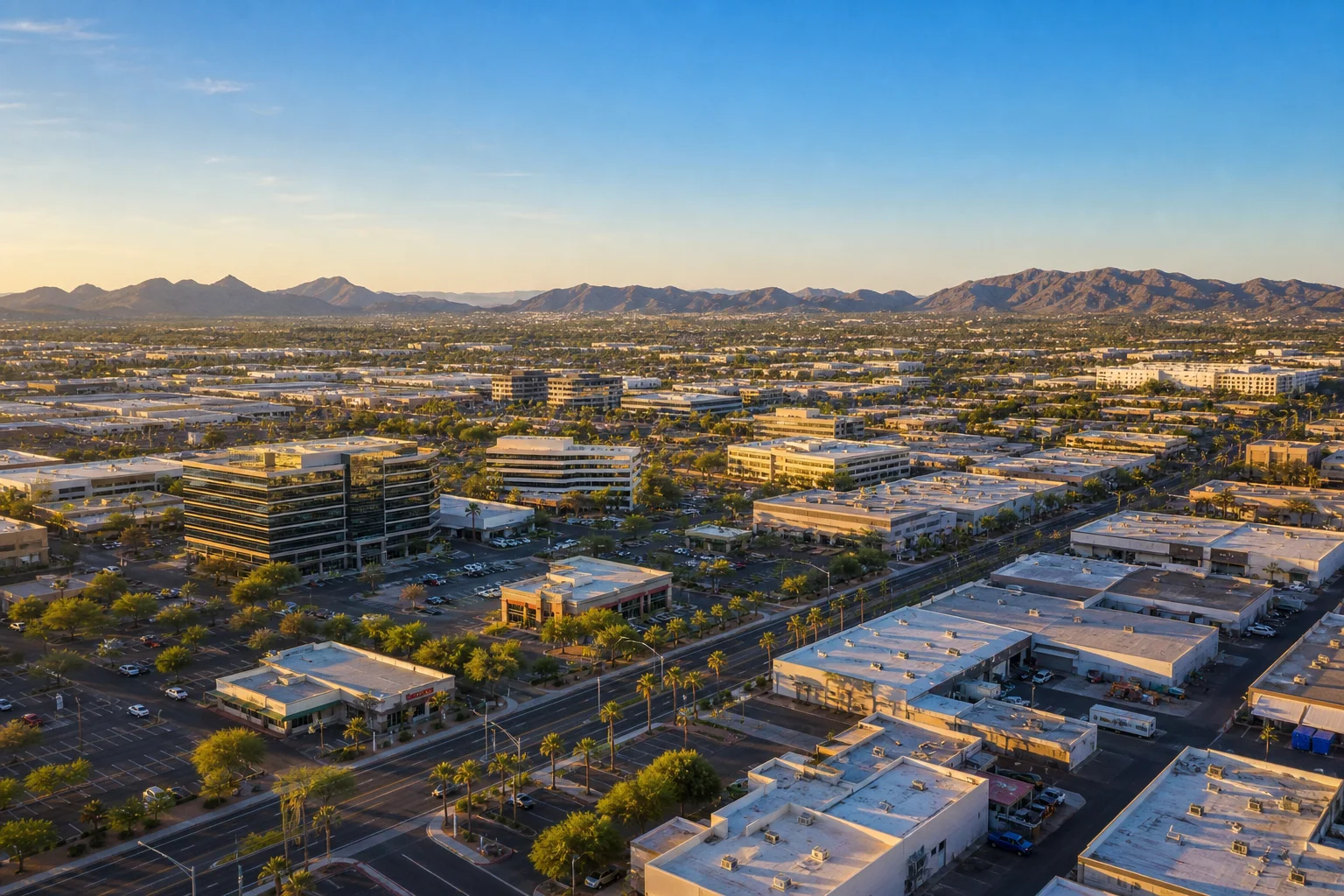
Gilbert's industrial submarket absorbed significant new supply through 2024 and 2025. CBRE's Phoenix Industrial Marketview (Q4 2025) reported East Valley vacancy below 6% across most product types. In corridors with tighter vacancy, landlords negotiate from a position of relative strength. Understanding where your target building sits on the local absorption curve should shape your opening ask.
What Tenant Improvement Allowance Covers in an Industrial Commercial Lease
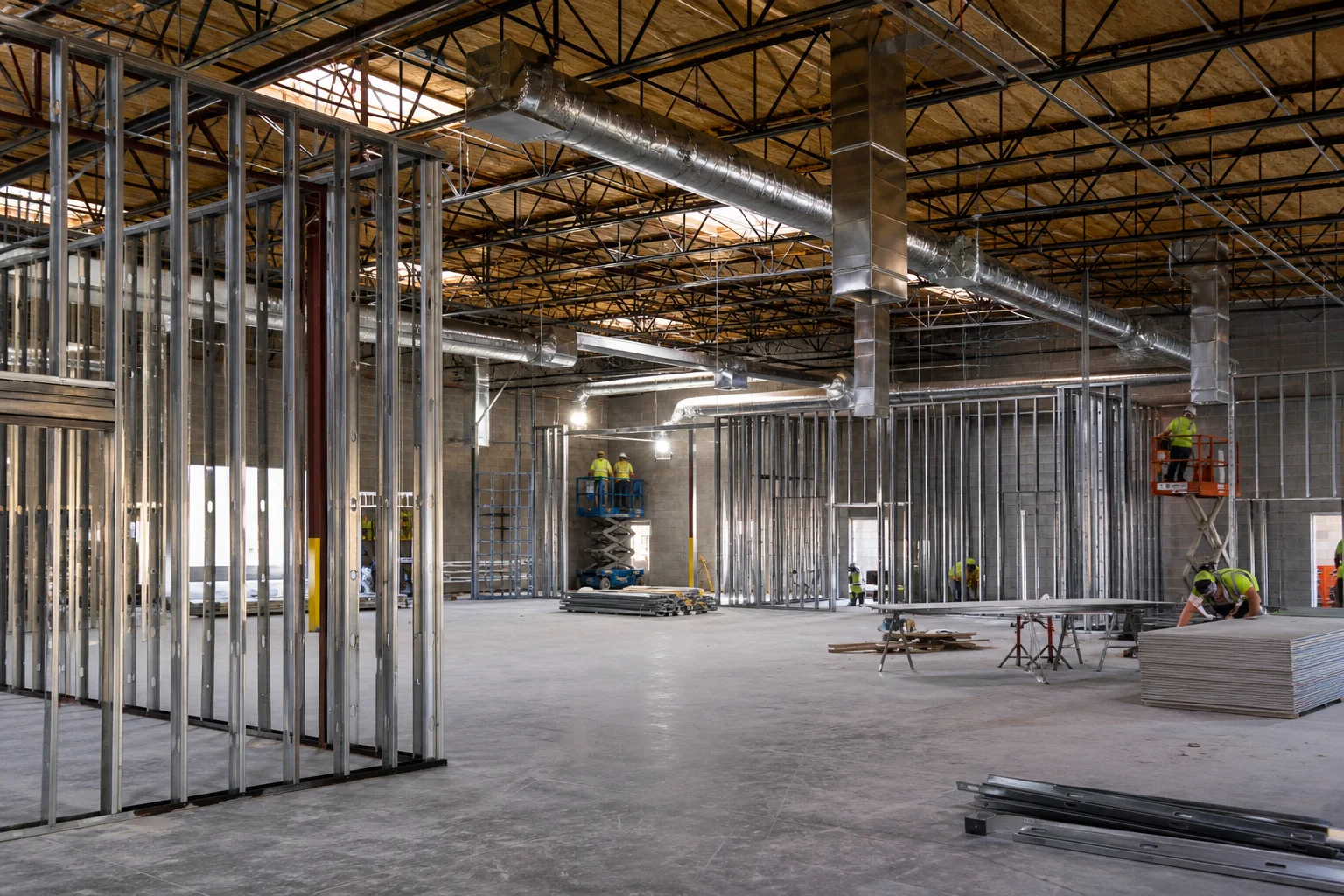
In a standard industrial commercial lease, the allowance tenant receives is defined by a build-out scope exhibit attached to the lease. Common items the allowance covers include:
- Interior framing and demising walls
- Electrical rough-in and panel upgrades
- HVAC installation or extension into the leased space
- LED lighting upgrades and warehouse-grade illumination
- Restroom construction for code compliance
- Basic office finish within the office portion (flooring, drywall, acoustical ceiling)
Standard tenant improvement allowance does not cover furniture fixtures and equipment. Furniture, fixtures, workstations, racking systems, and production equipment are tenant-funded costs in virtually every Gilbert industrial deal. On large anchor or build-to-suit transactions, a tenant can sometimes negotiate a separate FF&E credit as an explicit lease exhibit.
The tenant improvement allowance tenant ultimately receives should be documented before the lease is signed. The lease should define the allowance tenant improvement allowance draw schedule as a numbered exhibit attached to the commercial lease. Vague scope language is the most consistent source of TI disputes once construction begins.
How Lease Term and Square Footage Shape Your Ask
Landlords calculate TI requests by measuring the total contribution against the rent stream the lease generates. A 25,000 square foot warehouse on a 7-year lease term produces a fundamentally different amortization profile than the same property on a 3-year lease term. The longer the commitment, the more the landlord can recover the allowance across rent collections, and the more willing they typically are to contribute.
Working benchmarks for the Gilbert industrial market based on current deal activity:
- 3-year lease term: $15 to $25 per square foot for warm shell conditions
- 5-year lease term: $25 to $40 per square foot for standard industrial build-outs
- 7-year or longer: $40 to $60 per square foot, particularly on cold dark shell or build-to-suit
These ranges assume a creditworthy tenant and a reasonable build-out scope. Thin credit, a building with competing demand, or a minimal improvement need all pull the number lower. A below-market base rent paired with a larger ti allowance ask is a common structure in a commercial lease where the landlord prioritizes rent certainty over lump-sum TI recovery.
What TI Allowance to Ask for on a Gilbert Industrial Lease
Knowing what ti allowance to ask for on a gilbert industrial lease requires understanding the landlord's amortization math before you submit a letter of intent.
When a landlord evaluates a $35 per square foot request on a 12,000 square foot industrial space, they are examining a $420,000 commitment. They need confidence that this commitment is fully recovered before the lease term ends and that the tenant has the financial strength to sustain the full term. Your leverage comes from credit strength, lease length, and what it would cost the landlord to re-tenant the space if you walked.
One underused structure in commercial real estate negotiations is staging the allowance in milestone draws tied to construction completion. Landlords accept this because it limits their exposure to early default. Tenants benefit because the draws are tied to finished work, which removes incentive for landlord-controlled construction delays.
A second lever is base rent. If the landlord's counter falls below your target, offer a higher base rent in exchange for a larger TI package. Many landlords' internal return models favor higher ongoing rent income over larger upfront allowance costs. Running both structures with your broker before negotiations begin is practical preparation.
Ti allowances across Gilbert have tightened alongside broader Phoenix commercial space absorption since 2022. Knowing current comp activity in your specific corridor, whether Higley, San Tan, or the 202 loop industrial nodes, gives you a factual basis for the ask rather than a number pulled from a broad submarket average.
Build-Out Scope: What to Confirm Before You Negotiate
Requesting an allowance figure without a contractor walkthrough is a consistent mistake in industrial lease negotiations. The gap between what a landlord describes as delivery condition and what you actually need to operate is almost always wider than expected.
Common cost surprises in Gilbert industrial build-outs:
HVAC capacity: Older warehouse buildings along the South Gilbert and Higley corridors frequently have undersized rooftop units. Replacing or supplementing HVAC can add $8 to $15 per square foot to the actual build-out cost. Confirm existing BTU capacity against your operational density before agreeing to an allowance number.
Electrical service: Tenants with manufacturing equipment, server infrastructure, or high-draw production needs regularly find the existing panel cannot support their load. Panel upgrades and transformer work are typically excluded from the standard landlord contribution in an industrial commercial lease.
ADA restrooms: Occupancy classification changes often trigger ADA-compliant restroom upgrades assigned to the tenant side of the ledger. Budget for this before entering negotiations.
Flooring specification: Sealed or epoxy-coated concrete is listed as standard delivery on many Gilbert industrial leases. Confirm the specification. If your operations require a specific tolerance, coating type, or surface thickness, document it in the scope exhibit before agreeing to the allowance amount.
The definition of what the commercial lease allowance covers is shaped entirely by the scope exhibit. Negotiate the scope before you lock the dollar figure.
Frequently Asked Questions
What ti allowance to ask for on a gilbert industrial lease with a 5-year term?
For a 5-year commercial lease on warm shell industrial space in Gilbert, a starting ask of $30 to $40 per square foot is within current East Valley market range. Cold dark shell space or longer lease terms can justify higher asks. Anchor your request to a verified contractor estimate, since actual build-out costs vary significantly by scope and existing building conditions.
Does tenant improvement allowance cover furniture and equipment?
Standard tenant improvement allowance in a commercial lease does not cover furniture fixtures and equipment. FF&E is a tenant cost in virtually every industrial real estate transaction in the Phoenix metro. Build-to-suit deals occasionally include a separate FF&E credit as a distinct lease exhibit, but it must be negotiated explicitly, not assumed from general build-out language.
Can I get a higher TI allowance with a shorter lease term?
Shorter lease terms compress landlord willingness to contribute because fewer rent periods are available to recover the cost. A 3-year lease term in the Gilbert industrial market will typically yield a lower TI than a 5-year or 7-year commitment. If a shorter term is required, offering a higher base rent in exchange for a larger allowance is the most common structure.
Who owns improvements to the leased space at lease expiration?
In most commercial lease structures, improvements made to the leased space become the property of the landlord at expiration unless a restoration clause requires the tenant to return the space to original condition. Industrial leases rarely require full restoration, but mezzanines, demising walls, and HVAC modifications sometimes carry restoration language. Review this clause before signing.
What happens when build-out costs exceed the allowance?
The tenant funds the overage. If the contractor bid comes in at $50 per square foot and the allowance is $38 per square foot, the tenant covers the $12 difference from their own capital. Some landlords will structure the overage as an amortized addition to base rent on long-term deals, though this is more common in office than in industrial real estate.
Get Expert TI Guidance Before Signing a Gilbert Industrial Lease
Every Gilbert industrial lease negotiates differently depending on the building, the landlord's carry cost, and current demand in that specific submarket corridor. Anchoring your ask to real comp activity and a verified contractor scope puts you in a defensible position from the first round of negotiations. Contact our brokerage to benchmark your TI ask against current Gilbert comps.