


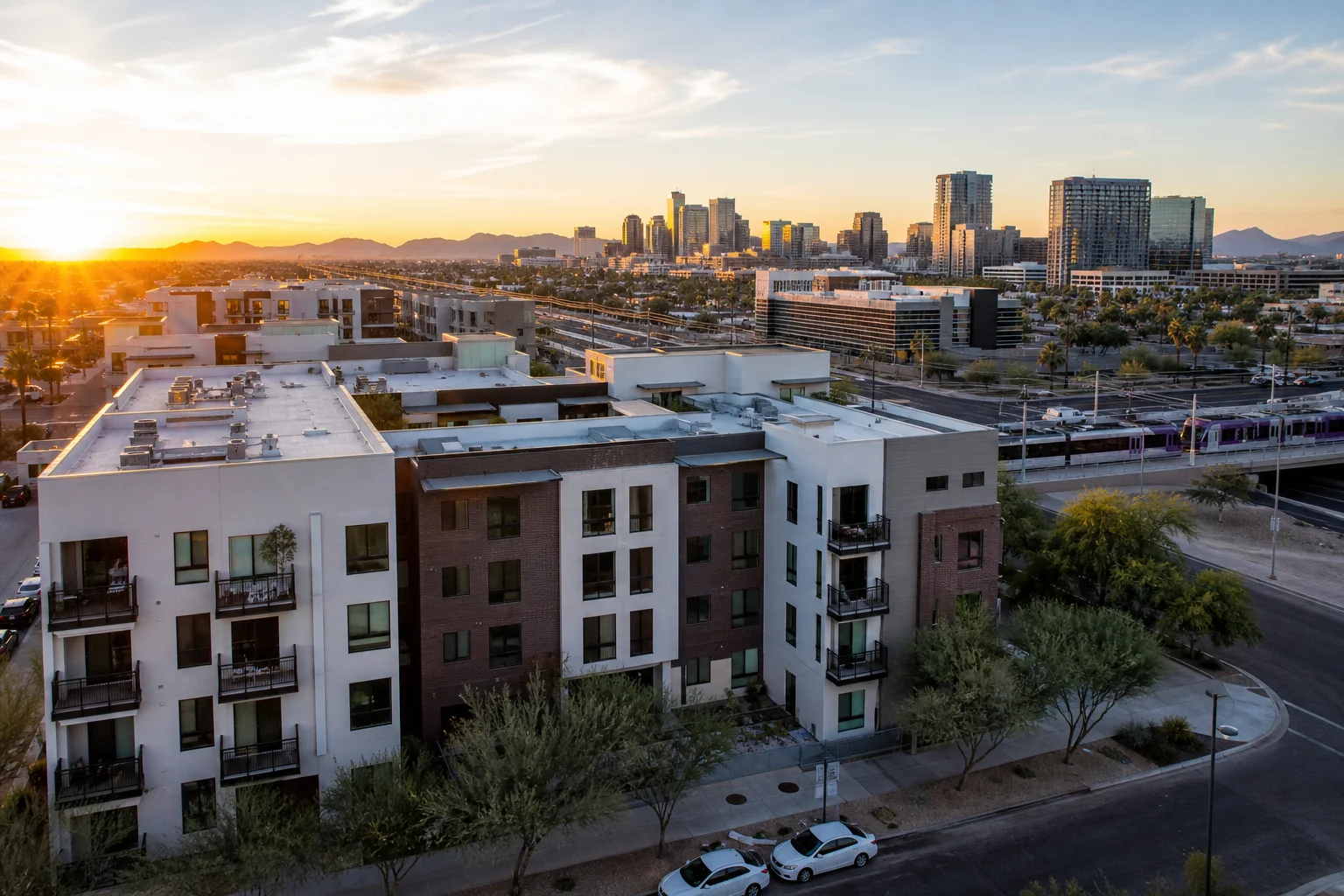
Rents for multifamily properties near Arizona State University in Tempe have climbed as enrollment growth outpaces new supply, and that gap is why Tempe multifamily near ASU is drawing steady capital from investors across the Phoenix metro pursuing multifamily investment close to campus.
By David Pierce, MHG Commercial
What Is Driving Multifamily Rent Growth Near ASU in Tempe?
Rent growth for multifamily housing near Arizona State University stems from a straightforward supply and demand imbalance. ASU's Tempe campus enrolls one of the largest full-time student bodies in the country, and a meaningful share of that population looks for housing within a few minutes' walk or bike ride of campus rather than committing to a car-dependent commute. Land close to campus is largely built out, and new construction has to compete with zoning limits, parking requirements, and rising build costs, so new supply arrives slower than new demand. Add in graduate students, faculty, and young professionals who want proximity to downtown Tempe's restaurants, transit, and light rail access, and the result is a rental market where occupancy stays high and landlords have room to push rent at renewal. This dynamic is the core reason Tempe multifamily near ASU keeps outperforming rent growth in outlying Phoenix metro submarkets.
Why Are Investors Targeting Multifamily Properties Near ASU Right Now?
Investors are drawn to the predictability of demand for student housing near Arizona State University, which does not swing with the broader economy the way office or retail demand can, so occupancy near a major university tends to hold up through rate cycles that hit other property types harder. Many multifamily properties near campus lease by the bedroom rather than the unit, which spreads collection risk across multiple tenants instead of one household, and parental co-signing on leases adds a layer of payment reliability that traditional multifamily doesn't always have. For an investor comparing entry points across the Phoenix metro, student housing adjacent to a top-tier public university offers a demand floor that's harder to find in less concentrated rental markets.
Which Tempe Neighborhoods Near ASU Have the Strongest Multifamily Demand?
Demand concentrates in the neighborhoods within a few minutes' walk or bike ride of campus. Corridors along College Avenue in Tempe and the blocks feeding into Apache Boulevard see consistent leasing activity because students can reach class without a car. Older residential pockets, including streets near Jentilly Lane in Tempe, draw investor attention for a different reason: several lots sit zoned multi-family with room to add square footage or an accessory dwelling unit, a value-add path that lets an owner increase unit count on an already-entitled parcel rather than negotiate a rezone. Comparable listings in the area show similar beds, baths, and MLS-verified square footage, which makes it easier to underwrite a fourplex or eightplex against recent real estate sales nearby. Downtown Tempe itself, with its light rail stop and walkable retail, continues to pull renters who want urban amenities within blocks of campus, and that has kept vacancy in the downtown core lower than the broader Tempe, AZ rental market.
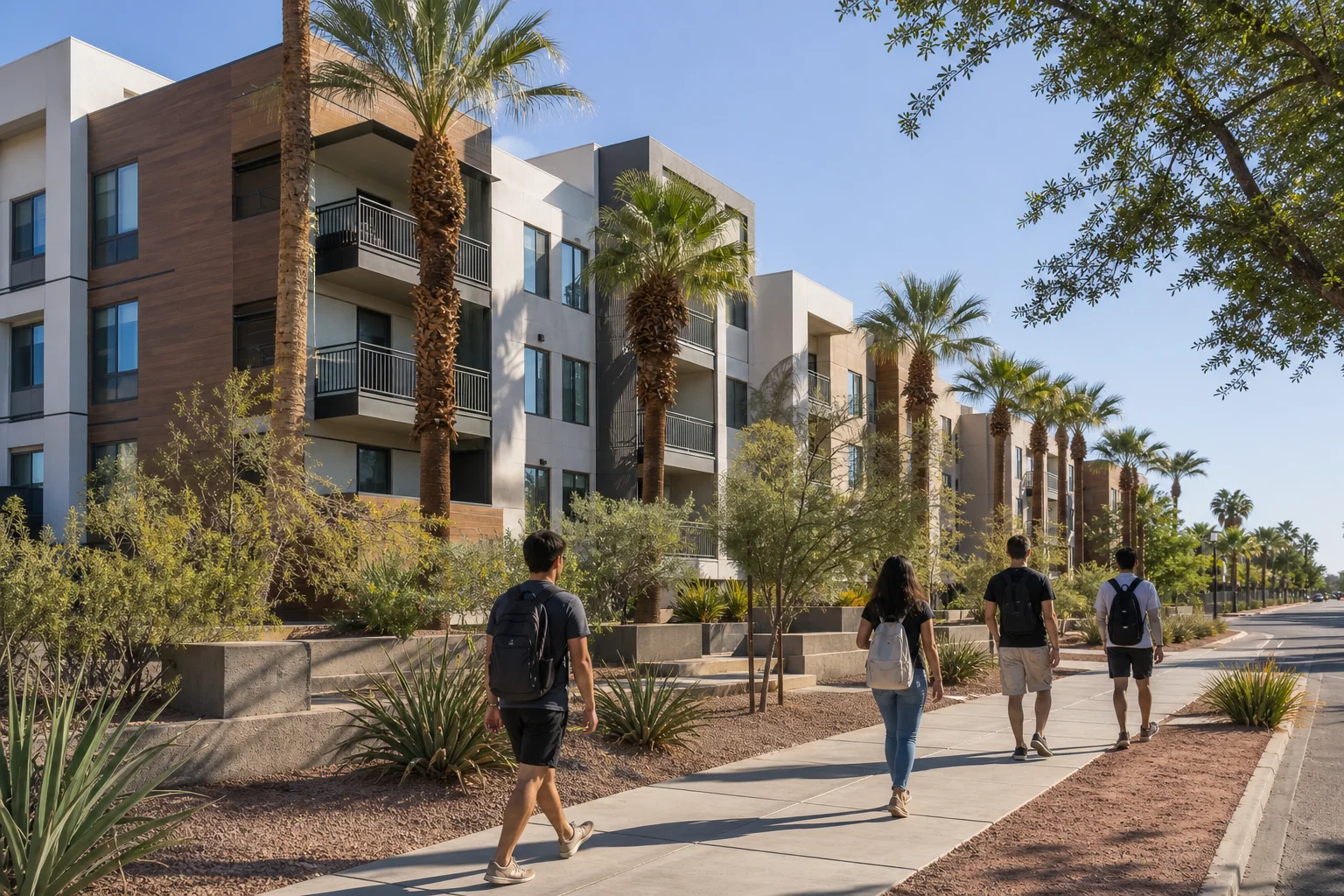
How Does ASU Student Enrollment Affect Occupancy and Rents for Nearby Multifamily Housing?
Arizona State University's enrollment growth on its Tempe campus is the single largest demand driver for nearby multifamily housing. Every incoming class that outpaces on-campus housing capacity sends a portion of students into the private rental market, and because a large share of that demand is inflexible about location (students want to be close enough to walk or bike to class), the properties within that radius see occupancy pressure before anywhere else in Tempe. Property owners near campus generally set lease terms around the academic calendar rather than a standard twelve-month cycle, and that alignment with the school year is part of why occupancy in this submarket tends to run tighter than citywide averages during the fall and spring semesters.
What Cap Rates and Price Per Unit Does Tempe Multifamily Near ASU Command?
Cap rates and price per unit for Tempe multifamily near ASU move with the same demand pressure driving rents. Properties within easy walking distance of campus have historically traded at tighter cap rates than comparable multifamily assets farther from a university, reflecting the premium buyers are willing to pay for a location with a durable renter base. Price per unit also tends to run higher near campus because buyers are underwriting location and lease-up speed as much as unit finishes. Actual pricing on any specific property depends on unit mix, condition, parking ratio, and current rent roll, so investors evaluating a deal near ASU should work through the underwriting with a broker who tracks recent comparable sales in the submarket rather than relying on metro-wide averages.
Is Buying Multifamily Near ASU a Good Investment in 2026?
For an investor whose strategy fits the asset type, multifamily near ASU remains a reasonable fit for 2026 given the enrollment-driven demand base and the limited land available for new competing supply. It is not a universal fit: student-oriented multifamily comes with higher turnover, seasonal leasing patterns tied to the academic calendar, and management demands that differ from a standard family rental property, so it suits investors who are comfortable with, or plan to hire for, that operating model. Investors building out investment portfolios across the Phoenix metro often pair a university-adjacent asset with more stable, longer-lease holdings elsewhere to balance the higher management intensity against steadier demand. As with any acquisition, the right answer depends on the specific property, financing, and the investor's own return targets, which is a conversation worth having with a broker before making an offer.
Frequently Asked Questions
What is a good cap rate for multifamily property near ASU? There is no single number that applies across every deal. Cap rates near campus have generally traded tighter than the broader Phoenix metro average because of the stability of student demand, but the right cap rate for any specific property depends on condition, financing, and rent roll. A broker who tracks recent comparable sales near ASU can walk through current pricing on a specific asset.
How much does ASU student demand drive multifamily rent in Tempe? Student demand is the primary driver of multifamily rent within walking or biking distance of campus. As enrollment outpaces on-campus housing capacity and new private supply, more students compete for the same units, which supports rent growth in that radius even when rents in outlying Tempe submarkets grow more slowly.
What is the average rent for a multifamily unit near ASU? Average rent varies widely by bedroom count, unit condition, and distance to campus, so a single citywide figure is not a reliable guide for underwriting. Properties closer to campus and to downtown Tempe generally command a premium over comparable units farther away. Current rent comps for a specific property are best pulled at the time of underwriting.
Where are the best multifamily investment areas near Tempe and ASU? The strongest demand sits within walking or short biking distance of campus, including the College Avenue corridor, the blocks near Apache Boulevard, downtown Tempe, and residential pockets zoned for multi-family use such as the streets near Jentilly Lane. Each area has a different mix of zoning, lot size, and renter profile, so the right fit depends on the investor's goals.
Will multifamily rents near ASU keep rising through 2026? Rent growth near ASU is likely to continue as long as enrollment keeps outpacing new supply within walking distance of campus, though the pace of growth can vary by year and by submarket. No specific rent trajectory is guaranteed, and investors should evaluate current leasing data on any property before underwriting future rent assumptions.
Get Local Guidance on Multifamily Near ASU
Pierce CRE tracks multifamily activity across Tempe, AZ, Chandler, Gilbert, and Scottsdale, and can walk through current pricing, zoning, and lease-up data for properties near campus. Contact our brokerage to review Tempe multifamily near ASU opportunities before you make an offer.