


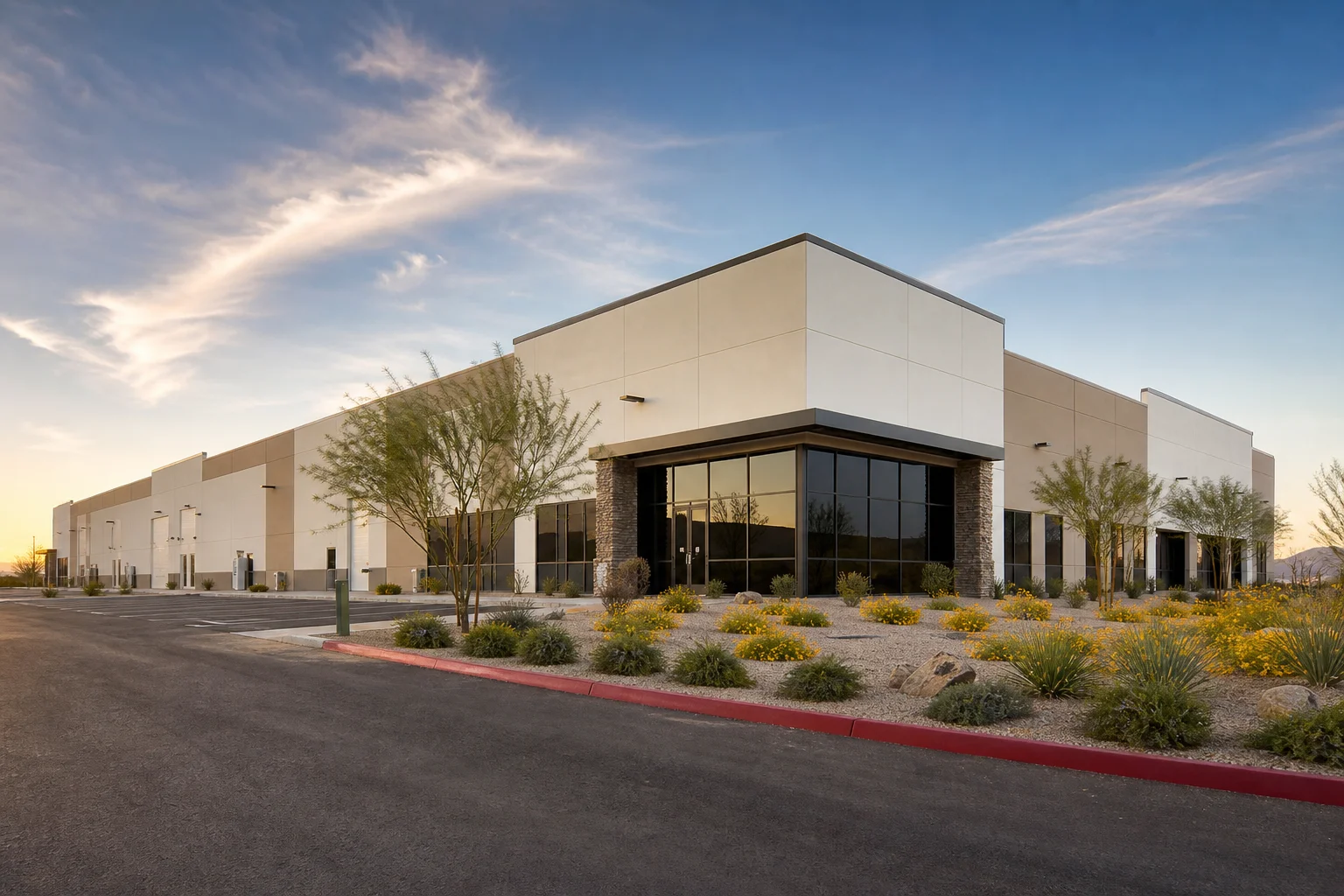
Deciding between build to suit in Peoria and signing another five-year lease comes down to control, cost, and timeline. Owner-occupiers and investors increasingly choose new development over leasing when space needs are specific, growth is planned, and the numbers pencil out over a ten-year hold.
By David Pierce, MHG Commercial
What Build to Suit in Peoria Actually Means
A build to suit project starts with a tenant or buyer's operational requirements, not a developer's speculative floor plan. The site is selected, the building is designed around the occupant's workflow, and construction proceeds under a contract that ties delivery to the end user's specifications from the first drawing. This differs from leasing an existing space or even a spec building, where the footprint, clear height, dock configuration, and finish package are already fixed before a tenant ever walks through the door.
In Peoria, this approach has become common among contractors, distributors, medical groups, and retailers who have outgrown a leased space but cannot find an existing building with the right layout, power capacity, or yard area. Rather than compromise on features that do not fit daily operations, these users control the design and own the asset once it is built.
Why Peoria Is Seeing More Build-to-Suit Activity
Peoria's growth along the Loop 303 corridor has pulled industrial, medical, and retail users west from older, tighter submarkets. Much of this demand traces to industrial real estate absorption near the freeway interchanges, where large parcels still allow for modern clear heights and truck court depth that older buildings in central Phoenix cannot offer.
Compared with land costs in Scottsdale AZ or infill Phoenix, Peoria and neighboring Buckeye AZ still price land at levels that support ground-up construction budgets. That gap matters. A business that would need to stretch well beyond market lease rates to justify new construction in a tighter Arizona submarket can often make the math work in Peoria, where land basis is lower and the city has been receptive to commercial and light industrial permitting.
Own vs. Lease: Running the Numbers
The decision rarely comes down to a single number. It requires comparing occupancy cost over a realistic hold period, factoring in what ownership builds versus what a lease simply consumes.
Lease Costs Over a Multi-Year Term
A lease keeps upfront capital low and shifts many maintenance and structural risks to a landlord, depending on how the lease is structured. But every dollar paid in rent builds no equity. Renewal terms are also uncertain: rates at the next lease cycle depend on market conditions the tenant does not control, and a landlord's redevelopment plans can force a relocation regardless of how well the space has performed.
Ownership Costs and Equity Build
Ownership requires a larger initial outlay, land acquisition, entitlements, and construction draws, before a business occupies a single square foot. In exchange, occupancy costs become more predictable once permanent financing is in place, and each payment builds equity in a real asset rather than funding someone else's building. For a business with a long operating horizon in Peoria, that equity position is often the deciding factor over a lease that resets in five to ten years.
Site Selection and Space Requirements
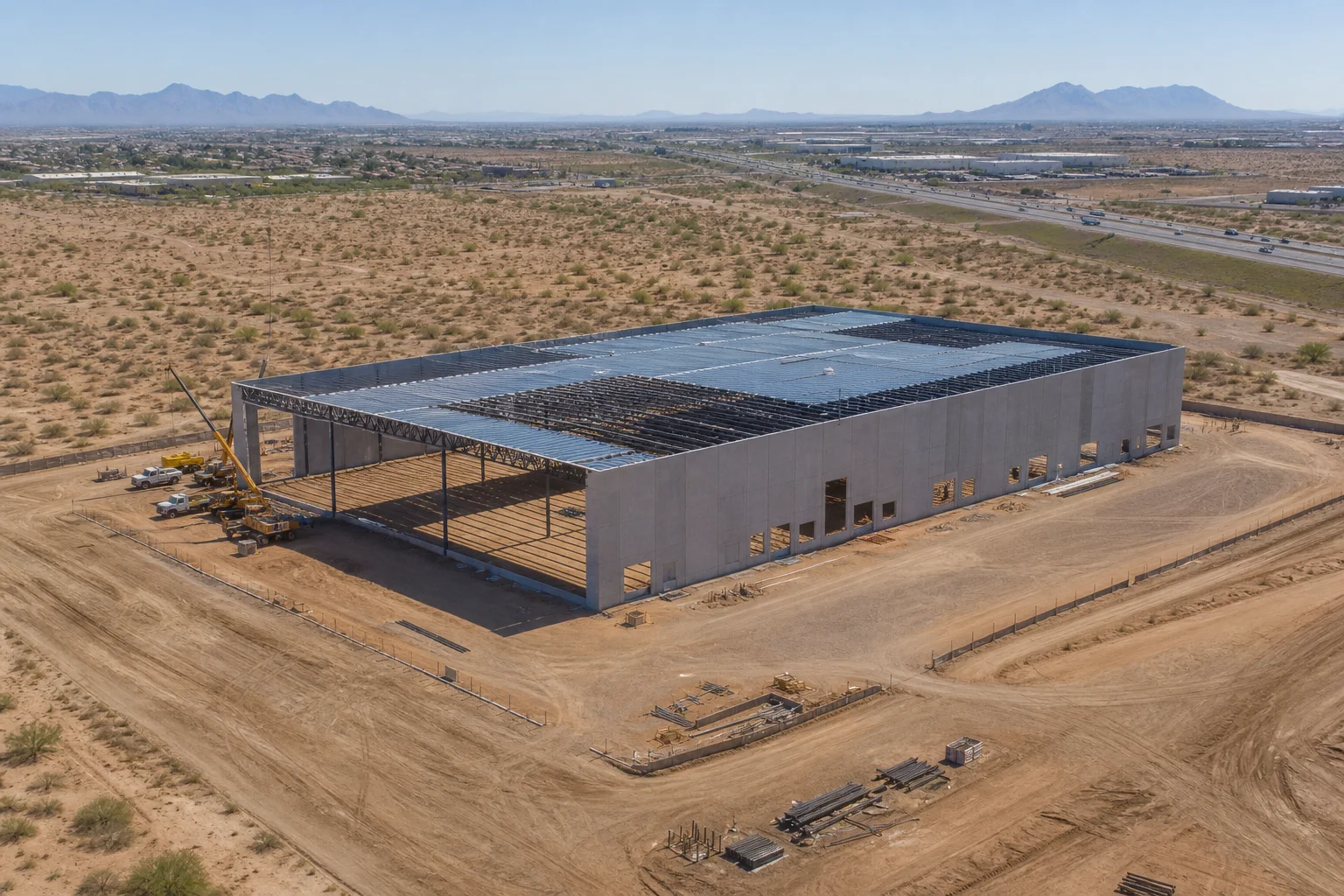
Finding the right parcel is where most build to suit projects succeed or stall. Zoning, utility capacity, access for trucks or customers, and proximity to labor all factor into whether a site supports the intended use. Various parcels along Peoria's commercial corridors carry different entitlement histories, and confirming what is actually buildable, not just what is listed, takes local site knowledge before a budget is finalized.
A broker who understands the city's permitting patterns and current inventory can narrow the search to sites that fit both the space program and the budget, rather than spending months on parcels that will not clear zoning or utility review. That vetting work, done early with an experienced team, prevents costly redesigns after a deal is already under contract.
Financing and Timeline Realities
Build to suit projects move on a different clock than a lease signing. Financing, design, and construction stack sequentially, and each phase carries its own risk if not managed with a realistic schedule from the start.
Construction Financing
Most build to suit projects use a construction loan that converts to permanent financing once the certificate of occupancy is issued. Lenders will want a signed purchase agreement or design-build contract, a completed budget, and often a pre-leasing or owner-occupancy commitment before releasing funds. Businesses considering this path should learn what their lender requires well before a site is under contract, since financing approval timelines can extend the overall project by months if started late.
From Site Control to Occupancy
Between securing land, finalizing design, permitting, and construction, a build to suit project in Peoria typically runs longer than a comparable lease-up. Working with builders and design teams who have delivered projects in the same jurisdiction shortens the permitting curve, since they already know the city's plan review process and common points of delay. Pricing certainty improves once a guaranteed maximum price contract is signed, but businesses should still budget contingency for site conditions, material costs, and inspection timing that can shift a completion date.
Frequently Asked Questions
Is build to suit in Peoria more expensive than leasing? Upfront costs are higher because land, design, and construction are paid before occupancy. Over a ten-year hold, ownership often costs less per square foot than repeated lease renewals, since payments build equity instead of funding a landlord's asset. The right comparison depends on hold period, financing terms, and how the site is used.
How long does a build to suit project take from site selection to occupancy? Timelines vary with building size, entitlement complexity, and permitting speed, but most projects run well beyond a typical lease-up period once land closing, design, permitting, and construction are sequenced. Starting site selection and financing conversations early is the most reliable way to protect the schedule.
What types of buildings work best as build to suit in Peoria? Industrial and flex buildings, medical and professional offices, and retail buildings with specific drive-thru or yard requirements are the most common build to suit projects in the West Valley, largely because standard existing inventory rarely matches their operational needs.
Can a build to suit project include future expansion space? Yes. Many owners design the initial building with expansion in mind, either through additional building pad rights on the same parcel or shell space finished later as the business grows. This is decided during site selection and should be confirmed with zoning before the land is purchased.
Do I need to already own land to start a build to suit project? No. Most build to suit projects begin with site selection, identifying and putting a parcel under contract that fits the required space, budget, and zoning before design work begins.
Talk Through Your Own vs. Lease Decision With Our Team
Whether build to suit in Peoria makes sense for your business depends on your growth timeline, budget, and the sites currently available in the West Valley. Contact our brokerage to review your options with a broker who works this market directly.