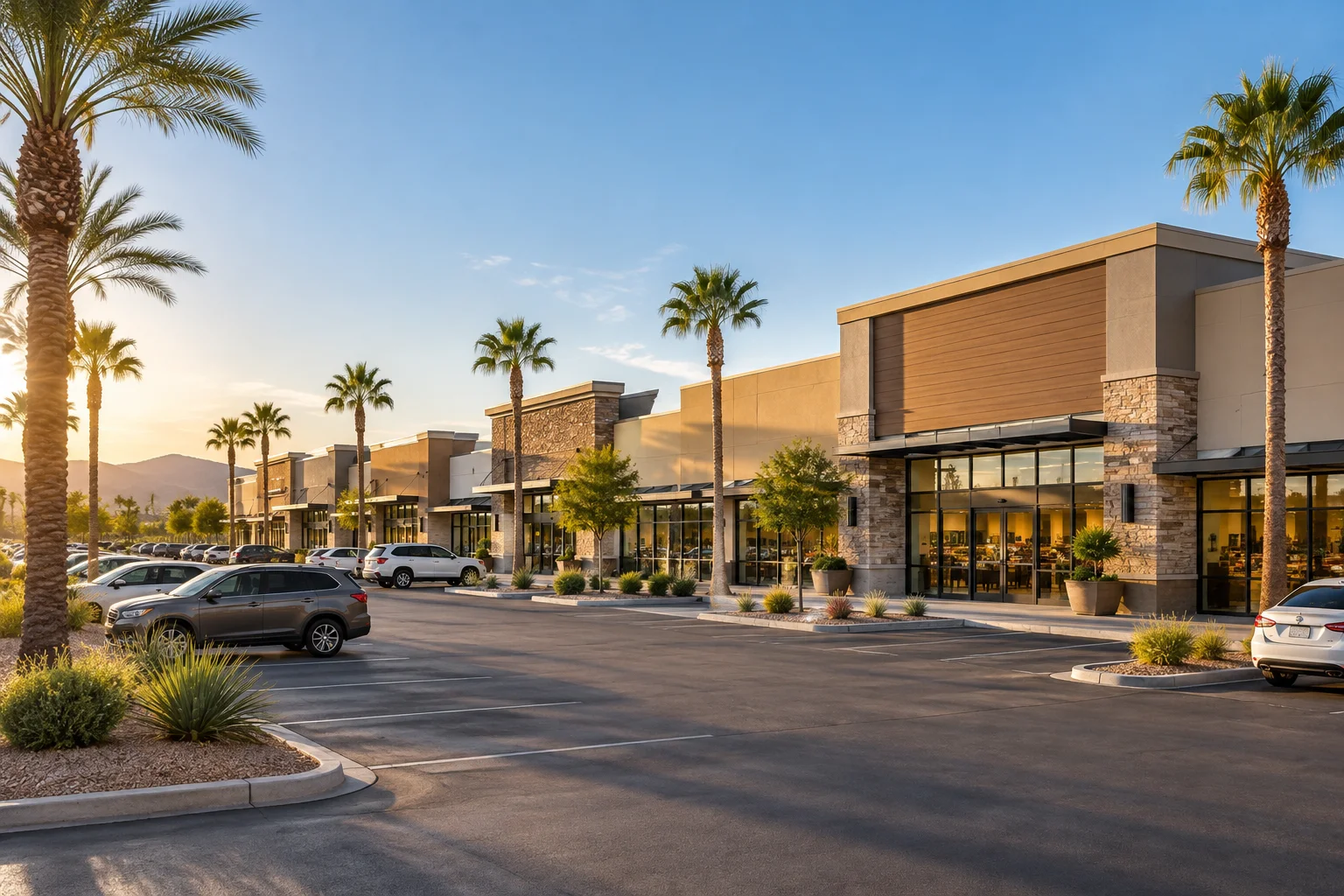
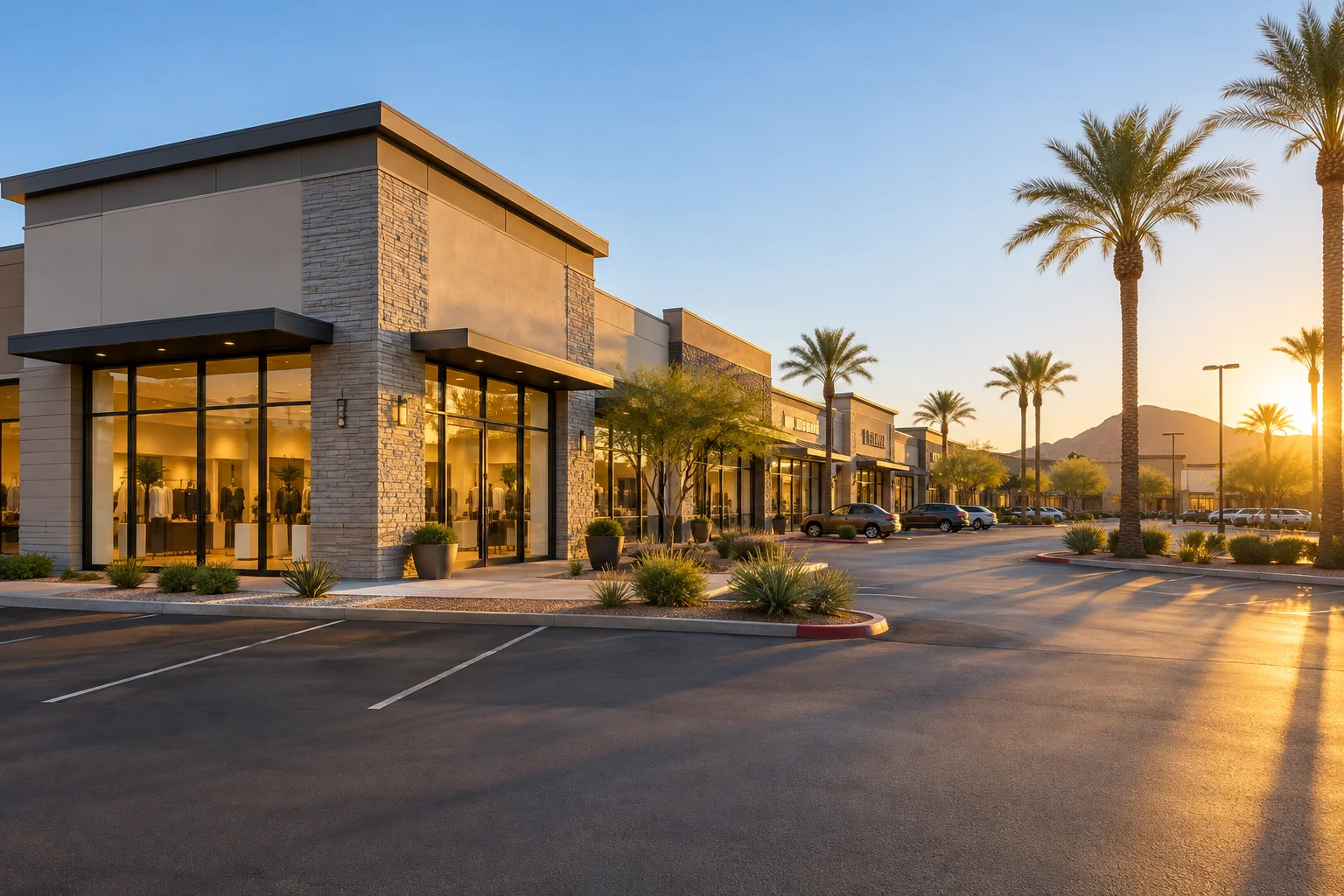
Endcap retail space is the suite at the end of a shopping center's building, with a second exposure, side windows and more visibility than neighboring units. In Phoenix, tenants weigh that exposure against rents that are often higher and leases that may differ. This comparison of endcap, inline and retail pad site positions guides retail leasing decisions across the Valley.
By David Pierce, MHG Commercial
| Attribute | Endcap | Inline | Pad site |
|---|---|---|---|
| Position | Last suite in a row, at the building corner | Middle of a row, neighbors on both sides | Separate parcel, usually near the street |
| Visibility | Two exposures, with front and side glass | One storefront | Stands alone, often with the most street exposure |
| Signage | Often two elevations, set by the lease | Fascia sign, sometimes a shared pylon panel | Own building sign, often a pylon panel, subject to city approval |
| Drive-thru | Only if the layout and city allow | Rarely workable | The usual choice |
| Rent position | Often above inline, set by the market | The baseline for the center | Ground lease, build-to-suit or sale, terms vary |
| Best fit | Walk-in retail and food users | Appointment and service users | Drive-thru, bank and auto-oriented users |
What Is Endcap Retail Space in a Phoenix Shopping Center?
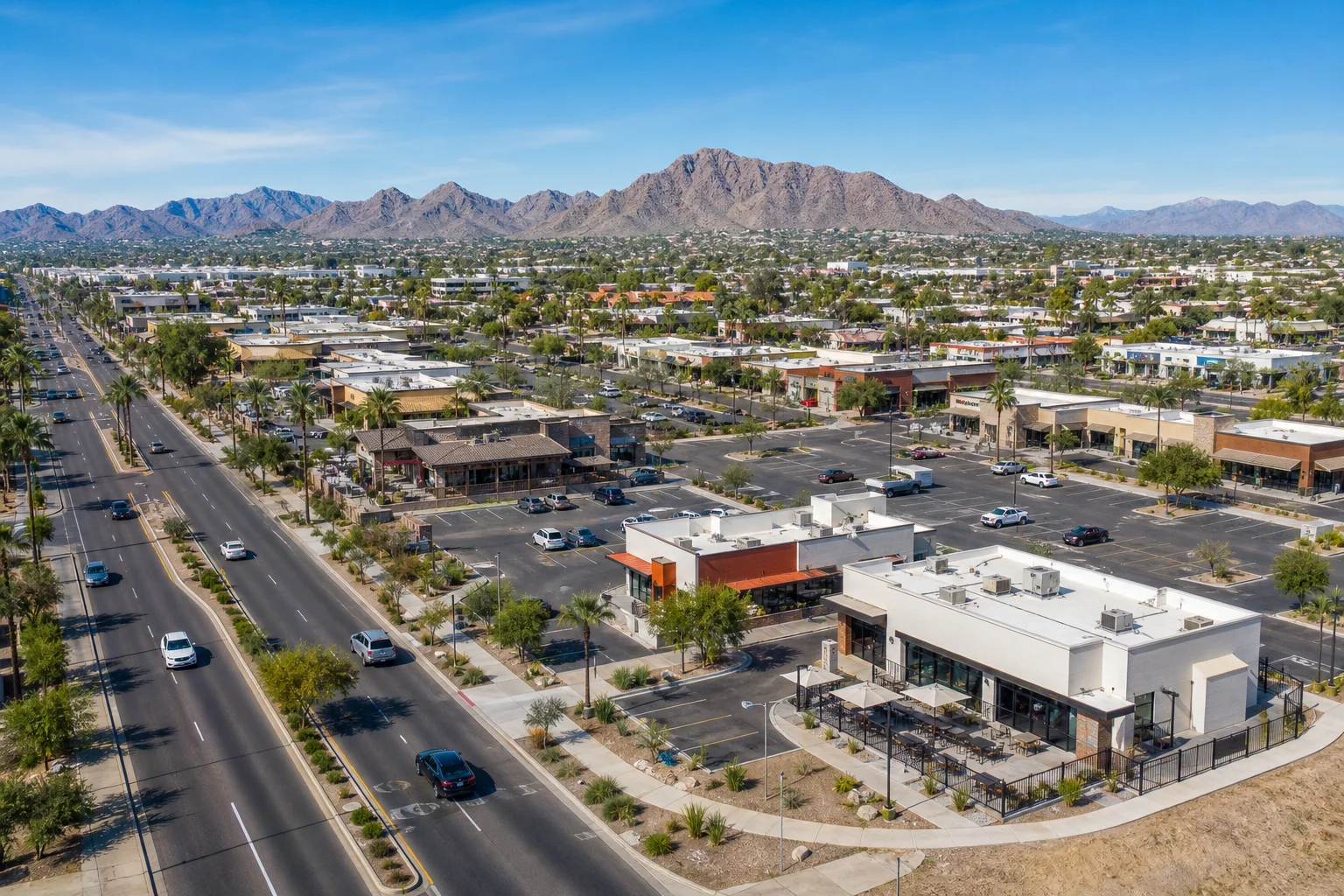
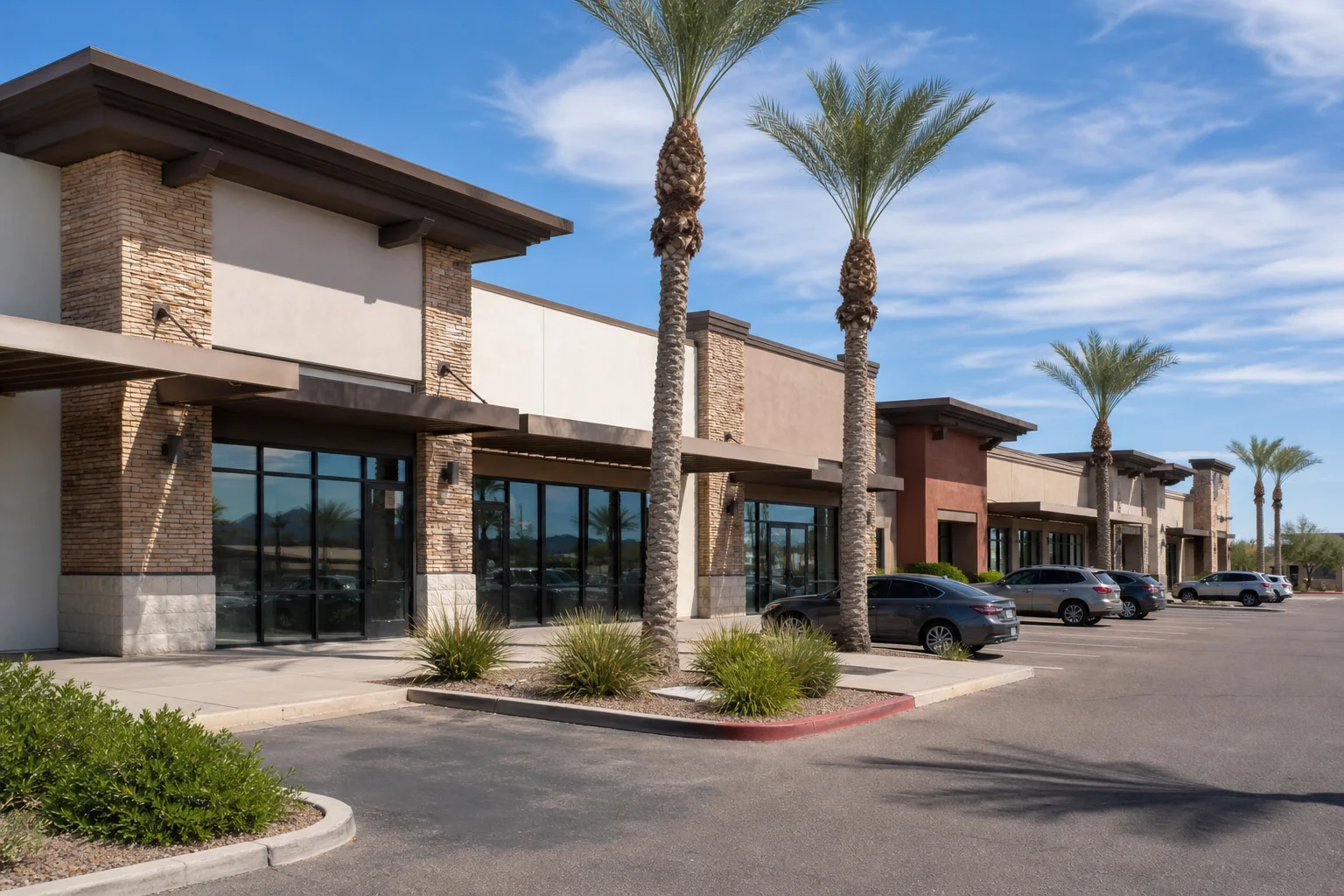
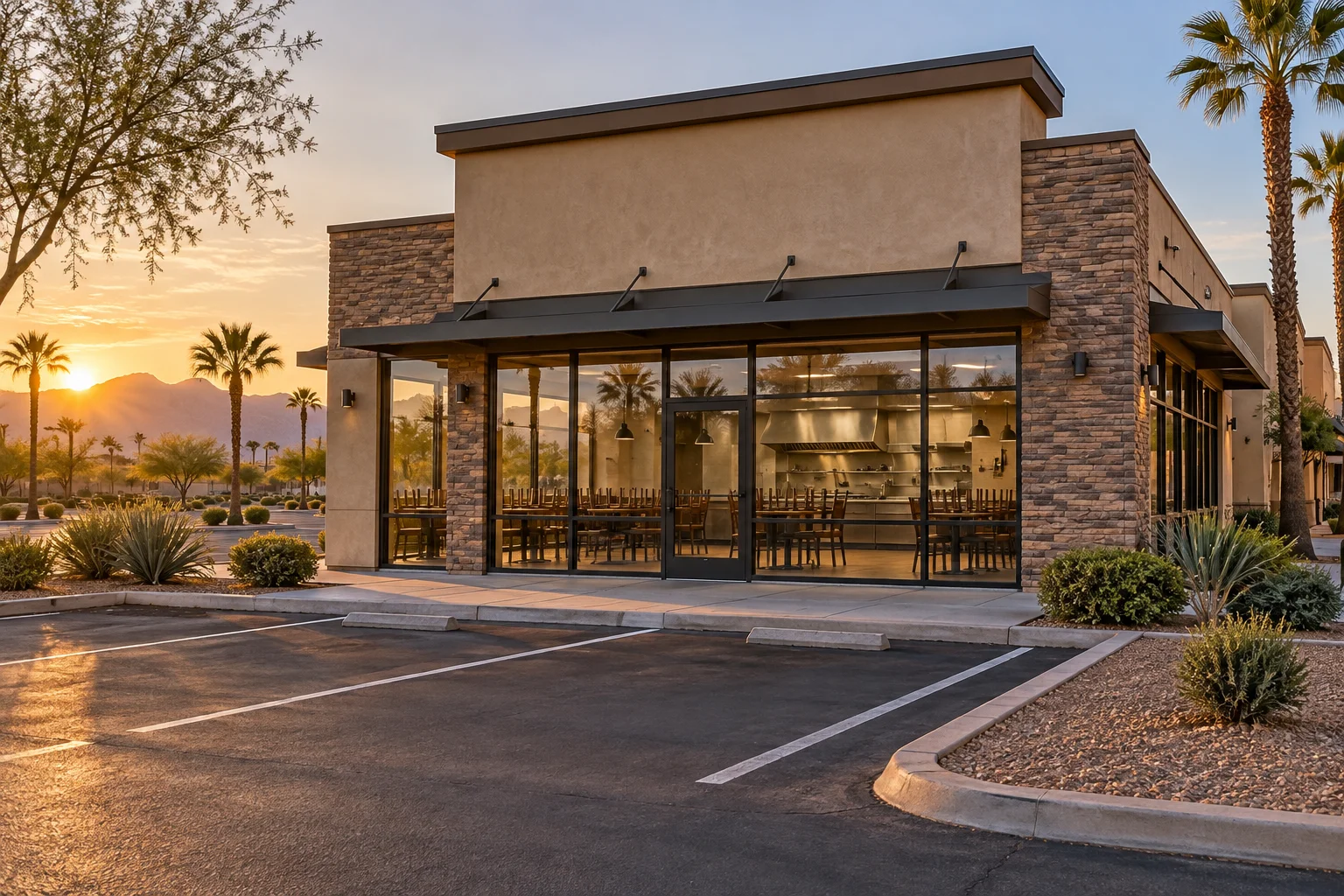
Endcap retail space is the last suite in a row of storefronts, usually at the corner of the building. One wall is shared with a neighbor. The other is exposed, so the suite can carry glass and a door on two sides. Inline spaces in the middle of a row get no such second face. In many Phoenix shopping centers, that corner sits beside a parking entrance or a main drive aisle, so drivers and shoppers see it first.
What does end cap mean in commercial real estate?
In commercial real estate, an end cap (also written endcap) is a unit at the end of a building or row, as opposed to a unit in the middle. It describes position only, not size, condition or rent, so read the site plan and the lease to see which suite the term covers.
What is the goal of a good endcap? In-store displays explained
Retailers use the same word inside the store. An end cap display (also called a cap display) sits at the end of a shopping aisle, where a shopper sees it from two directions. The goal of a good endcap is to lift visibility for a product or promotion and prompt impulse purchases. Merchandising teams build these displays on a gondola (a freestanding shelving unit) and follow a planogram (a diagram of where each product goes), and a display pays only when it moves more units than regular shelves at margins that justify the prime spot.
The logic carries over to the building: tenants that sell on impulse value an end cap suite for the same reason retailers value end caps in the aisle.
Endcap vs Inline Retail Space: What Is the Difference?
What is an inline in retail?
An inline suite sits between two neighbors, with storefront glass on one side only. In retail real estate, inline describes any unit in the middle of a row, in a strip center or a mall, and it is the baseline unit in most centers. Its signage is typically a fascia sign above the door, plus a panel on a shared pylon sign if the lease grants one.
The endcap differs in three ways. It has a second elevation for window displays and signage, it can have a side entrance, and it usually draws a different rent conversation, because the landlord is pricing exposure and visibility as well as square footage.
Do endcap retail spaces cost more per square foot than inline suites?
Often, but not always. Each landlord sets its own pricing, and the premium, if any, varies by center. Corner frontage, extra signage rights, nearness to anchors such as grocery stores and strong demand push it up. Compare effective cost, not the quoted rate alone: base rent, common area maintenance (CAM) charges, tenant improvement allowance and any free rent.
Is endcap retail space worth the higher rent in Phoenix?
It depends on whether your customers find you by seeing you. Coffee shops, boutiques and quick-service restaurant concepts that win customers from passing traffic may earn back the exposure. A dental office, insurance agency or accountant that fills its schedule through referrals and search rarely does. Price the exposure against your own conversion and margins, not against the neighbor's rent.
What Is an Outparcel in Real Estate? How a Retail Pad Site Differs From an Endcap
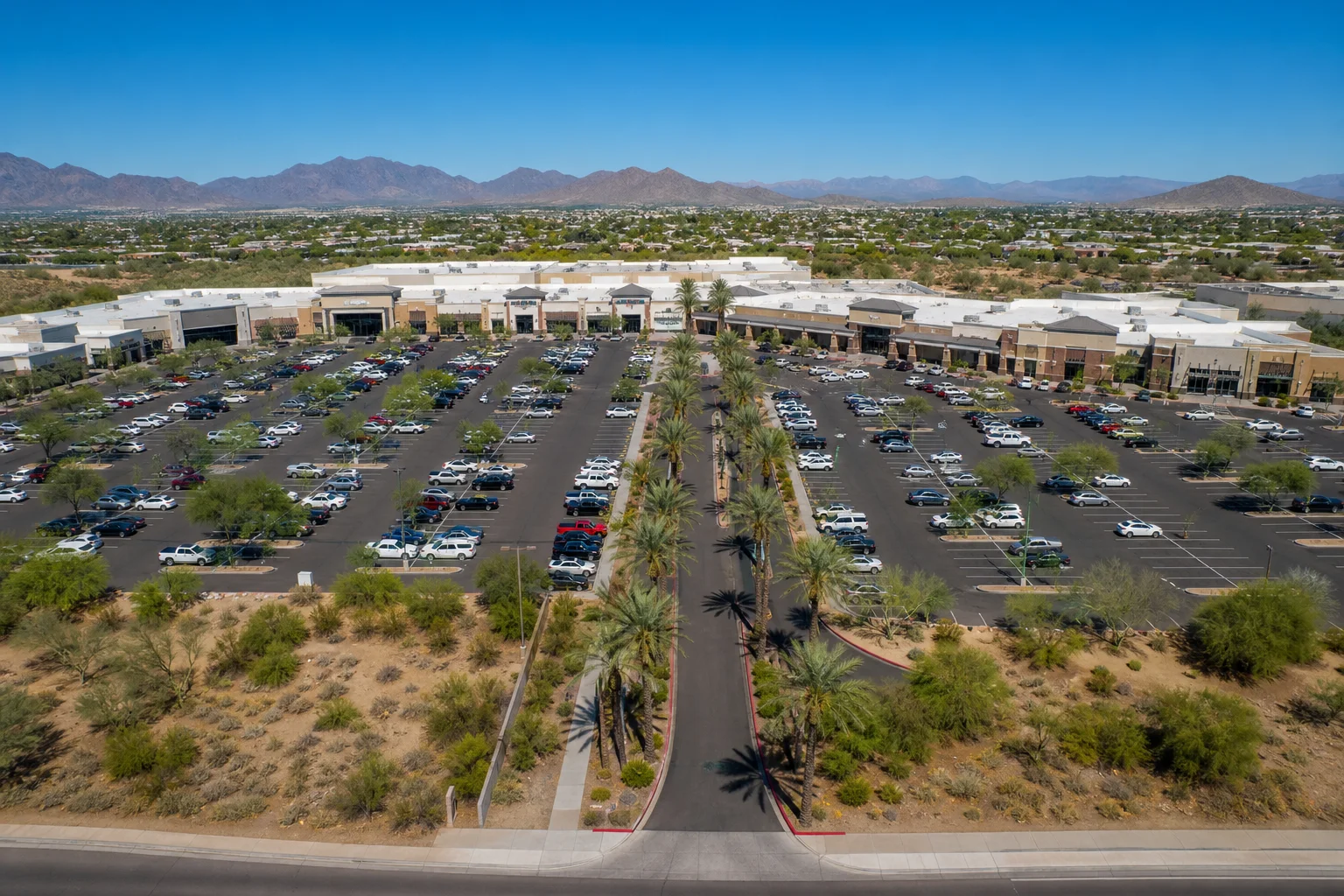
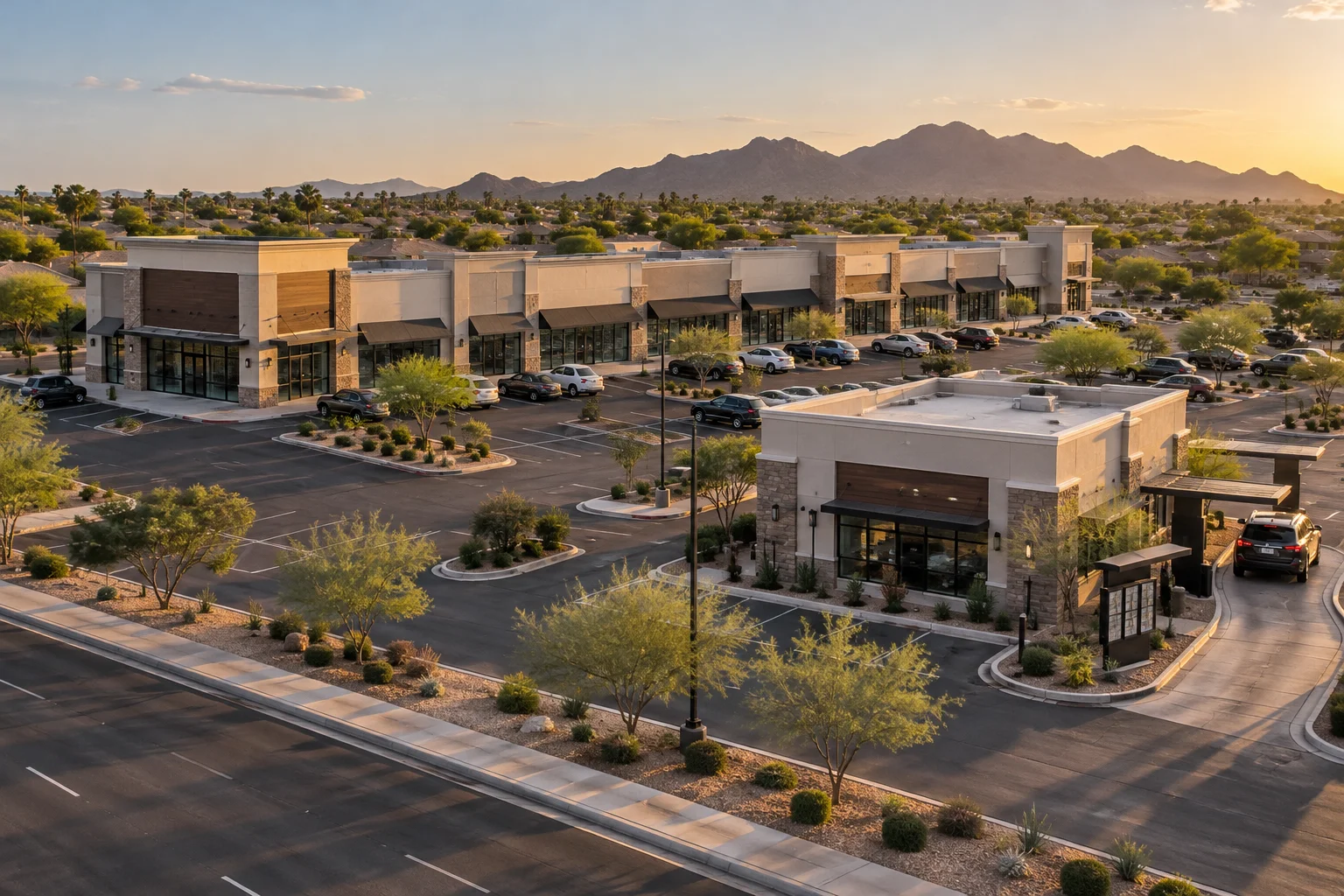
A retail pad site, also called an outparcel, is a separate parcel in front of or beside a shopping center, usually near the street, built for a single freestanding building. Tenants typically reach it through a ground lease (the tenant leases the land and builds), a build-to-suit lease (the landlord builds to the tenant's specifications) or a purchase. Outparcels are sold or leased as their own parcels, so a buyer who wants to build on a pad parcel begins with a land brokerage question about zoning, utilities and access.
The differences from an endcap are structural. A pad building has no shared walls, its own parking and circulation, and its own building sign. Whoever builds it also goes through city plan review as a separate project, which adds time and approvals.
What are some outparcel examples?
Common outparcel examples include a bank branch, a drive-thru restaurant, a fuel or convenience store, an auto service shop and a freestanding medical or dental office. What they share is a single-tenant building that wants its own access, parking and signage.
Is an endcap or a pad site better for a drive-thru restaurant?
A pad site is usually the better fit. A drive-thru needs a stacking lane (the line where cars queue), a menu board, a pickup window and a clear path out to the street, and a tenant that builds on a freestanding parcel can lay it out around that flow. Some endcap suites can host a drive-thru if the building and drive aisles allow it, but the lane often conflicts with parking and fire access. Chandler, Tempe, Gilbert and Scottsdale each apply their own planning rules, so confirm the use with the city and the landlord first.
Which Retail Suite Position Fits Which Type of Tenant?
Use the tenant's business model, not the look of the spaces, to decide.
- If sales depend on walk-in impulse purchases, such as coffee, specialty food or boutiques with strong window merchandising, choose the endcap.
- If customers book by appointment or referral, choose an inline suite and put the rent difference into marketing strategies like search and referrals.
- If you run a drive-thru, choose the pad site.
- If you need your own building identity and control of the site, choose the pad site, and plan for a longer approval and build timeline.
What Should You Check Before Signing a Lease for an Endcap or End Cap Suite?
The position of end cap retail space is only worth paying for if the lease lets you use it. Check these items:
- Signage rights. Which elevations may carry signs, whether you get a pylon panel, and what the city sign code allows for sign installation.
- Use and exclusives. Your permitted use, any exclusive rights the landlord granted to neighbors, and drive-thru or patio rights if you need them.
- Total occupancy cost. Base rent, CAM, taxes, insurance, and what the tenant improvement allowance covers.
- Expansion rights. A right of first offer gives the tenant the first look at adjacent space before the landlord markets it. A right of first refusal lets the tenant match a third party's offer. Confirm which one the lease grants.
- Building systems and compliance. Two exposures can mean more sun load on the HVAC (heating and cooling) system, and the suite must still meet accessibility, fire and city requirements.
Our Verdict: Where Endcap Retail Space Earns Its Rent
For walk-in retailers, boutiques or food users choosing a suite within one Phoenix shopping center, take the endcap. It earns its rent when the lease grants signage on both elevations and the premium over inline rents is modest against expected sales. Choose inline when customers come by appointment or referral. Choose a pad site when the use needs a drive-thru or a freestanding building.
If you are weighing a specific suite, contact our brokerage with the center name, the square footage and your use, and our brokers can compare the positions against your business model.
How do I find endcap retail space or an outparcel for lease in Phoenix?
Start with the site plan, not the listing photos. A search for endcap retail space near me returns map pins, and a pin rarely shows which suite is the corner. Brokers read the plan, check signage and exclusives, and shortlist shopping centers by city. Pad sites and outparcels usually lease on a ground lease or build-to-suit basis, so confirm who pays for site work. We work retail across the Phoenix metro and East Valley, including Chandler, Tempe, Mesa, Gilbert and Scottsdale.
Endcap retail space for sale is a different transaction. Buyers usually purchase a building or a whole center, since a single suite rarely trades alone unless the building is subdivided into condominiums.
Talk Through Your Suite Position With Pierce CRE
Whichever position fits, the decision starts with how your customers find you. Start that conversation with Pierce Commercial Real Estate.