To lease a second generation restaurant space in Phoenix, find a former restaurant unit, inventory what the last tenant left, and confirm the hood, grease interceptor, permits and lease terms before you sign. What stayed behind, from a full commercial kitchen to bare walls, decides how much build-out you can skip. Before you sign any retail leasing paperwork, have the equipment, the permits and the lease checked in that order.
By David Pierce, MHG Commercial
What Is a Second Generation Restaurant Space?
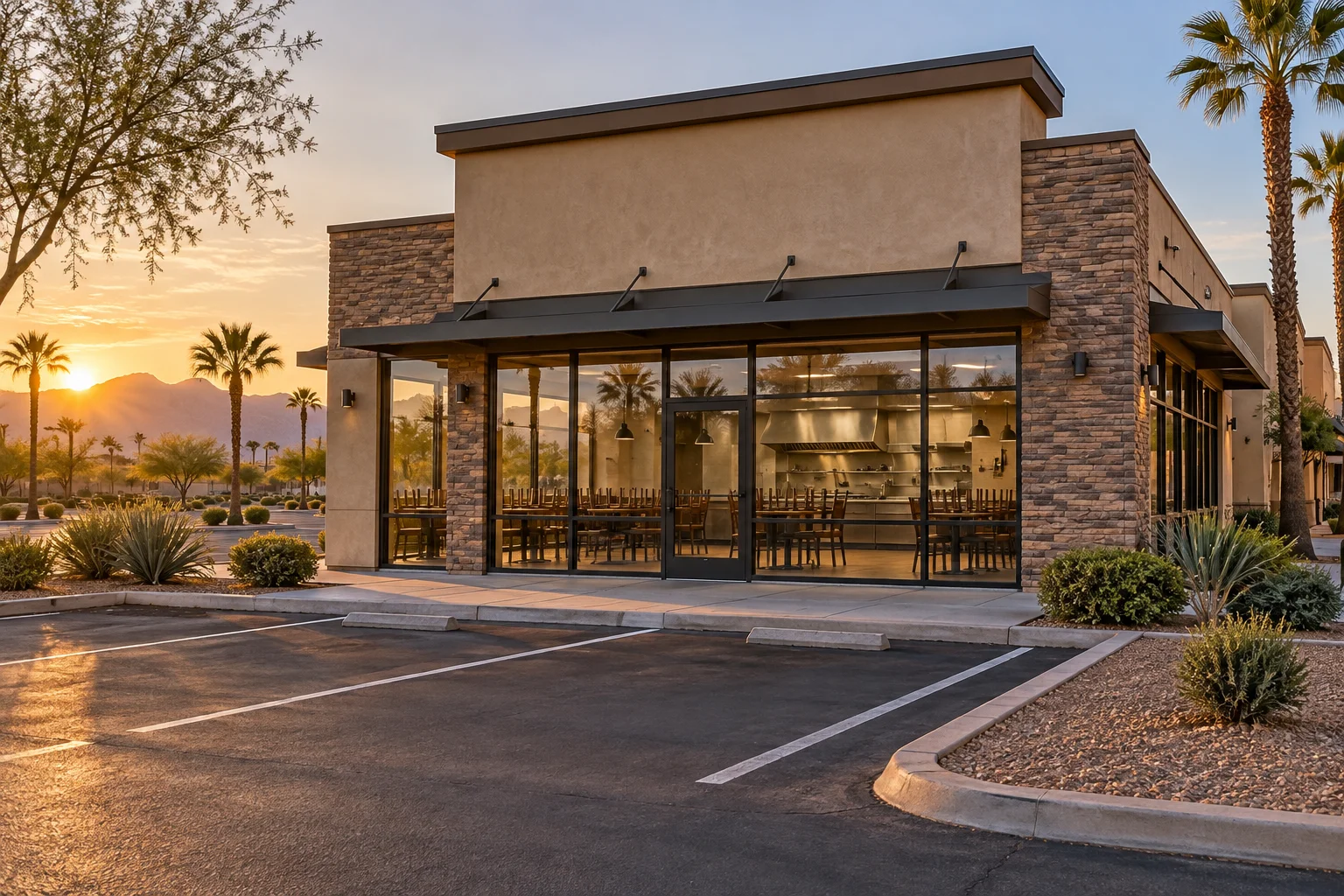
A second generation restaurant space is a unit where a restaurant operated before, with some kitchen infrastructure still in place. A first generation space is a bare shell, so the tenant builds everything: walls, plumbing, hood ductwork and grease handling.
That is the appeal, and it is also the catch. A ready kitchen was built for the last operator, not for you. Confirm that the existing layout fits your concept and the number of seats you plan to fill. Tenant improvements, the build-out work a tenant pays for or negotiates, shrink in a second generation unit but rarely vanish.
How to Find a 2nd Generation Restaurant Space for Lease Near Me
A search for a 2nd generation restaurant space for lease near me returns a mix of sources, so work the channels that carry former-restaurant units:
- Commercial listing platforms. LoopNet, Crexi and CoStar let you filter retail by city and size. Try the terms "former restaurant," "restaurant ready," "Type I hood" (a commercial hood that vents grease-laden smoke), "grease interceptor" and "walk-in cooler."
- Retail brokers. A broker active in your target city can tell you which units kept their kitchens before a listing goes up. Ask for the equipment list, not only the square footage.
- Shopping center leasing pages. Suburban center owners post availabilities on their own sites. Search by city, such as restaurant space for lease in Chandler, AZ or Gilbert, AZ.
- Business-for-sale marketplaces. Sites such as BizBuySell list operating restaurants whose leases may transfer, a route covered below.
Listings show only part of the market. Call the leasing contact at suburban retail centers and ask which units have hoods and grease traps and whether the kitchen equipment stays.
One practical note: listing portals behind a security service can block floor plans and photo galleries. If a page stalls, check your browser settings, pause any browser extension that blocks scripts (browser extensions are a common cause) and, on an office connection, ask your network administrator whether the network settings filter the site.
How to Find a Closed Restaurant for Lease in Phoenix
A closed restaurant for lease in Phoenix is not always listed. Drive the corridors you want and note the dark restaurants. Then look up the owner of record on the Maricopa County Assessor's site and ask whether the space is available.
Ask why the restaurant closed. The cause could be the operator's finances, but weak visibility, tight parking or a poor layout can also be the reason.
Where Can I Find a Small Restaurant Space for Rent Near Me?
A search for a small restaurant space for rent near me tends to return end caps and in-line suites that suit counter-service, bakery, coffee and takeout concepts. Look in Mesa, Gilbert, Queen Creek and Tempe, and ask for the exact rentable square footage and the floor plan.
A small unit can still carry a full hood and grease trap, or neither. The equipment list matters more than the size.
What the Last Tenant Leaves Behind
Every former restaurant unit is different, because every prior tenant removed different things. Some operators strip the unit to the walls. Others leave the hood, a walk-in cooler and a full cooking line. Use the table below as a starting list, not a promise about any one unit.
| Item | What may be left | What to confirm |
|---|---|---|
| Type I hood and exhaust | Hood, ductwork, exhaust fan | Condition, cleaning records and fit with your cooking line |
| Grease trap or interceptor | In-ground or under-sink unit | Size, last service date and city requirements |
| Plumbing | Floor drains, hand sinks, water heater | Working order and capacity for your concept |
| Loose equipment | Ranges, fryers, shelving | Ownership and any liens |
Who Owns the Hood, Grease Trap and Kitchen Equipment the Last Tenant Left?
The answer depends on how the equipment is attached and what the old lease said. Hoods, ductwork and in-ground grease traps are typically built into the building, so landlords treat them as part of the property. Loose equipment such as ranges, fryers and shelving may still belong to the previous tenant, a lender or an equipment lessor.
Ask the landlord for a written inventory that names each item and states who holds title. A lender may hold a lien, which is a legal claim against the item. Your lease should say which items you may use, who repairs them and what happens to them at the end of the term.
What to Inspect Before You Take the Unit
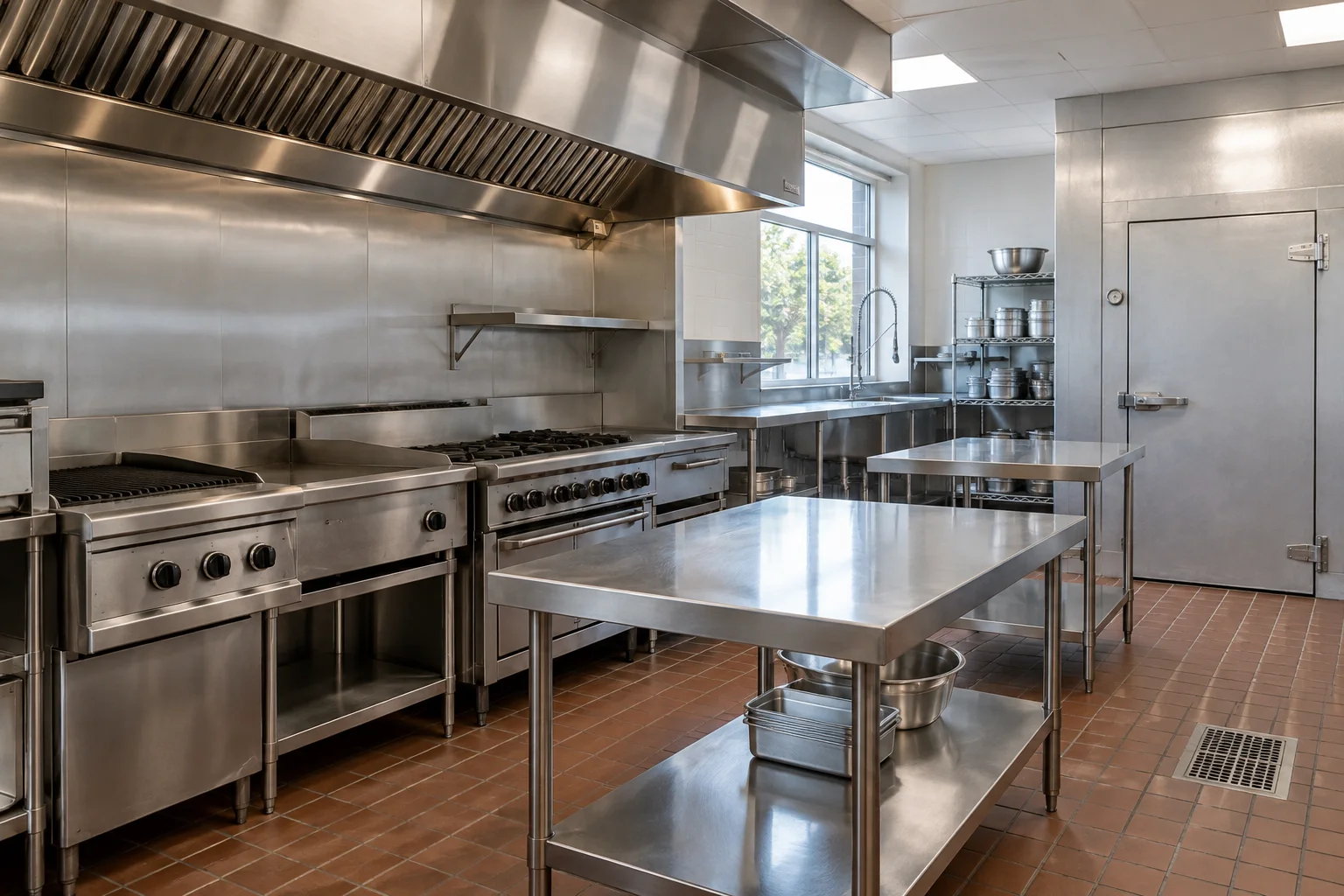
Walk the unit with your kitchen designer or a mechanical contractor, not only with the broker. Check these items:
- Hood and exhaust: fan operation, the ductwork route to the roof, and make-up air, which replaces the air the hood pulls out. Ask whether the hood is long enough for your cooking line, whether it has a working fire suppression system and whether the fan was sized for the airflow your equipment needs.
- Grease traps: size, access and service records. As an example, in-ground interceptors commonly run from 750 to 2,000 gallons, and under-sink units are much smaller. Ask what size the city requires for your menu and whether the installed unit meets it.
- Plumbing: floor drains, slab lines, hand sinks and water heater capacity. Plumbing under concrete is costly to repair, so ask about past backups.
- Electrical and gas: panel capacity and gas line size for your equipment.
- Roof and HVAC: leaks above the kitchen and cooling capacity for Phoenix summers.
Budget for the inspection itself. As an example, a hood, ductwork and grease interceptor inspection from a licensed contractor might run roughly $500 to $1,500, and a camera scope of slab plumbing costs extra. Get written quotes for your unit.
Photograph everything and attach the findings to the lease, so the condition at delivery is on record.
What to Check in a Second Generation Restaurant Lease Before Signing
A second generation restaurant lease should spell out the kitchen, not assume it. Read each term against the space you inspected.
- Permitted use and exclusives. Confirm the use clause covers cooking and, if you plan it, alcohol service. Check whether another tenant holds an exclusive that limits your menu.
- Delivery condition. Attach the equipment inventory as an exhibit, and state whether the unit comes as is.
- Repairs and maintenance. Name who maintains the hood, grease traps and plumbing, and who pays when one fails.
- Allowance and rent start. Ask about a tenant improvement allowance and when rent begins. As an example only, an allowance in a second generation restaurant unit might fall between $10 and $40 per square foot, with higher figures for a bare shell. Test any offer against your contractor's bid. A delayed rent start while permits are pending is a negotiated term, not a given.
- Assignment and surrender. Know your options if the concept does not work out, and what you must remove when the term ends.
Have a commercial real estate attorney review the document; this list does not replace that review.
Do I Need New Permits to Open in a Second Generation Space?
Yes, in most cases. A new operator generally needs its own health permit, even when the kitchen already exists. In most of the Phoenix metro, food establishment permits come from Maricopa County Environmental Services, and plan review may apply when you change the layout or equipment. Building, fire and business permits come from the city, so Tempe, Scottsdale, Gilbert and Chandler each run their own process.
A change of use, a new hood or a moved wall can trigger more permits. As an example only, allow roughly four to eight weeks for county plan review and approval once a complete application is filed, and longer if corrections are requested. Confirm current timing and requirements with the county and the city before you sign, and before you commit to a rent start date.
Is a Second Generation Restaurant for Sale Cheaper Than Leasing One?
Not always. A second generation restaurant for sale is typically a sale of the business: the name, the equipment and, in many cases, the right to the existing lease. That can cost less upfront than building a kitchen from scratch, but you inherit the old operator's equipment condition and lease terms. Leasing a vacant unit gives you a cleaner start and a defined term, but you carry more of the build-out.
| Option | What you take on | Flexibility |
|---|---|---|
| Lease a vacant second generation space | Build-out, equipment terms, lease obligations | Set by the lease term and renewal options |
| Buy an operating restaurant | Business, equipment, usually a lease assignment | Depends on landlord consent |
Before you commit to a space, walk through deal size, your capital and the lease you would assume with a broker such as Pierce Commercial Real Estate.
Quick Answers Before You Sign
Can I find a second generation restaurant space in suburban Phoenix?
Yes, second generation spaces can appear in suburban retail centers across the East Valley, including Chandler, Gilbert, Tempe and Mesa. Availability changes, so check current listings and ask center landlords directly.
What if the landlord will not provide a written inventory?
Walk the unit, photograph and list every item, and ask that the list be attached to the lease as an exhibit. If the landlord still declines, price the unit as if the kitchen were not there, because you cannot rely on what is not documented.
Talk Through Your Phoenix Restaurant Space Search with Pierce CRE
Before you tour a second unit, gather the unit's equipment inventory and the lease's delivery-condition and repair clauses, then contact our brokerage and send them to David Pierce at MHG Commercial for review. Pierce CRE works restaurant and shop space for lease across the Phoenix metro, and the review gives you a clear list of questions for the landlord before you commit.